


It was both refreshing and slightly unsettling to attend this past weekend’s All-American LA Phil concert, “Adams, Ólafsson & Copland.” Events in Minneapolis had been heating up as the populace grappled with an increasingly aggressive ICE presence. On the heels of Renée Good’s death at the hands of ICE, ICU nurse Alex Pretti was killed by ICE agents—Federal accounts of both shootings (that the victims were “domestic terrorists”) contradicted video footage.
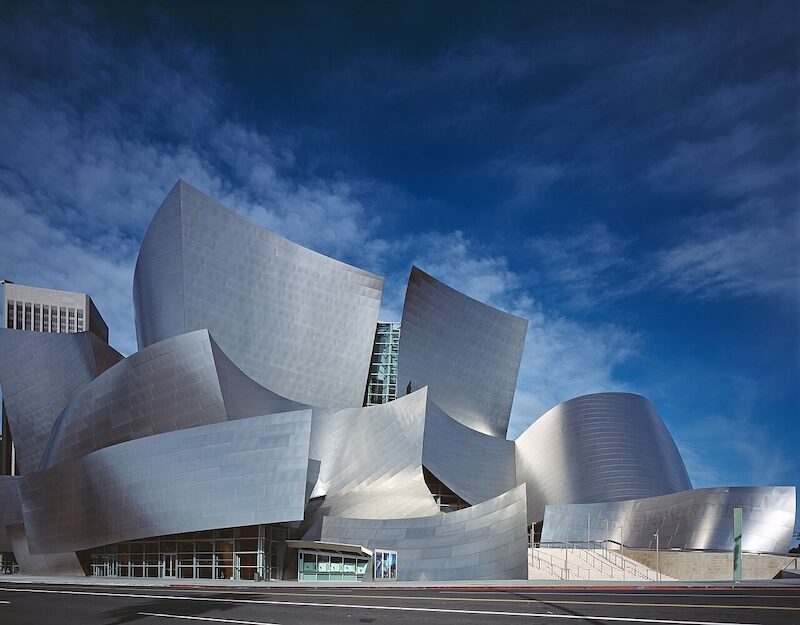
After opening with Charles Ives’ “The Unanswered Question,” LA Phil Creative Chair John Adams led the orchestra in Roy Harris’ 1938 “Symphony No. 3, in One Movement,” considered the “quintessential American symphony.” The piece translates the physical and cultural landscape of the United States—from spacious textures evoking big skies and wide-open spaces to syncopation that recalls the energetic, restless, and forward-thinking nature of Americans. The work also captures the rugged individualism said to be characteristic of Americans.
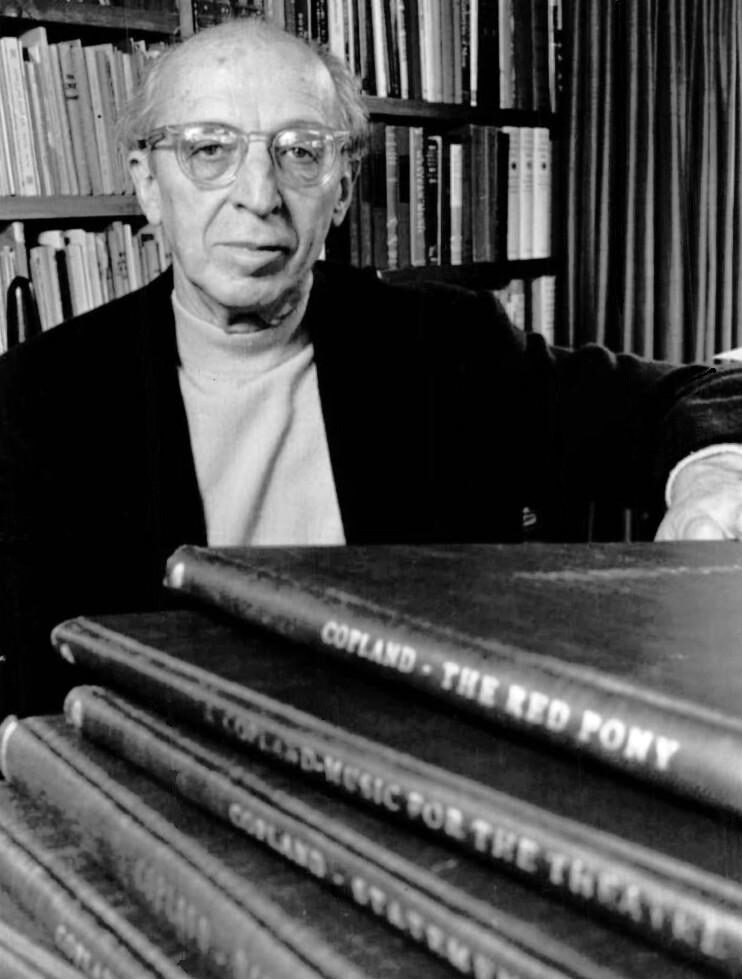
Paired with Aaron Copland’s “Appalachian Spring Suite for Orchestra,” the evening seemed to partly recall an idealized, cinematic presentation of the nation, just as it was being torn apart by events in Minneapolis. Of course, LA Phil programming is determined far in advance of performances. But the optimism that’s drawn without a hint of cynicism and the pioneering sense of home, especially found in Copland’s piece, became a stark contrast to unfolding events in Minneapolis, as well as in Los Angeles, and indeed nationwide.
John Adams’ Extraordinary Sonic Landscape
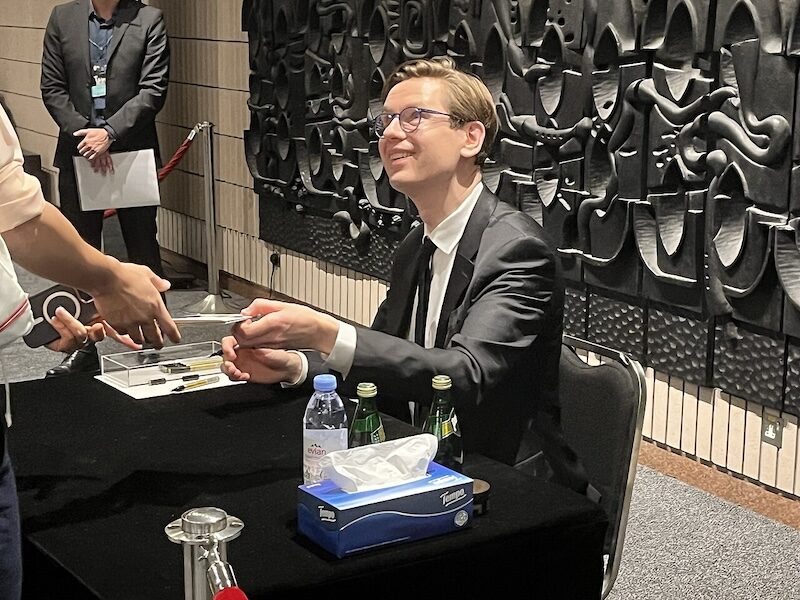
But truly, the program’s defining moment was Adams’ own 30-minute piece, “After the Fall,” his third full-scale concerto for solo piano. The piece was commissioned by the San Francisco Symphony for the Icelandic pianist Víkingur Ólafsson.
“After the Fall” opens with airy shimmering textures: harps, celesta, vibraphone and sustained strings. The piano soon enters with erratic rhythmic patterns—and in the finale, there’s a prominent neo-Bach moment that weaves in the C-minor Prelude from Bach’s “The Well-Tempered Clavier.” All told, “After the Fall” lived up to what it’s been termed: a “dreamlike thrill ride.”
With Ólafsson on the keyboard, the concerto soared. And as with so many commissioned LA Phil works, the sonic landscape constructed and rendered was extraordinary.
“After the Fall” is not part of the LA Phil’s Green Umbrella project, but it fits the bill for the orchestra’s trademark series that champions ambitious new music. Established in 1987, Green Umbrella has presented other works by Adams, as well as by Kaija Saariaho, Philip Glass, John Cage, Unsuk Chin, Gabriella Smith and many others.

The series is as unpredictable as it is refreshing. “Angélica Negrón played tropical fruits as instruments during this season’s Recovecos program centered around Latin American and Caribbean joy, healing, and heritage,” the LA Phil notes. “In October 2013, Esa-Pekka Salonen brought the world premiere of Frank Zappa’s completed orchestral-rock experiment 200 Motels to life, fulfilling a dream project first attempted in 1970 by Zappa and then-Music Director Zubin Meta.”
Here are the remaining three Green Umbrella events for this season, held in February and March: