


Philip Glass’ Akhnaten is casting its spell at the Dorothy Chandler Pavilion through March 22 as part of the LA Opera’s 40th anniversary season. The three-hour production, with two intermissions, doesn’t so much unfold as it envelops.
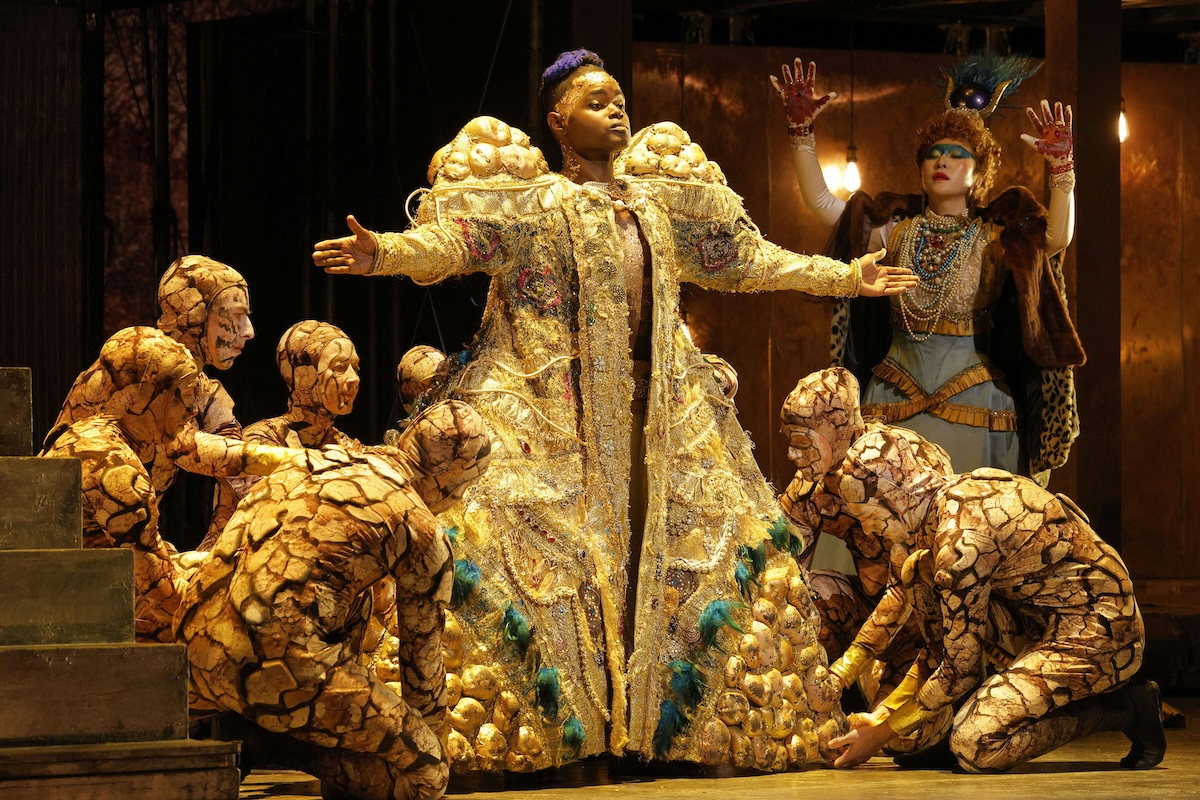
What to expect: wave after wave of Glass’ shifting harmonics, chant-like vocals, a maze of juggled spheres and clubs, and singers who cross the stage at a marvelously glacial pace, effectively seeming to stop time. The music, action and visuals emerge from the stage as a time warp mediation, never failing to entrance.
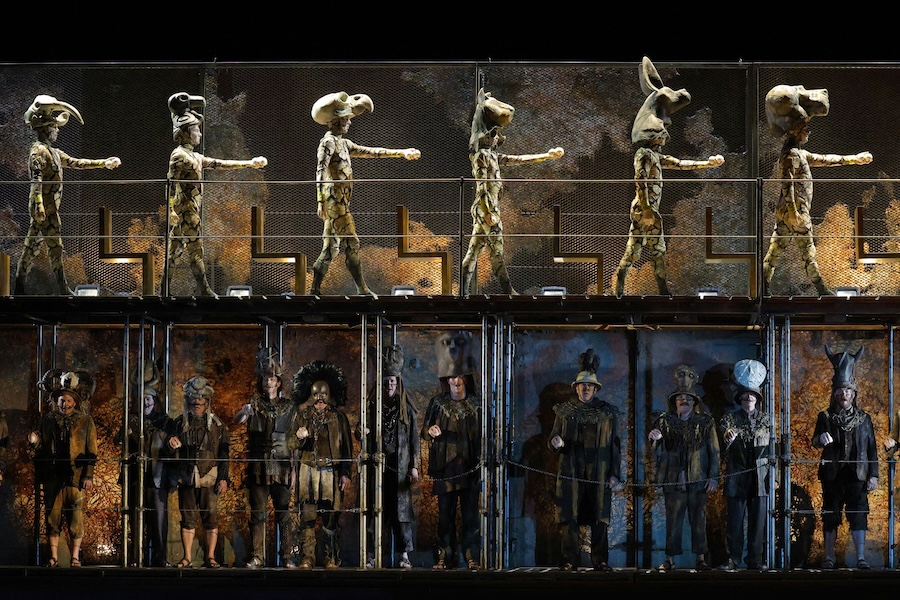
The opera, which Glass completed in 1984, is the culmination of his “portrait trilogy,” three works examining figures who reshaped human history. Einstein on the Beach (1976) took on science; Satyagraha (1980) explores Mahatma Gandhi and the birth of nonviolent resistance. Akhnaten, the most visually striking, explores religion. Its title character: the Egyptian pharaoh who, for 17 years in the 14th century BC, tossed out polytheism and turned toward the sun, worshipping Aten, the sun disk.
The score with its somber ancient feel draws its text from hymns, prayers, inscriptions, and letters—sung in their original Egyptian, Hebrew, and Akkadian.
Director Phelim McDermott first staged Akhnaten for the English National Opera, then brought it to the LA Opera in 2016 and the Metropolitan Opera in 2019 and 2022. Tom Pye’s towering scaffold-like sets are minimalist frames for Kevin Pollard’s dazzling costumes—animal heads, exotic plumage, regal draping, and lots of gold.
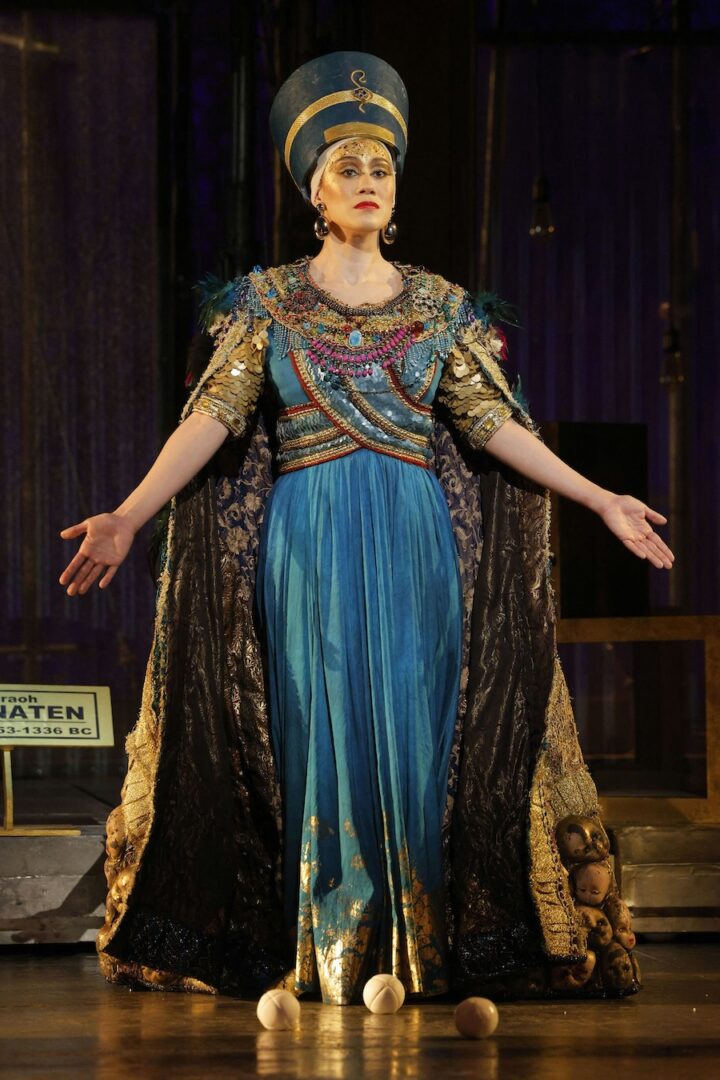
Sean Gandini’s acrobats and jugglers, used throughout the production, pair perfectly with Glass’ hypnotic score—the ever-ascending and descending balls mirroring Glass’ repetitive, driving notes.
At the center stands countertenor John Holiday as Akhnaten, new to the role with the LA Opera after performing it to acclaim in a Berlin production by director Barrie Kosky. “The voice is the voice of a shaman,” said Kosky of Holiday’s skill, in a November 2025 interview with the New York Times. Holiday’s otherworldly voice, especially in the “Hymn to the Sun,” turns ethereal, sustaining phrases with a focused stillness.
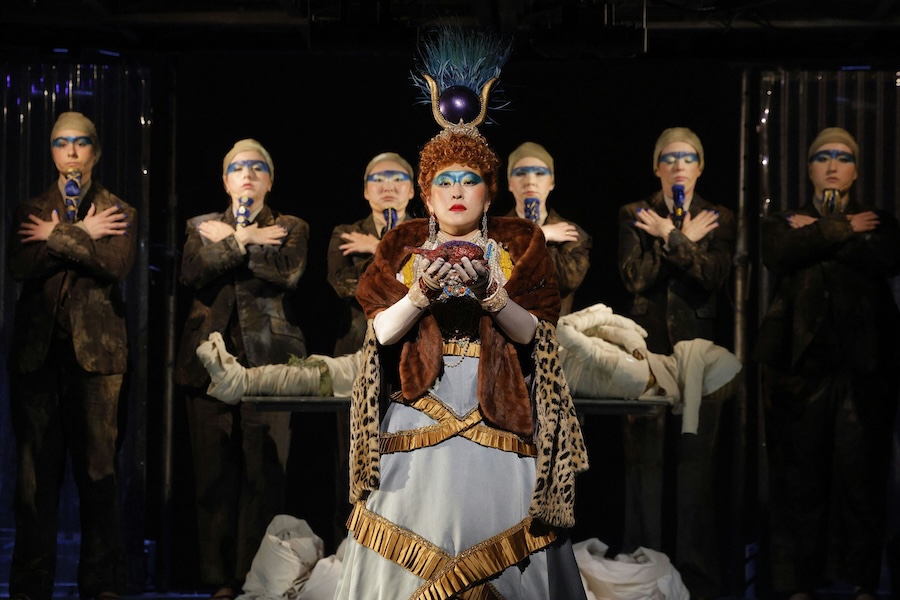
Mezzo-soprano Sun-Ly Pierce renders Nefertiti in equal clarion tones, her demeanor conjuring a sacred aura around the royal couple. Soprano So Young Park, a former member of the LA Opera’s Domingo-Colburn-Stein Young Artist Program, commands as Queen Tye, her steady presence filling the stage. The narrator-ghost—Grammy-winning bass Zachary James—reprises his role as the late Amenhotep III. He’s magisterial while at once sepulchral, his resonant voice embodying the dynastic weight.
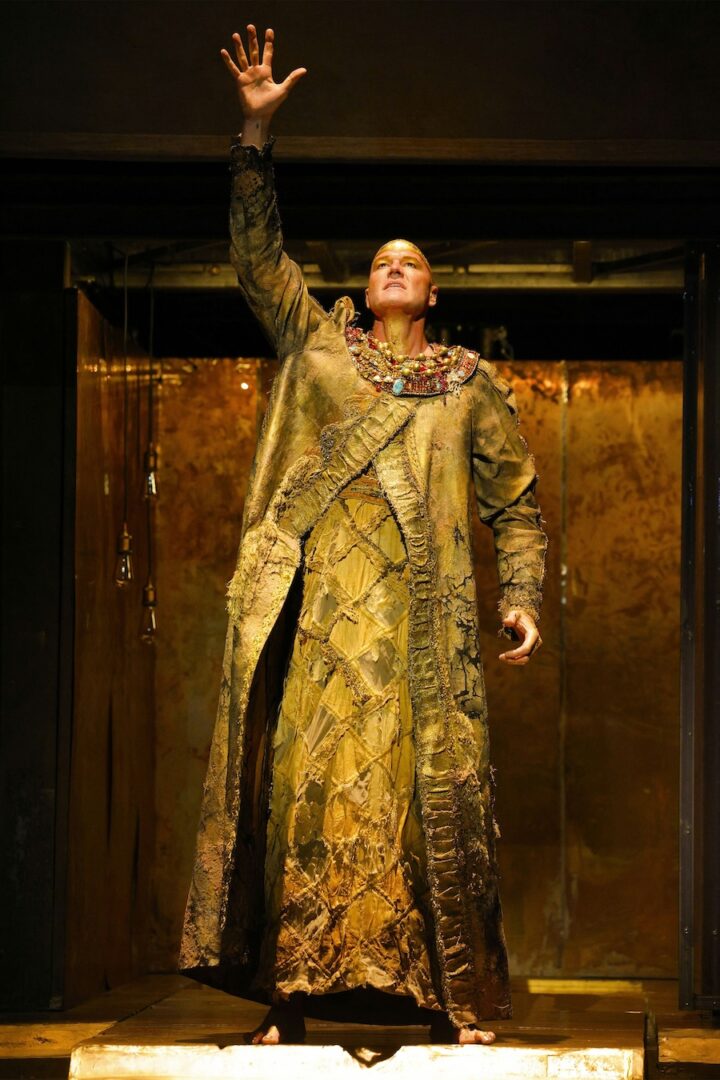
Filling out the political machinery that will ultimately destroy the pharaoh: tenor Yuntong Han as the High Priest of Amon, baritone Hyungjin Son as General Horemhab and bass Vinícius Costa as Aye.
The production marks Ukrainian-born Finnish conductor Dalia Stasevska’s LA Opera debut. Stasevska masters the score, unfolding it patiently, expertly building on the cumulative force of Glass’ trademark repetition.
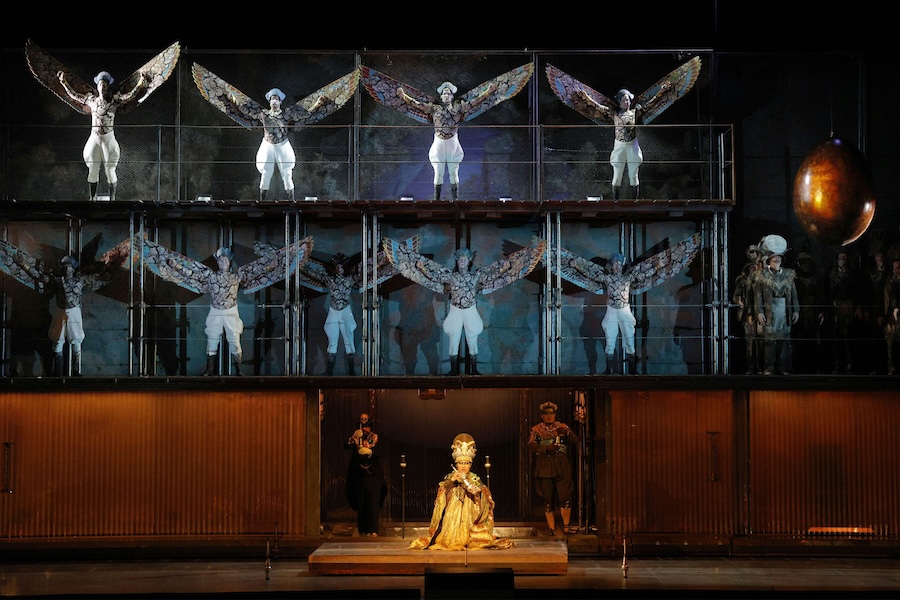
The opera’s three ritualistic acts each begin with symbols projected on a scrim—minimalist representations of hieroglyphic-inspired iconography.
The first act opens with the death of Amenhotep III who’s laid out as a corpse. Priests remove his body’s organs, placing them in canopic jars. Taken from the Book of the Dead, the ritual concludes with the pharaoh’s heart that’s ceremonially weighed against a feather—if equal in weight, his afterlife is guaranteed.
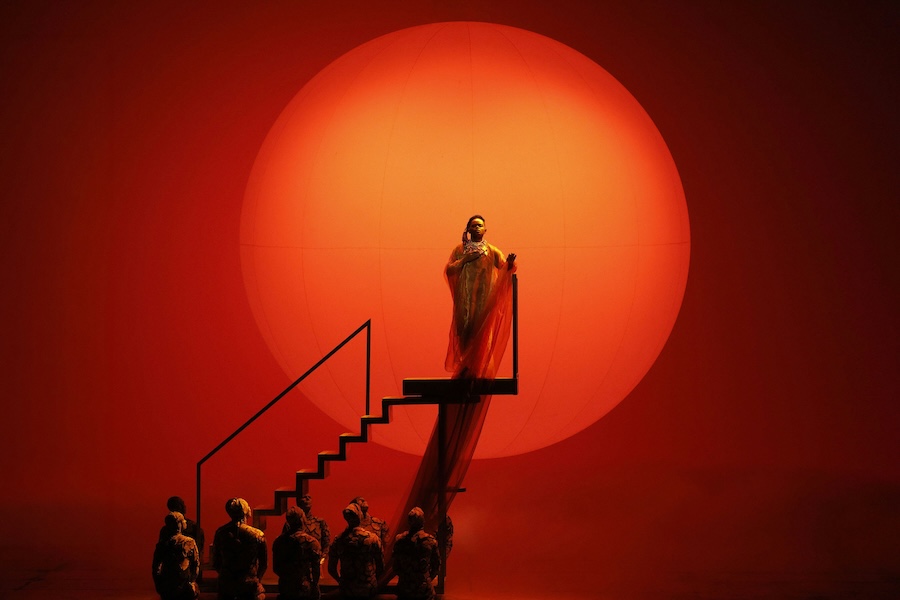
The last two acts logically follow as the new pharaoh reveals his monotheistic vision, banishes the old religion, builds a new city, dwells in insular harmony within it for many years, and then is attacked by the priests and killed. His son, Tutankhamun, is crowned, the former polytheistic religion brought back.
The scene shifts to modern day as a professor gives a lecture to students on ancient Egypt. Center stage, Akhnaten is presented as a museum statue, his name on a placard before him. But his ghost, along with that of Nefertiti and Queen Tye return, their voices rising, insisting on being heard across three thousand years.
The LA Opera will next present The Magic Flute, May 30 – June 21, 2026