


The truth hurts / that’s the definition of LA / they don’t show this on the news / but LA is the city of muse / all they see is Beverly Hills / and living it up to the fullest / but come to south LA you’ll find / dead bodies violence and bullets / they think LA is only concrete / but they don’t see the Compton Creek / seeing the grass under your feet.
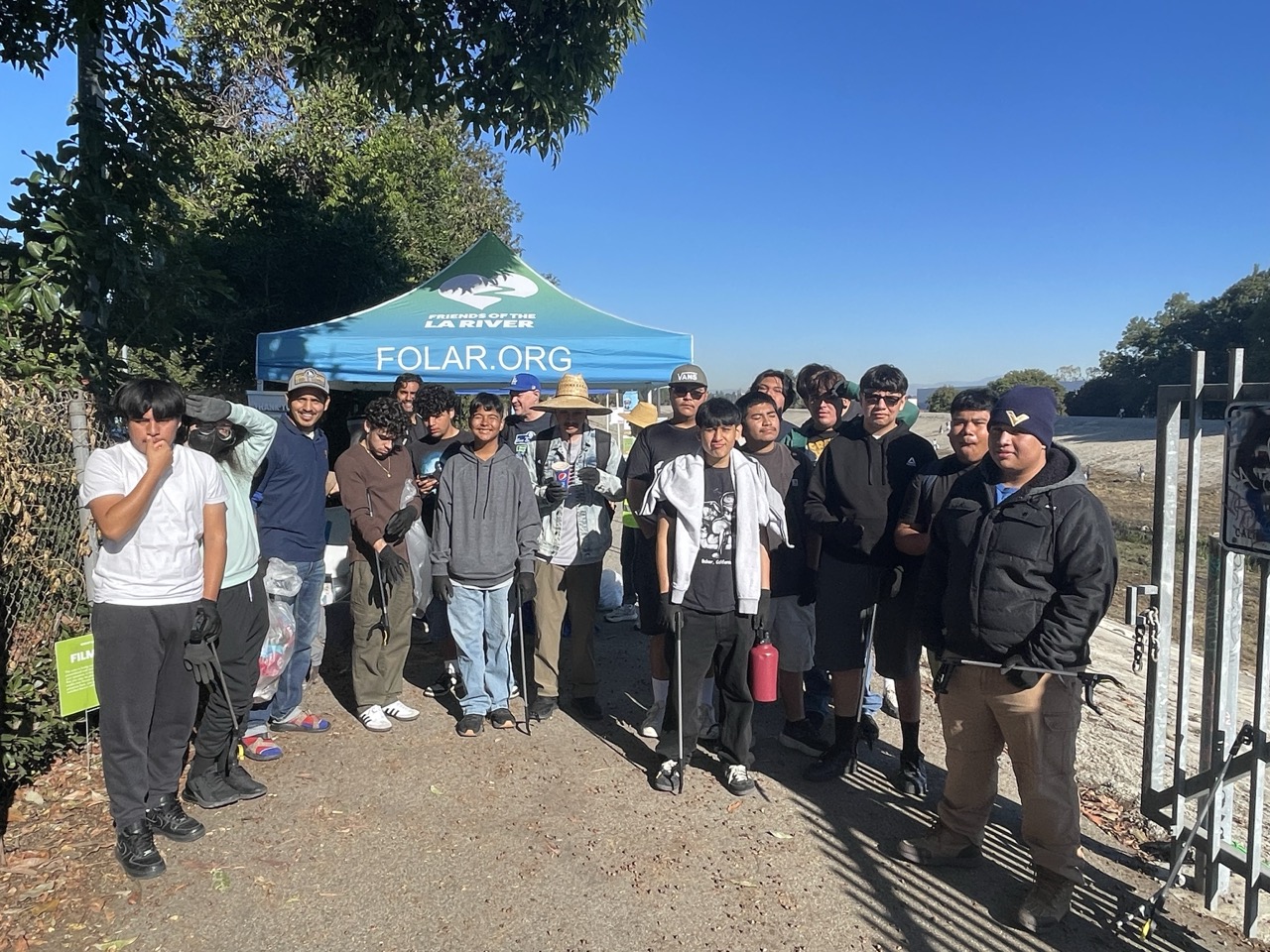
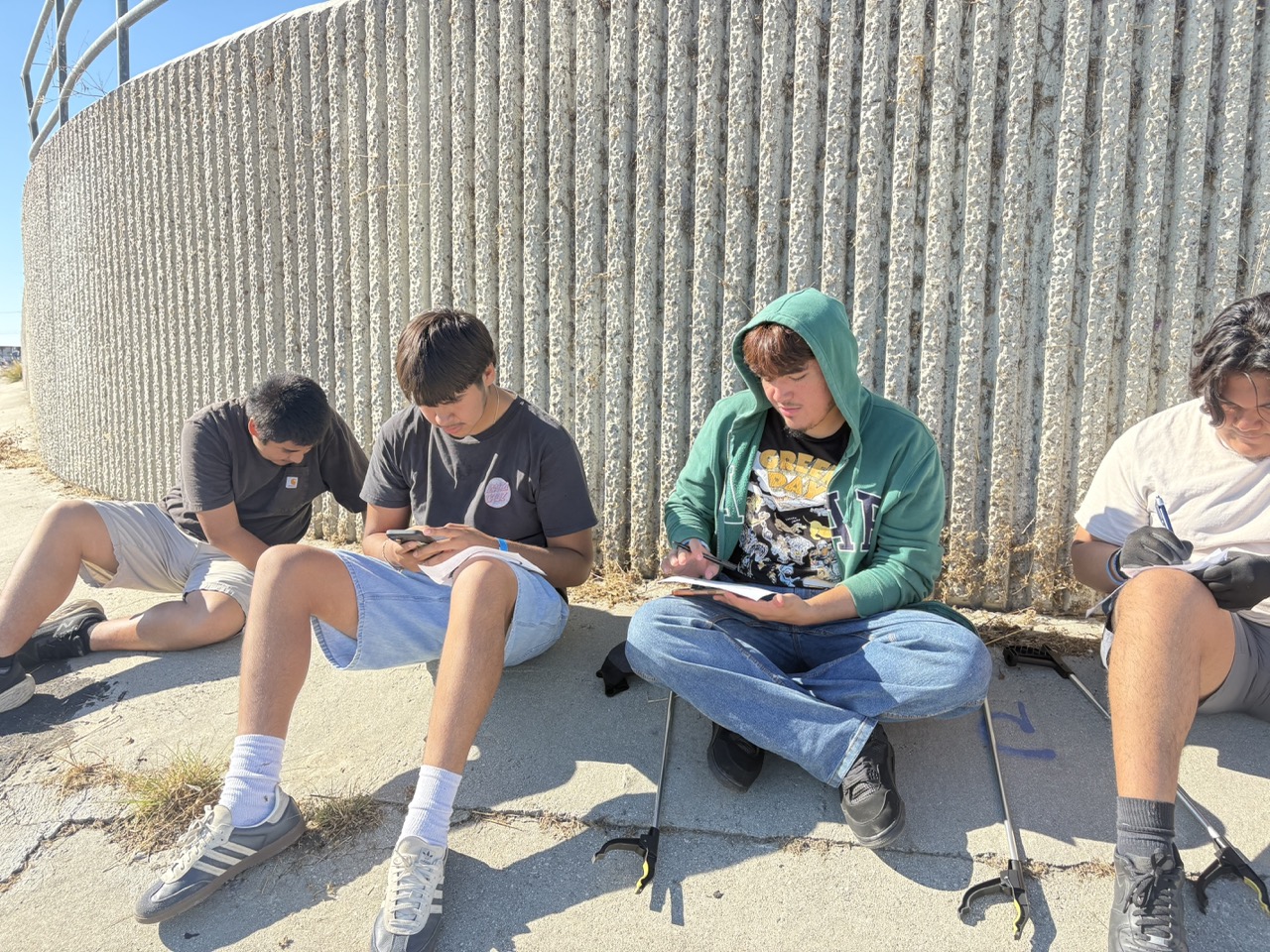
The author of these words is 18-year-old Santiago Padilla. A Compton resident and one of my students over the last two years at Verbum Dei Jesuit High School, Padilla wrote this poem on an excursion with math teacher Richard Lopez and I at Compton Creek. Beginning in December of 2024, Lopez and I took four student groups to the creek to clean up debris and then write poems. These trips are sacred combining environmentalism, geography, urbanism, Los Angeles history, fellowship and poetry. Moreover we abide by the coda of “collaboration, education, celebration,” the mission of a group working in the Los Angeles River called the Frogtown Arts Collective.
The genesis of these trips began when Lopez asked me in September 2024 if there was a service trip I’d like to organize. Lopez is the service coordinator at Verbum Dei aka Verb and he’s organized countless service trips from building orphanages in Tijuana, Mexico to the Urban Plunge SkidRow overnight mission where he volunteers with students in downtown foodbanks. Lopez likes taking action using his enthusiasm to set the world on fire through service.
His question about a service trip made me think of Compton Creek because it runs across the street from Verb. In my second week at Verb exiting the 105 freeway on Central, I realized that the concrete waterway running diagonal to the exit was the Compton Creek, so when Lopez asked me a few weeks later if there was a trip I had in mind, I instantly thought of cleaning up the creek.
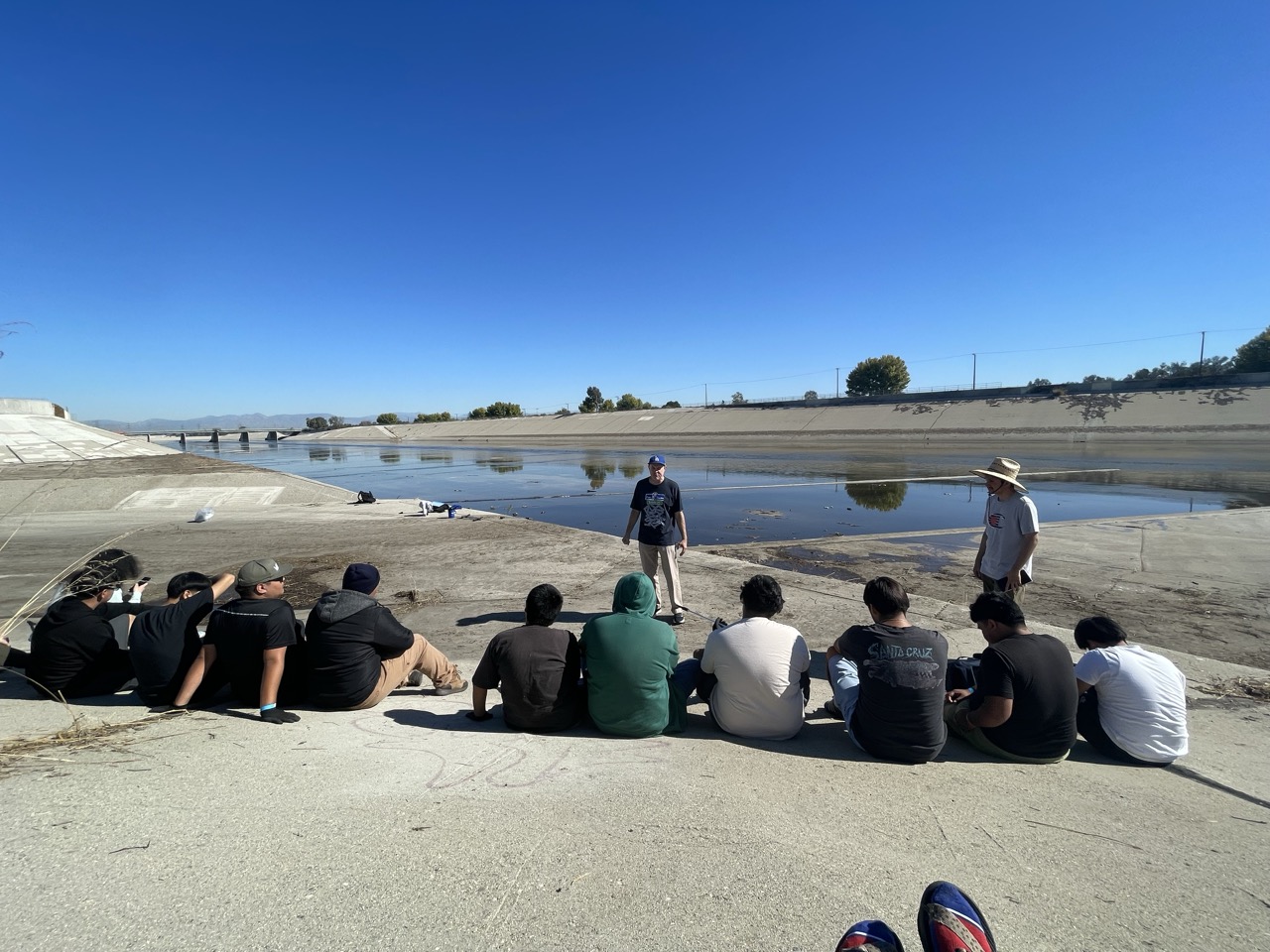
The Compton Creek is the Los Angeles River’s southernmost tributary, the only one beginning in the inner city with headwaters coming from South Central Los Angeles street storm drains. It flows for 6.5 miles downstream from Watts to Willowbrook to Compton to Rancho Dominguez into North Long Beach where it merges with the larger river. The artist, author, and activist Joe Linton writes in his book Down By the Los Angeles River that even though the Compton Creek is one of America’s most polluted waterways, it’s popular with birdwatchers because the creek’s last two miles hosts migratory birds like herons, ducks, egrets and plovers.
Encased in concrete for most of its path, most people passing it daily do not even know that it’s the Compton Creek. I learned about the creek when I studied the Los Angeles River at UCLA in the 90s. A few years later I began working with the cofounder of the Friends of the Los Angeles River (FoLAR), the late Lewis MacAdams (1944-2020).
Lewis was a poet before becoming an environmental activist and an important mentor to me. His example of using poetry and art to shift the river’s public perception from a polluted drainage ditch back into a cherished green space was a process he called a 30-year art work. When I first met Lewis almost three decades ago, he did several poetry readings with my friends and I. Lewis taught me about using poetry to promote environmentalism, how to use the arts to build community and how to become a steward of our city.
Years later when I learned about “deep ecology” and “bioregionalism”, I realized that Lewis and FoLAR embodied these concepts to the T because his sincere efforts to restore the river’s natural ecosystem transformed FoLAR from a small artistic group into a major non-profit with over 40,000 supporters. His work demonstrated what you can do when you show up and stay true.
After I met Lewis in 1999, I volunteered with FoLAR. By 2007 I gave river walking tours and then started taking my students there, especially around Frogtown. When I taught my LA Stories class at Woodbury University from 2015 to 2024, I took architecture students for river walks and a writing workshop. Since 2022, I’ve worked with Frogtown Arts Collective hosting literary lounges on the water.
This brings us back to Saturdays in Compton Creek. We start by meeting at Verb at 8.30am. We drive about 7 miles southeast to North Long Beach near Del Amo and Santa Fe where Compton Creek meets the Los Angeles River. We pick up trash while walking to the confluence of the two waterways. We follow Frogtown Arts’s mission of: “collaboration, education, celebration.”
Our Saturdays at Compton Creek embody collaboration because we come together to clean up the watershed. We build brotherhood, spending about four hours picking up trash and then writing poems before lunch. This resonates with Richard Lopez because as Verb’s service coordinator he appreciates the space created to heal the river. Lopez is a true steward that walks the walk. He can often be seen on Central Avenue in front of Verb around 7am before school picking up trash and sweeping up the sidewalk.
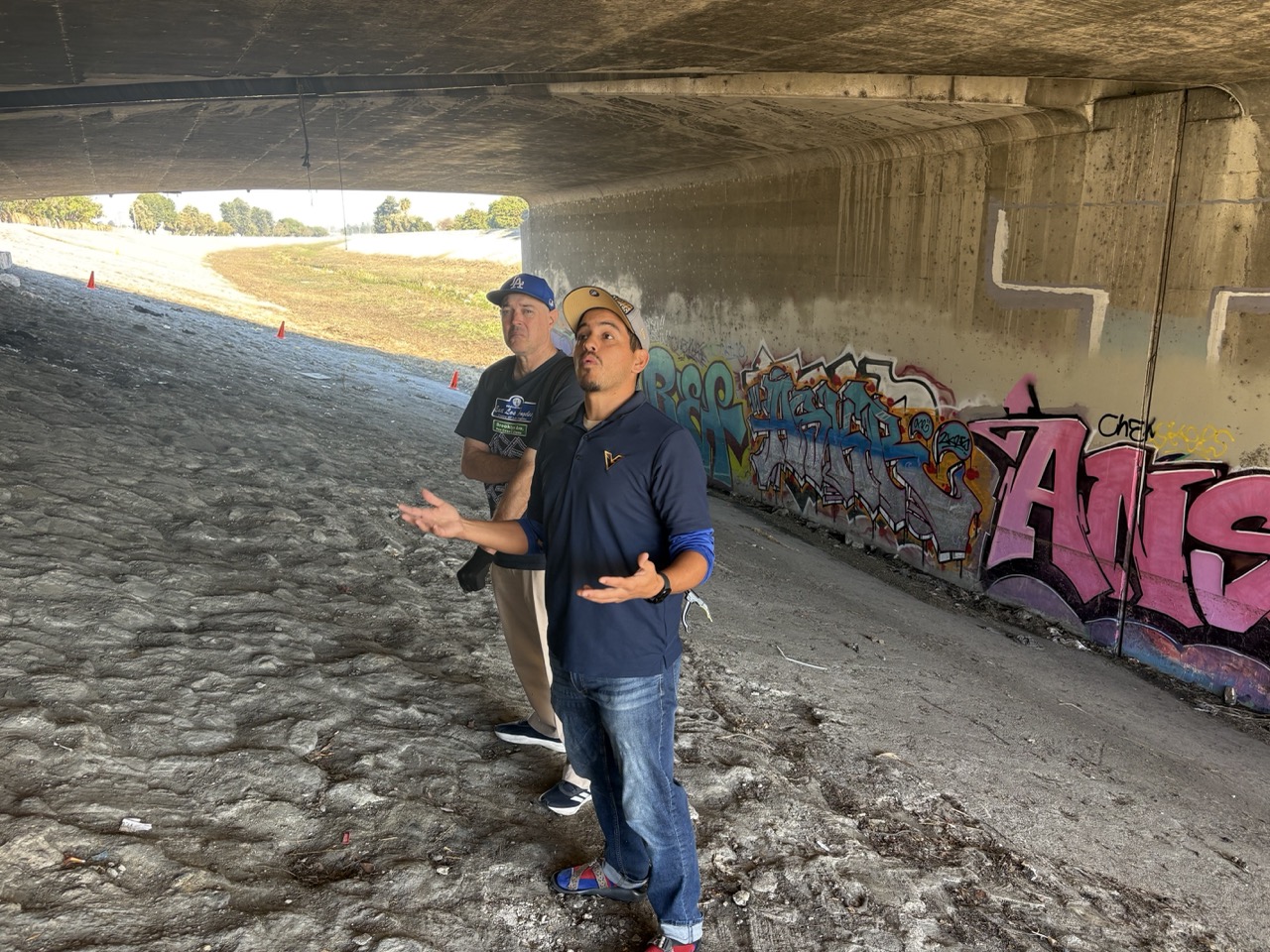
Collaboration means colleagues accompanying us too. Each morning we were joined by other teachers including English teachers Jonathan Procopio and Nathan Rivas, math teacher Jesus Arzapolo and science teacher Marco Orendein. “It was a joy to accompany students to Compton Creek,” Orendein says. “I was impressed by their willingness to take care of our city. As an environmental science teacher, I was equally impressed by life’s vigor to exist. Despite the litter, poor sunlight, and clear lack of attention, Compton Creek is full of life.” Orendein is from Dallas/Fort Worth and he’s moving back to Texas next year where he intends to do a similar campaign on the Trinity River, a 710-mile waterway running from Northern Texas through Fort Worth all the way to the Gulf of Mexico.
Education factors in when we cover the creek’s history. Marco Orendein points out plant life: “Ragweed, creeping charlie, chickweed, and dandelions live up and down the creek. Vascular or nonvascular, it didn’t matter. Life persists. It finds a way.” Many of our students are from Compton including Santiago Padilla and Richard Hernandez.When they learn about the vegetation and creek’s backstory, it astounds them. Though most of the creek is channelized concrete, its mere existence personifies one of L.A.’s central dichotomies of man versus nature.
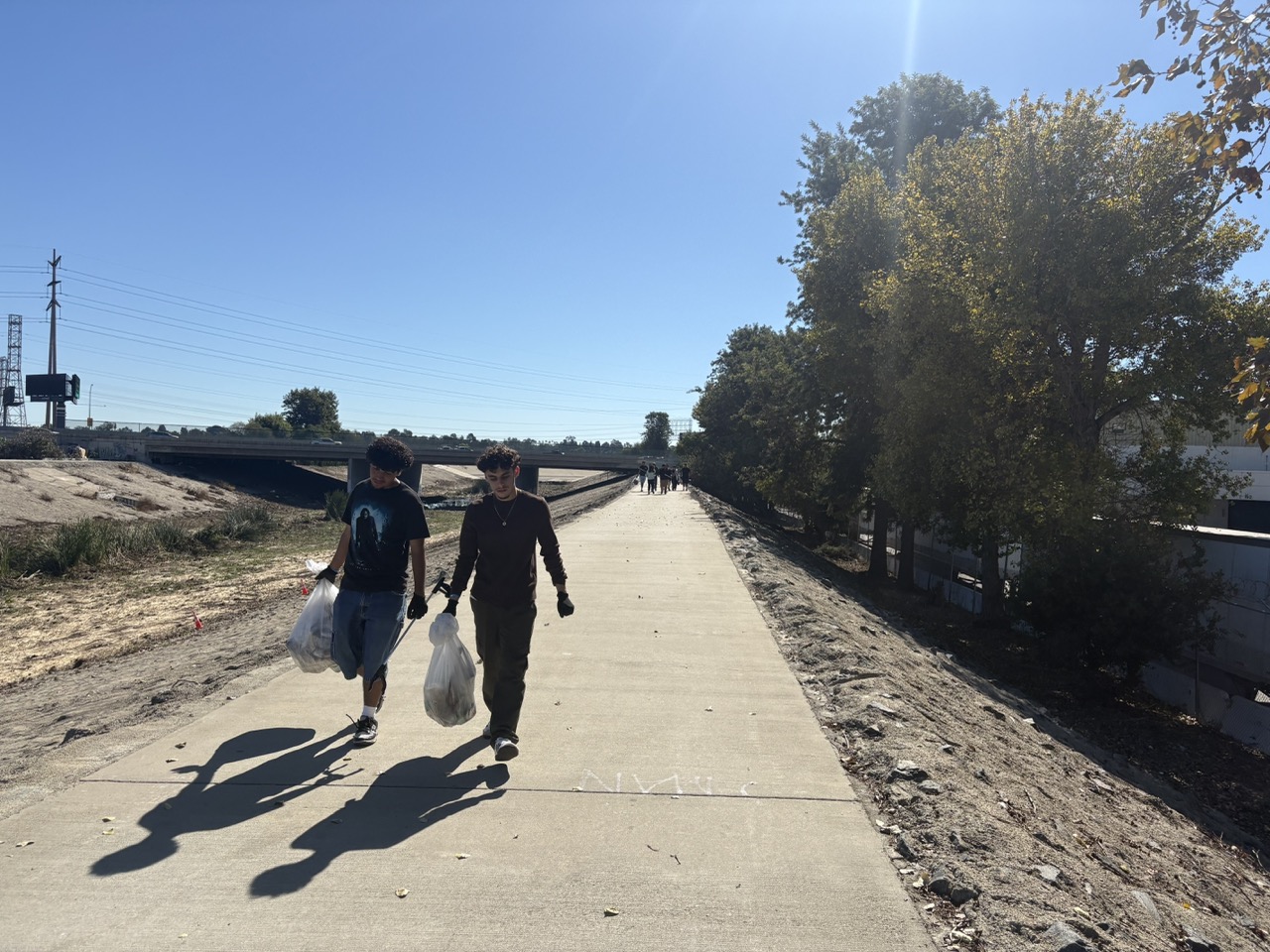
It’s a celebration because cleaning together we create a more hopeful future. In a city that’s tried to tame nature over and over again since its inception, the facticity of the river’s condition speaks volumes. In other words, even though Compton Creek is one of America’s most polluted waterways, it remains a sanctuary for migratory birds. Compton Creek reminds us that there is hope even in the midst of a tainted river.
There’s more celebration when students write poems after the clean up. We hold an impromptu open mic on the riverbank. Art has always been at the center of the Friends of the Los Angeles River because Lewis MacAdams wanted to make the invisible visible by reimagining the concrete channel as a natural, civic and cultural resource. When students write river poems then recite them, we are following FoLAR’s example, reimagining the creek making another world possible.
This sentiment is expressed perfectly by Santiago Padilla: “These people near us are all we got / so we are the future and change it / in the name of God / we all grew up nearby / and it’s up to us to make a difference.”
For Richard Lopez, it always comes back to service. He’s thrilled when students like Padilla get excited about making a difference. “The value of service seems to be the work on the heart more than the hands,” Lopez says. “How does one learn to create change, healing and restoration in a broken world? When we go forth and set the world on fire, we start with ourselves, we love a world within ourselves yet it looks like loving the earth outside.”
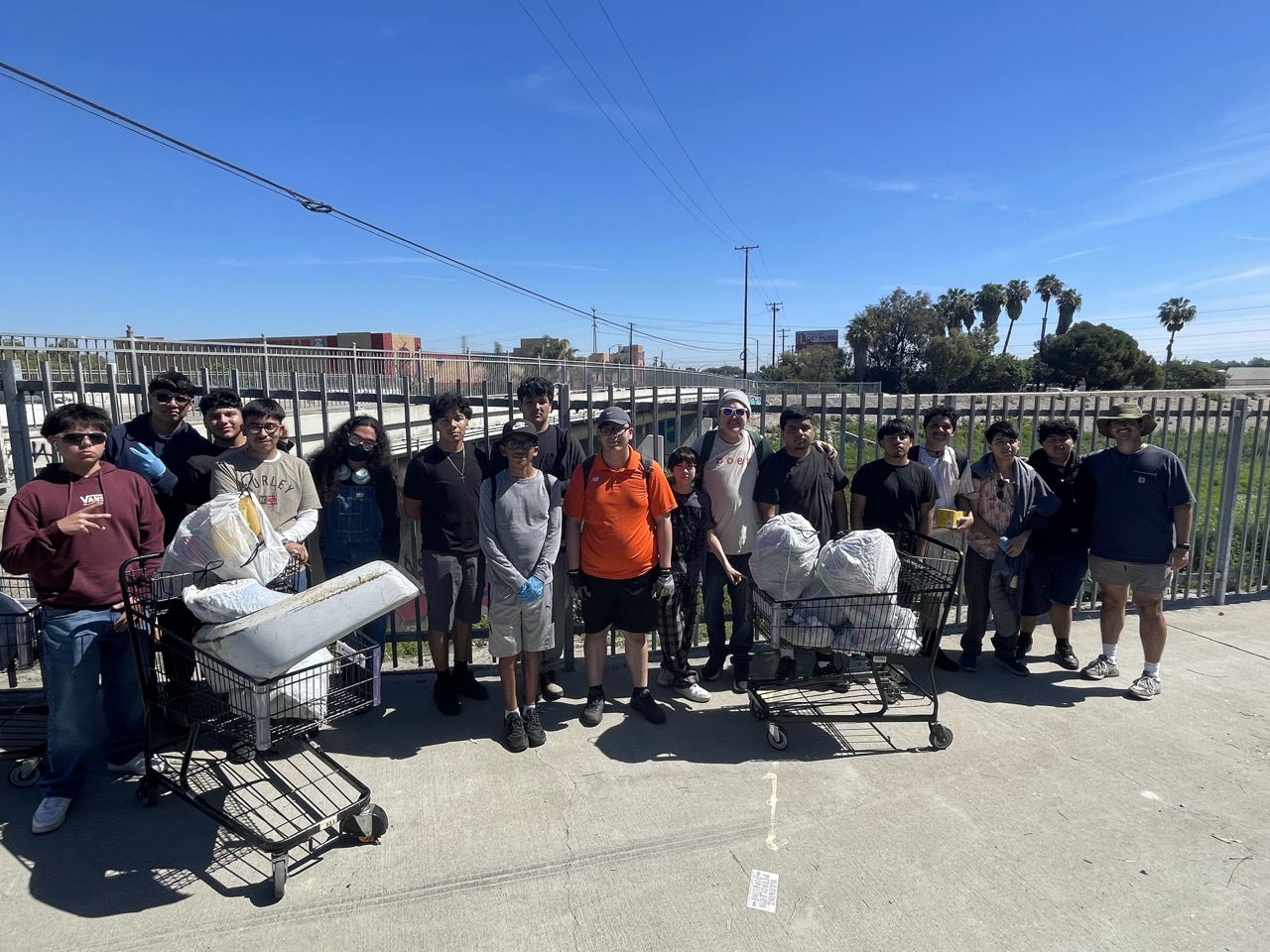
This is why Lopez sees service as the best education of all. He cares most about giving back. I concur wholeheartedly. The combination of collaboration, education and celebration made our Compton Creek trips among the most rewarding activities I have ever done as an educator.