


The world premiere of a new full-length Eugene Onegin opening San Francisco Ballet’s 2026 repertory season this week realizes choreographer Yuri Possohkov’s long-held dream project, stars two dancers sympatico with the choreographer, and extends San Francisco Ballet artistic director Tamara Rojo’s commitment to co-commissions designed to expand the audience for new ballets.
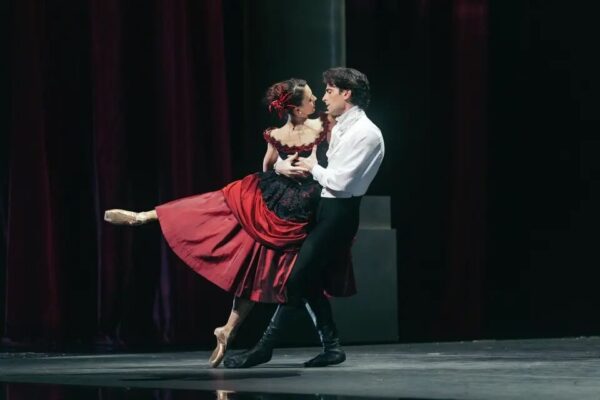
In February 2023, the choreographer’s last project, Tolstoy’s 800 page romantic tragedy Anna Karenina, took the stage as a full-length ballet co-commissioned by Chicago’s Joffrey Ballet and the Australian Ballet. Anna Karenina was an instant hit. Vocabulary in the effusive reviews included “stunning,” “cinematic,” “lush,” and capturing “the full emotional impact of the source novel.” That last evaluation is the target of the new Eugene Onegin.
Possokhov originally proposed Alexander Pushkin’s Eugene Onegin which had long been on his wish list, but Joffrey Ballet artistic director Ashley Wheater’s preference for Anna Karenina prevailed. The resulting success buoyed efforts for Eugene Onegin to be next. San Francisco Ballet, where Possohkov is resident choreographer, joined the Joffrey Ballet for the new co-commission. Assembling many of the team behind Anna Karenina, Possohkov’s full-length Eugene Onegin opens San Francisco Ballet’s 2026 repertory season from January 23 to February 1, and closes the Joffrey Ballet’s season, running from June 4 to 14.
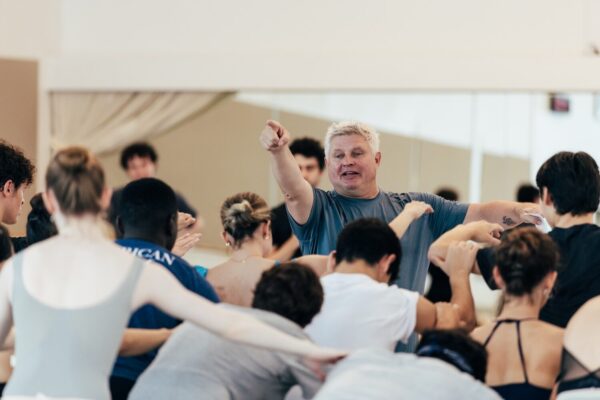
Raised in Russia, Possohkov’s reverence for Pushkin reflects how the author is venerated in Russia in terms comparable to Shakespeare in England or Goethe in Germany. Pushkin’s masterpiece verse novel focuses on Onegin, an aloof aristocrat, his poetic friend Lensky who is engaged to a vivacious Olga, and her older, bookish sister Tatiana. Their interwoven stories of love, rejection, tragedy, and remorse play out against a portrait of the culture and society of the early 19th century Russian Tsarist era.
In the U.S., Eugene Onegin is best known through Tchaikovsky’s opera and John Cranko’s popular 1965 ballet version which was part of San Francisco Ballet’s repertoire as recently as 2016.
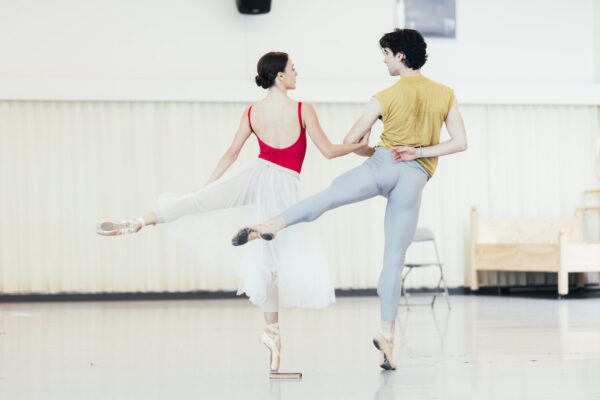
In a recent phone interview, San Francisco Ballet principal dancer Joseph Walsh who has danced Lensky in the Cranko version, talked about the challenges preparing for his new role as Onegin in the opening performance.
Walsh is quick to concede that Onegin is not an easy person to like and the question was how to tap into this kind of disconnected, nose-in-the-air kind of character.
“The clues first came when Yuri and I were working on the very first solo at the uncle’s funeral when Onegin inherits property. It only took watching Yuri do it once to understand where he wanted the character to lie in terms of movement and execution of movement,” Walsh recalled. “Then I had to keep in that zone of an interesting, out-of- towner who has a lot of weight to his name, who encounters a lot of preconceived notions coming from the city into the country, and finding that he has this power that he doesn’t necessarily have when he’s with the rest of the aristocrats that he normally spends his time with. I do think that within Yuri’s vision of him, Onegin is very clearly torn by whatever it is inside of him that is constricting or blocking or locking up his heart and his soul.”
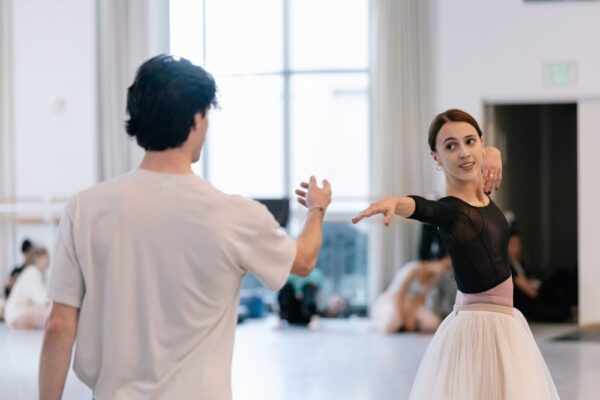
San Francisco Ballet First Soloist Katherine Barkman, who dances with Walsh as Tatiana at the premiere, found reasons explaining what draws the bookish, romantically inclined young woman to Onegin.
“I think, initially, probably his intelligence is the draw, because he does have a quiet intelligence to him. I think that’s attractive for her at that time in her life,” Barkman offered. “He is a man of the world, someone who is what she sees in her books, a view of the outside world. At this time period, it is very rare that a woman is reading to that extent, and the books that she’s reading are mind opening and mind expanding. She feels like he’s a match for that.”
Like Walsh, Barkman found keys to her character in the choreographer’s movement.
“Yuri is a choreographer of few words, in the best way. He’s very big on energy and emotion, and of course, movement, how the body expresses itself,” she added. “Tatiana is a huge arc of a woman in this ballet from the beginning to how she ends up in the end. The first rehearsal was creating the first meeting of Tatiana and Onegin, and I remember Yuri being very keen on the fact that she’s quite shy at first, into her romance novels, a dreamer, yet also intuitive. I think she sees a future that Onegin is not ready to see, so he rejects it. I think for Yuri, the purity of Tatiana’s youth was big for him.”
As a dancer at San Francisco Ballet, Possokhov knew the Cranko version, dancing the poet Lensky. Knowing the book in Russian, he felt there was more Onegin to be told. As he developed as a choreographer, Eugene Onegin remained an itch, that with this co-commission, he finally had the chance to scratch. He brought in several of his Anna Karenina team and at Rojo’s suggestion, added costume designer Tip Yip who designed Akram Khan’s ballet Giselle and was production designer on the film Crouching Tiger, Hidden Dragon.
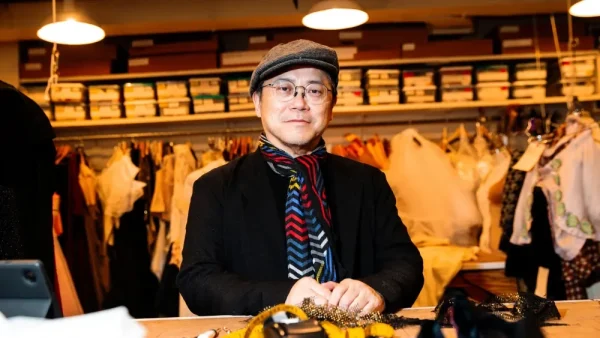
Drawing from the book, Possohkov’s new ballet includes Tatiana’s nightmares populated by beasts that prove premonitions of events to come. At a Guggenheim Works & Process event in November, sketches of Yip’s costumes reflected the seasonal changes in the ballet’s actions and included sketches of the masked beasts.
Walsh, who dances as a beast, admitted dancing in masks is always challenging.
“I find that in the mask I have to harken back to my time at art school, talking with my theater major friends learning mask technique, and I remember some of the goals and techniques that they were using. For me, it’s both embracing the absurdity and also making sure that my movements are slow enough that the whole body is reacting, not just my head snapping or wobbling like a bobble head or knocking the head off.”
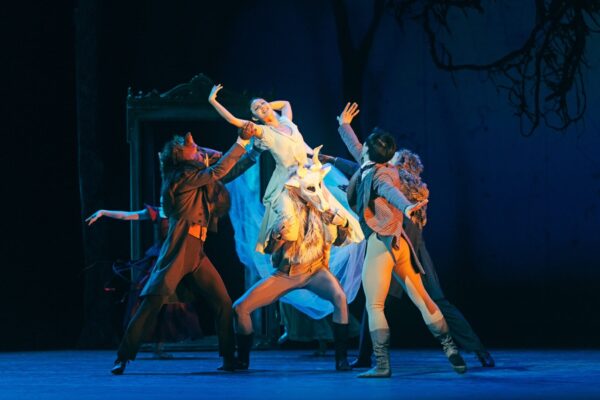
During the Guggenheim panel, Rojo pointed to ways that the beasts in Pushkin’s story echo other countries’ literature.
“One of the things I love about Russian literature is that it is a little bit similar to South American magical realism. Both have moments in dreams that are premonitions and they are very fantastical, often figures of either animals or religious things. Usually in Latin America, it is religious figures and in Russia, animals. I love the fact that there was room in this narrative for fantasy and these characters of Tatiana’s nightmares,” Rojo explained.
To capture the essence of Pushkin’s verse in a ballet libretto, playwright Valeriy Pecheykin who tamed Tolstoy for Anna Karenina and frequent Possohkov composer Ilya Demutsky worked closely with the choreographer. Both are from Russia, and share the choreographer’s deep knowledge of the story.
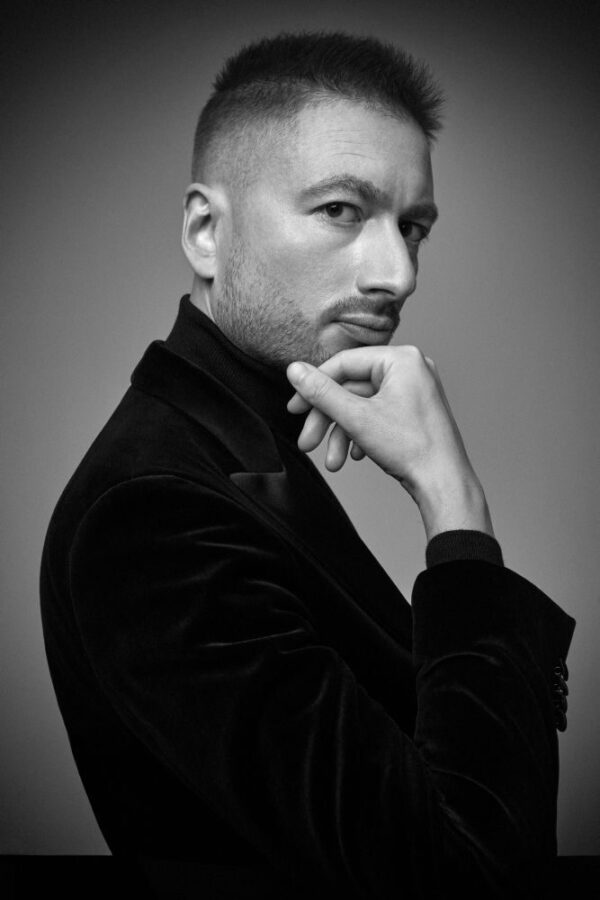
At the Guggenheim event, a panel included Rojo, Wheater, and San Francisco Ballet Music Director Martin West who described the ballet’s composer as one of the greatest talents he had come across.
“Demutsky’s music has this extraordinary ability to synthesize the past and the future,” West enthused. “And he has this incredible ability to take really simple themes and transform them over a period of time. So the inner feelings of the characters are made really clear in the music and then again later through the choreography.”
Walsh also observed the deep symbiosis between the composer and choreographer in evidence throughout the ballet’s creation.
“For Yuri and Ilya this book is in their DNA, plus they have a deep working relationship. Yuri only has to say very little, and Ilya comes back with this magnificently complicated score that has earworms that just stick with you. I’ve been humming and whistling, all of the bits to myself for months,” he admitted. “Then to hear it actualized with the first orchestra rehearsal brought so much more energy and anticipation into these moments that were quite still and scary and unclear, then suddenly we had clarity in the beauty of Ilya’s score.”
The co-commission involved each company raising half of the $2 million dollar budget to set the choreography, develop the music, make the costumes, everything except putting it on the stage. The running costs remain part of each company’s repertory season. At the Guggenheim event, Rojo pointed to the extended time the co-commission allocated for creating the ballet and creative ways she envisions future co-commissions.

“Most people think that for the performing arts the challenge is money, but actually, another thing to think about is time. Money and time are the two biggest challenges. Giving Yuri twice as many weeks of creative process has been an amazing gift. We’re also doing something different in that we’re doing a preview. Ballet companies almost never preview their performances. But this is something I learned in London,” she explained.
“As a performing art, our competition is not another ballet company, it is Broadway where they do six months of previews to refine a piece of work. Very often, ballet companies invest two to five million, and we give ourselves a day and a half in the theater before opening night. It is madness,” Rojo contended. “This time, we have allowed ourselves a whole week of technical rehearsals, a preview with an invited audience, and then more time after to do changes. I think when you have a partner, by taking away some of the pressure points of financial, and also time, ballet can do things better to make sure that the work we do reaches as many people as possible.”
San Francisco Ballet presents the World Premiere of Eugene Onegin at the San Francisco War Memorial Opera House, 301 Van Ness Ave., San Francisco, California; Fri., Jan. 23 & 30, 8 pm, Sat., Jan. 24 & 31, 2 & 8 pm, Sun., Jan. 25 & Feb. 1, 2 pm, Tues.-Thurs., Jan. 27-29, 7:30 pm. San Francisco Ballet.
Joffrey Ballet Chicago presents Eugene Onegin at Lyric Opera House, 20 N. Wacker Dr., Chicago, Illinois; Thur.-Fri., June 4-5 & 11-12, 7:30 pm, Sat., June 6 & 13, 2 & 7:30 pm, Sun., June 7 & 14, 2 pm. Joffrey Ballet Chicago.