


On a recent visit to Louisville, Kentucky, I was intrigued to learn the city had the largest contiguous collection of Victorian mansions in the United States. Being from California, I was familiar with the Queen Anne style, the gingerbread homes of San Francisco’s Haight-Ashbury and Los Angeles’ Angelino Heights. With that background, I assumed old Louisville would have similar homes. I was wrong.
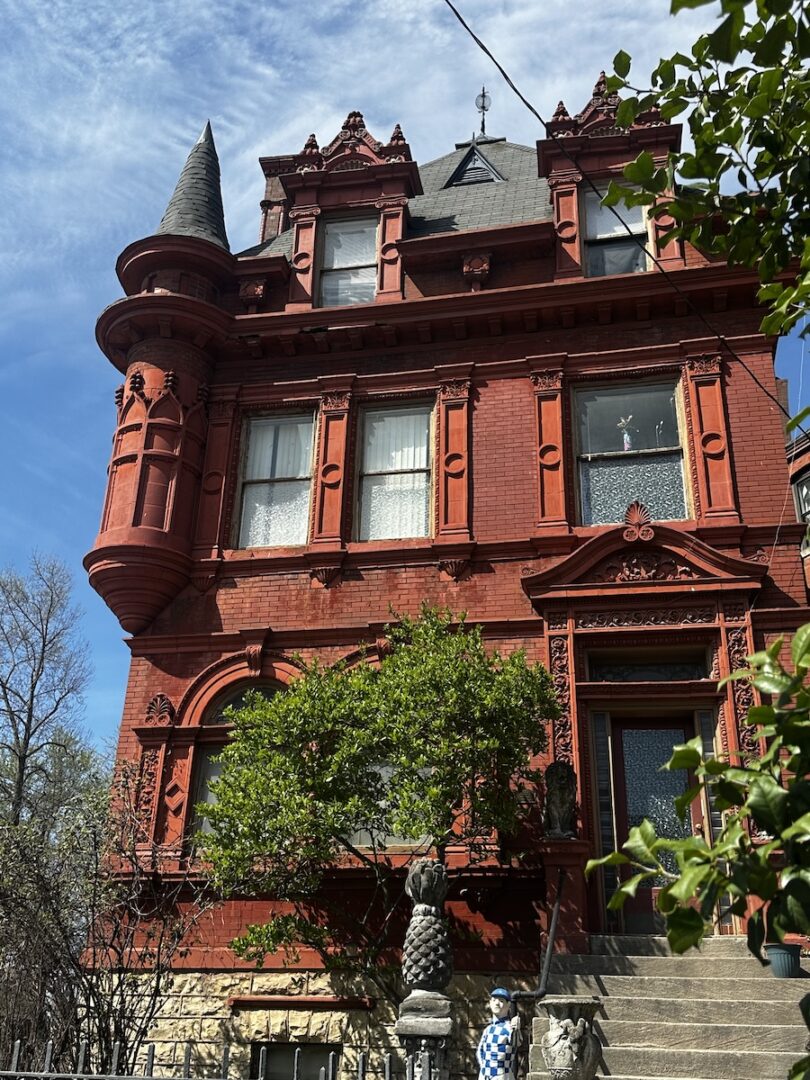
A Walking Tour of Old Louisville
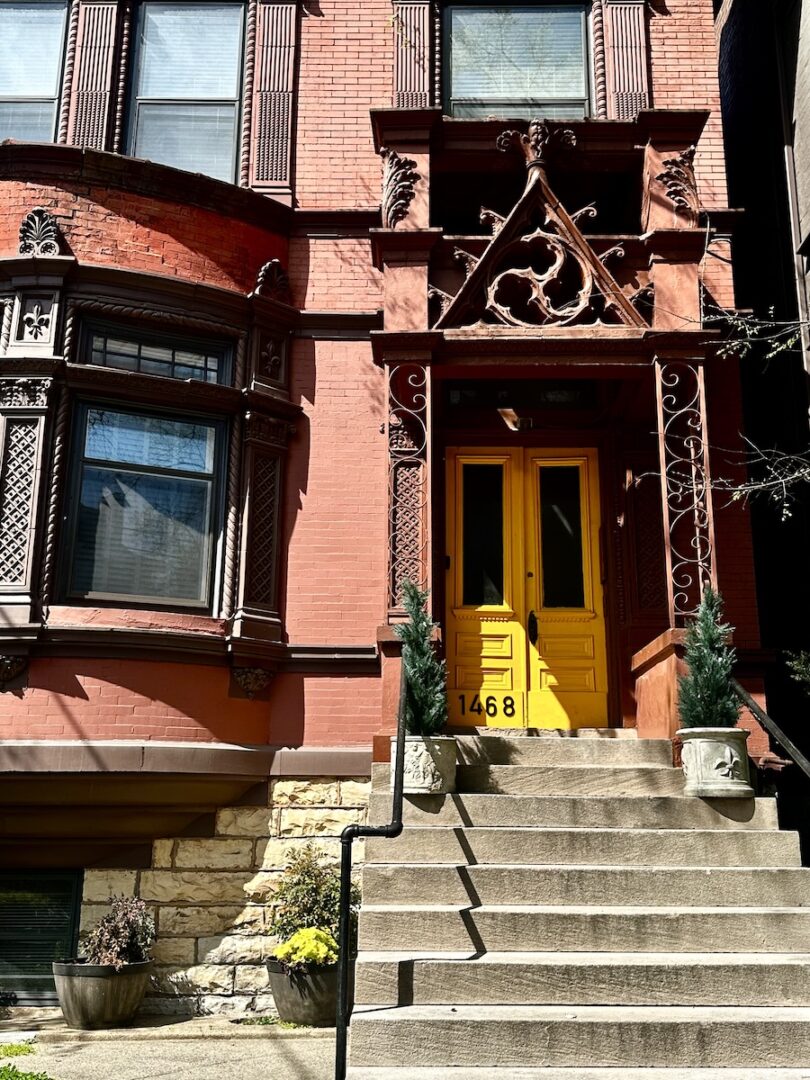
What I found on a walking tour were stone and brick homes, more along the lines of Italianate, Gothic, Châteauesque, Richardsonian Romanesque, and Beaux Arts. They were impressive—a sampling of more than a thousand 19th-century structures spread across about 45 city blocks. During that first Golden Age (we’re now solidly in the second Golden Age of conspicuous wealth), the area’s residents were mainly wealthy bourbon barons, the horse set, and tobacco titans. The appearance of tech moguls and crypto billionaires was still a long way off.
Where to start exploring the area? With a guide, of course. I chose author David Dominé, who runs Louisville Historic Tours. On a Sunday morning in late March, dogwood trees in bloom, Dominé ushered a dozen of us for a two-hour look at select parts of Old Louisville, replete with Louisville lore.
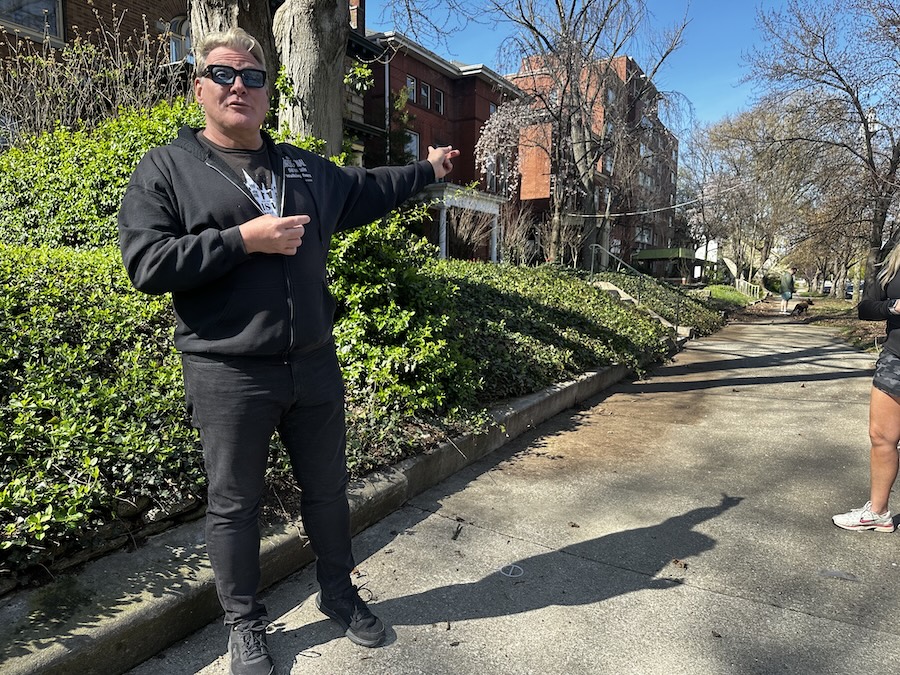
“Some are calling this the new Charleston or the new Savannah,” said Dominé in front of a striking block of homes. By the end of the tour, I was convinced the area could become just that. For now, however, the area still feels authentic—not too tarted up or precious; there’s a quiet majesty about the neighborhood.
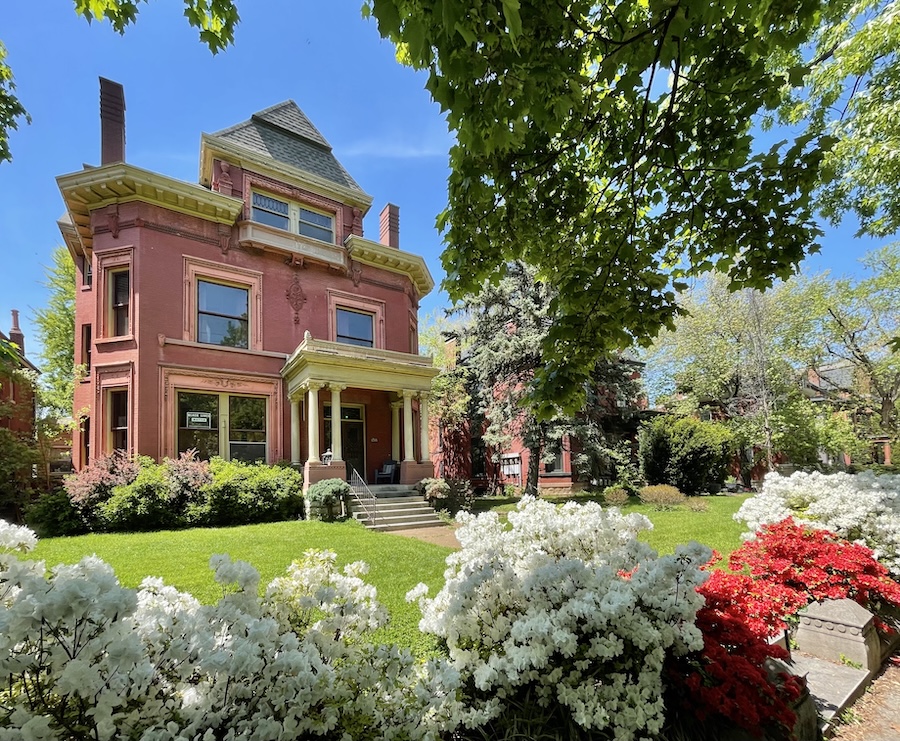
Dominé explained that the wealthy used higher-quality stone and brick to build their homes because they could afford it. That solved the Queen Anne mystery for me, but I did see a few homes with the style, but not the grand dames found in San Francisco and Los Angeles. “More like, princess style,” said Dominé, who authored the true-crime saga, A Dark Room in Glitter Ball City, which HBO recently released as a two-part documentary, Murder in Glitterball City.
The Disco Ball Capital of the World
I had no clue one of Louisville’s nicknames was “Glitterball City.” During the 1970s and 1980s, Louisville was the primary center for disco ball (glitterball) manufacturing. Omega National Products (now Omega Mirror Products) specialized in the mirror balls and theatrical effects equipment, supplying nightclubs, event venues, and productions. Far from New York City’s Studio 54, Louisville became “Disco Ball Capital of the World.”
I later discovered that the first patent for the “Myriad Reflector” was filed by a Kentuckian in 1917, which paved the way for the manufacturing boom of disco balls.
But by the late 1980s and into the 1990s, Chinese factories cut into production, churning out cheaper balls with wider size variations that were often bundled with lighting and motor kits.
Disco, alas, had become commodified.
But the Victorian homes have maintained their regal presence. Back on the tour, Dominé talked about what the neighborhood was like in previous decades.
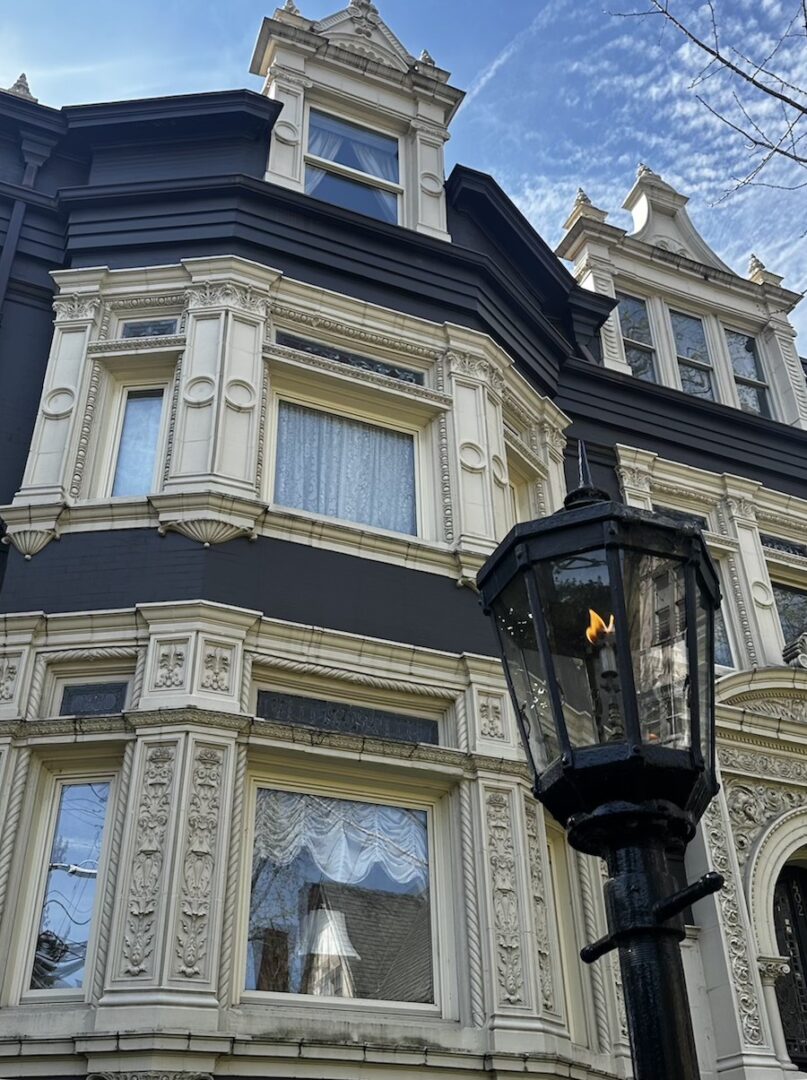
“In the 1970s, many of these homes were carved up into apartments or used as boarding houses,” Dominé said. The area was rougher, but by the mid-1990s, a restoration movement took hold. “Now, about 60-65% of homes are single-family again,” he said.
Shotgun Houses and More Victorians
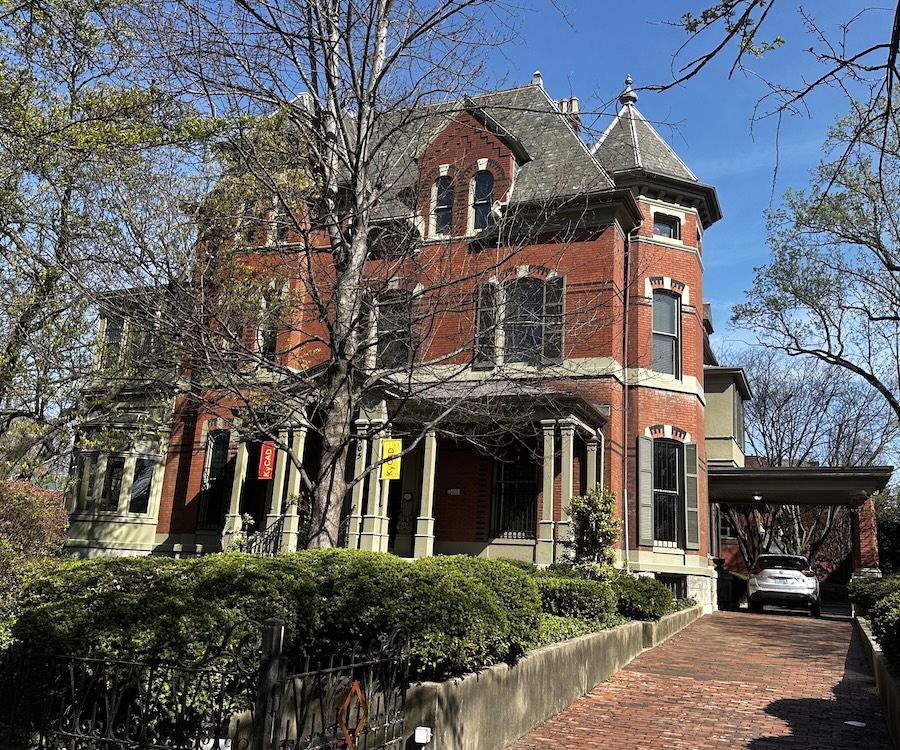
Dominé pointed out the J.B. Speed Mansion on 3rd Street, built in the late 1890s for James Breckinridge Speed, a wealthy industrialist. With its heavy stone exterior and rounded arches, it’s a standout example of Richardsonian Romanesque architecture. Across town, the Speed Art Museum, founded and funded by his wife, Hattie, in 1927, is the oldest and largest in Kentucky. During my stay, I visited and was impressed by the size. A $60 million expansion finished in 2016 has wholly modernized the museum.
Walking on, I was surprised that the architecture was so varied; one block can have eight to ten styles.
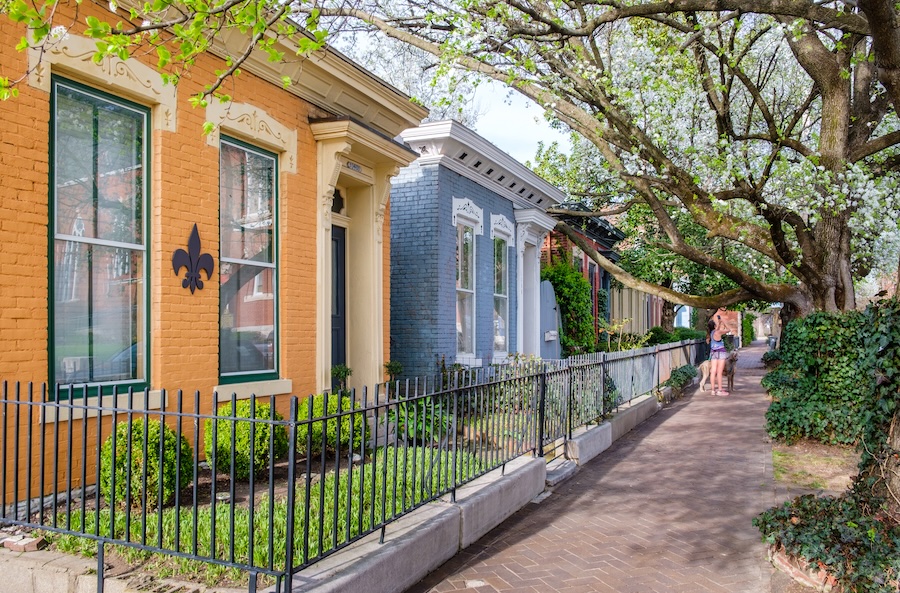
Amid the march of Victorians, I spied numerous shotgun houses along the tour—long homes with narrow rooms that proceed one behind the other with no hallways. They were built for working-class families who lived alongside the mansions. After Hurricane Katrina destroyed much of New Orleans’ shotgun housing stock, Louisville became the city with the most surviving shotgun houses of any other in the country.
The Witches’ Tree
Dominé paused at a gnarled tree hung with beads, bells, skeleton keys, and set with candles: the Witches’ Tree. I knew he was winding up to deliver a prime Louisville legend. The Osage orange tree grows—or half of it does, it’s seen better days—at the corner of Sixth Street and Park Avenue. Dominé explained that a maple once grew there, which was a gathering spot for a local coven in the late 1800s. City authorities didn’t cotton much to that scene, so they chopped the tree down for use as a Maypole. The witches cursed the city, saying eleven months would pass and then disaster would strike. It did, on March 27, 1890, when a tornado tore through downtown Louisville, killing about 100 people. The story goes that lightning struck the old stump, and then the current tree began growing in its place.
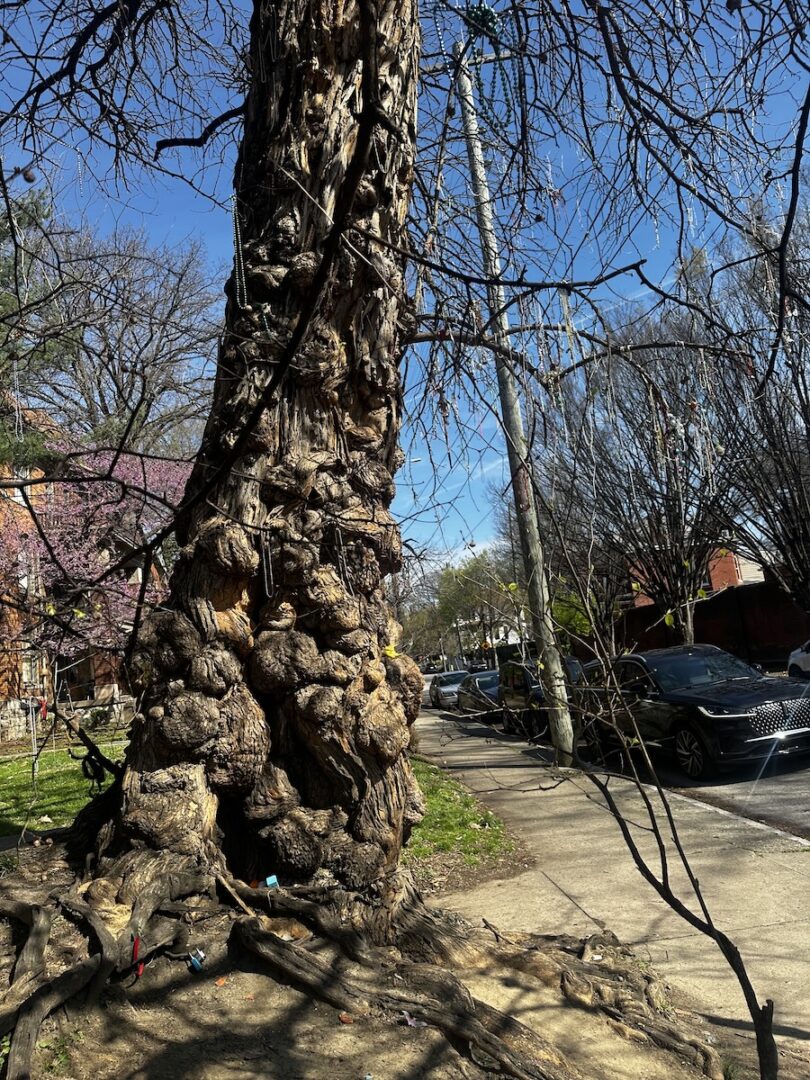
The 1890 tornado and subsequent deaths are true, but the origin of the current tree is an urban legend. “Today, witches and Wiccans still gather here,” said Dominé, adding that people leave trinkets for good luck.
The Grand St. James Court
Walking on, we came to St. James Court, a wide boulevard and promenade lined with Victorian homes. The area dates to about 1890.
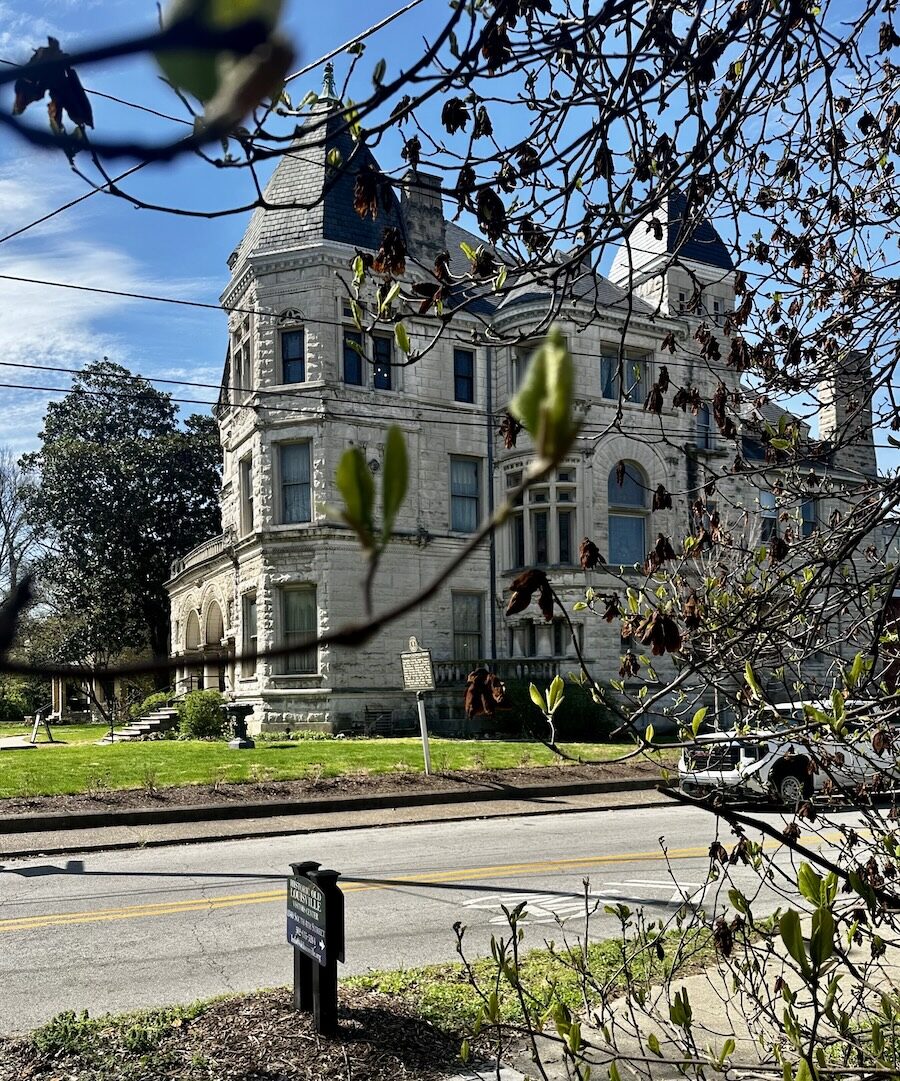
Dominé pointed out the Conrad-Caldwell House at 1402 St. James Court, known locally as Conrad’s Castle. Clarke & Loomis architects built the home in the Richardsonian Romanesque style, similar to the Speed Mansion. The home has massive archways, a few gargoyles, and intricate stone designs.
Further on, Belgravia Court, built the same year as St. James, is far more intimate with smaller homes lining a walking path set with gas lamps. It looks like something out of a romance novel, but without the syrupy trimmings. The Court was among the first pedestrian-only residential streets built in the United States.
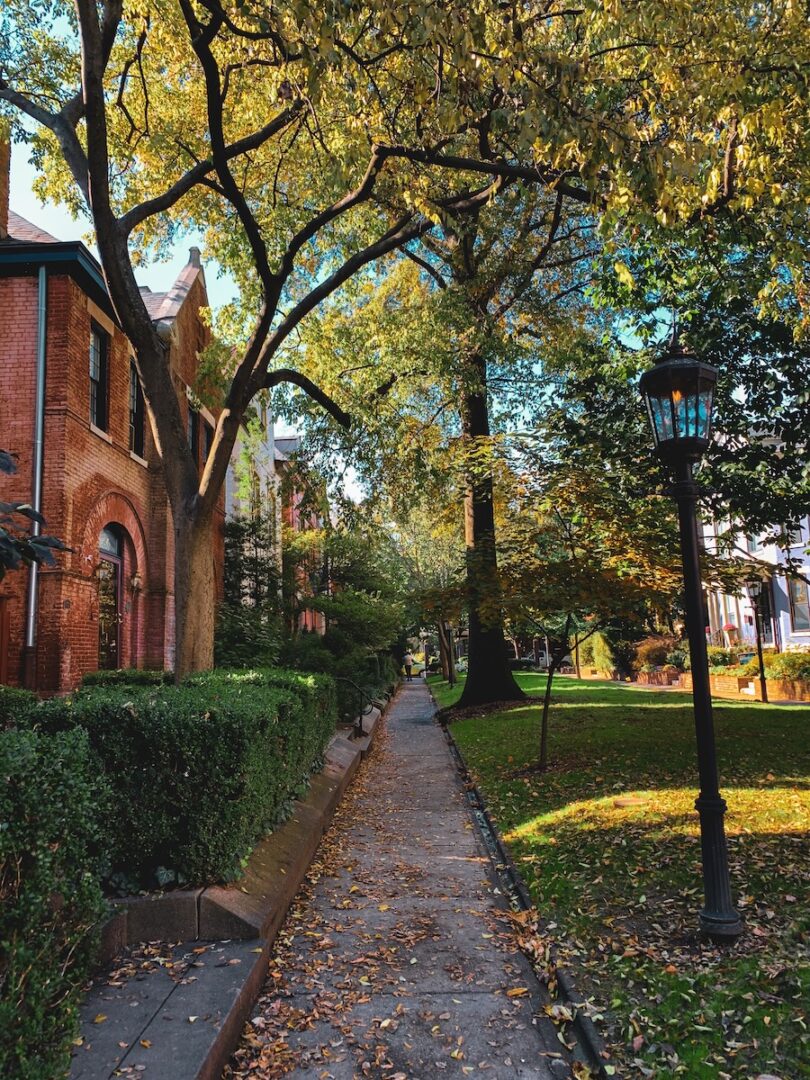
The area bursts with color and creativity each October at the St. James Court Art Show, which dates to 1957. The juried fine arts and contemporary crafts show features more than 600 artists from around the U.S. This year marks its 70th anniversary, held October 2-4, 2026.
Notables at Cave Hill Cemetery
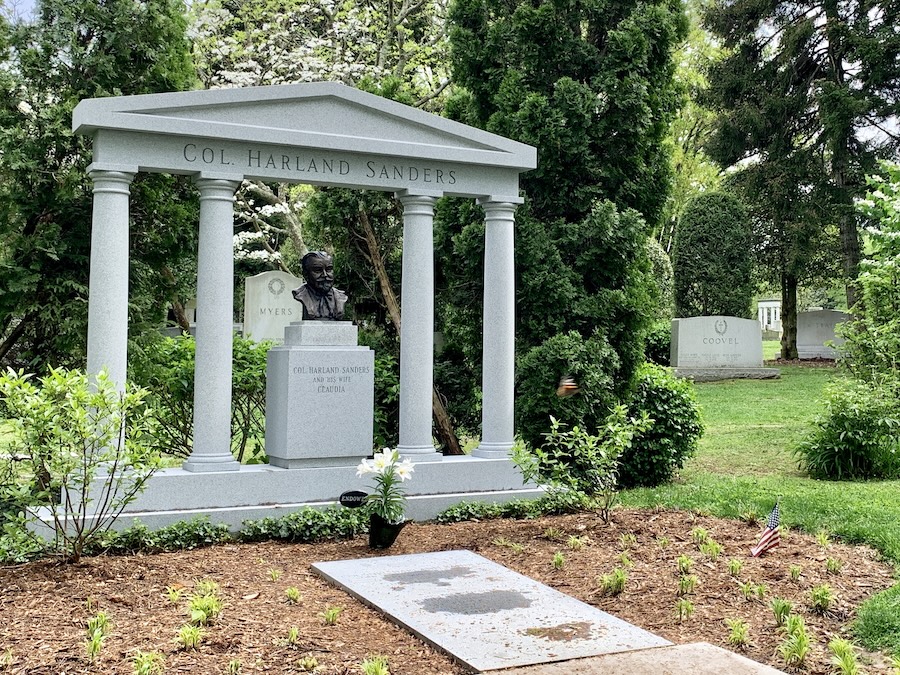
A short drive from Old Louisville, Cave Hill Cemetery is more than a burial ground—it was designed from the mid-1800s onward as a garden cemetery with winding paths, lakes, and ponds. The nearly 300 acres include gravestones and monuments for Muhammad Ali, Colonel Harland Sanders, and Pete Browning, whose cracked bat led directly to the creation of the Louisville Slugger. Also: Patty Hill and Mildred Hill, the sisters who composed the ubiquitous “Happy Birthday to You” song. It’s where the city gets one of its nicknames, “The Happy Birthday City.”
The Hip Highlands Neighborhood
On my last day in the city, a friend gave me a tour of the Highlands neighborhood that runs along a three-mile stretch of Bardstown Road, the city’s original Restaurant Row. I saw Victorian and Craftsman homes alongside shotgun houses—some being sold at a fraction of the price you’d find in Los Angeles. I learned that the Highlands is a stitched-together quilt of several smaller areas: Cherokee Triangle with its old money mansions; Original Highlands with shotgun houses next to Victorians; and also Deer Park, Bonnycastle, Belknap, and others.
The Highlands is considered Louisville’s cultural center, and it’s a funky, fun one with street art and murals, indie shops, offbeat businesses, and lots of nightlife. The highly walkable area harbors a blend of young professionals, creatives, and longtime residents.
The Dot Experience
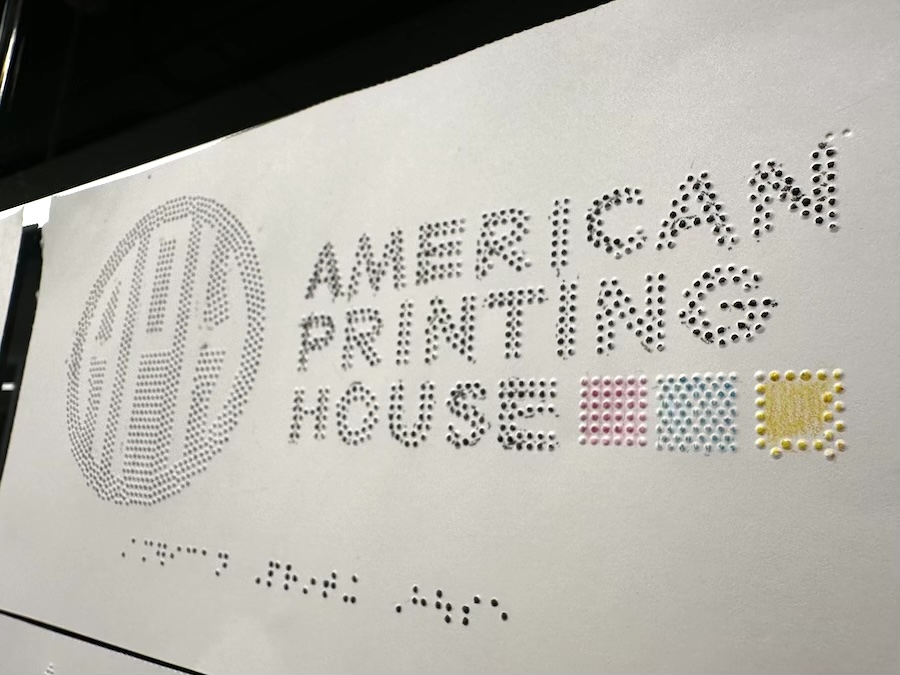
A few hours before my plane left for L.A., I snuck in a new museum, still under construction before its planned late October opening. The Dot Experience is billed as the world’s first attraction to make every exhibit, image, and artifact accessible to those who can’t view them. It’s done through the use of Braille, American Sign Language, visual descriptions, and tactile pathways.
Donning hard hats, a group of us toured the facility that’s still very much under construction—all told, it will span 28,000 square feet.
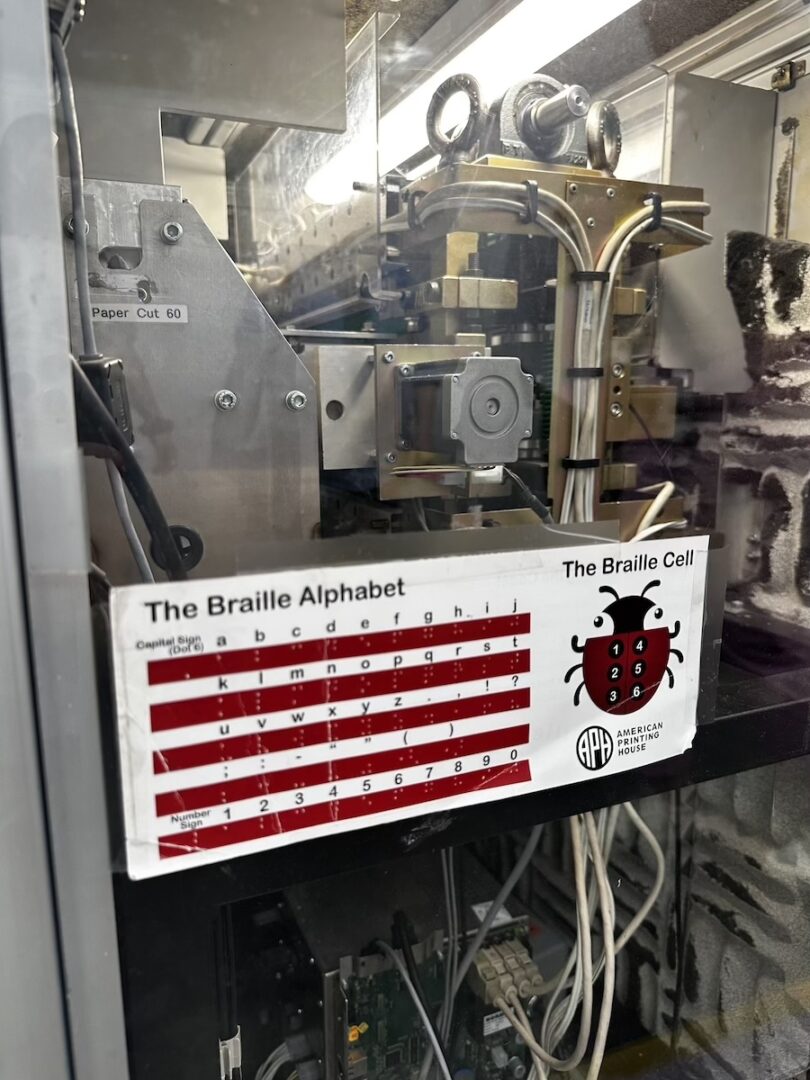
It’s anchored by an exhibit on Helen Keller. Visitors can touch a replica of the water pump that sparked her discovery of language, and explore original documents, images, and personal objects. Other exhibits include a piano once played by Stevie Wonder and artifacts tracing the lives of people who are blind or have low vision.
“There’s no place you can go where every word that’s written on a sign is also shown in Braille,” said Jo Haas, head of museum advancement for the American Printing House for the Blind (APH), which is adjacent to the Dot Experience. “Every object that’s behind glass will have a tactile companion piece. We do that not just because blind people can’t see, but because touch is a human experience, the single most powerful way that people learn about the world around them.”
The new museum will explore a variety of methodologies beyond Braille, including tactile flooring and tactile QR codes that convert text to speech.
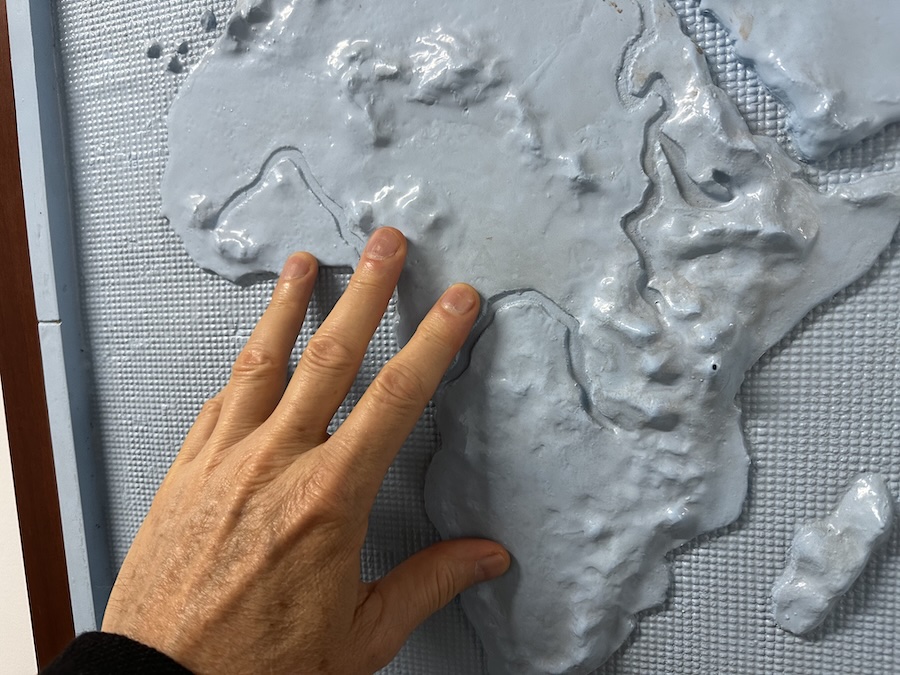
One intriguing exhibit will help sighted people know what it’s like to use a walking cane, far beyond just navigating down a hallway with one.
Experiencing a Walking Cane
“We’ll show how a cane is a tool that conveys information, like vibration and various sounds that are based on what a cane is made of,” said Haas. “People will be able to hold a cane and feel and hear surfaces that it touches. We’ll have four or five different cane tips that can be placed on rigid, concrete, carpeted, and tile surfaces. Each surface conveys different sets of information that blind people are acutely tuned to.”
Walking through the museum, which was still in the sheet rock phase, I remembered my first job in Los Angeles at age 21. I worked as a reader-advisor for the Braille Institute on Vermont Avenue. Intrigued with the community, I read most of Helen Keller’s books at the time, immersing myself in the culture. Walking through Dot Experience, even without the exhibits up, felt like a full-circle moment.

“The Helen Keller exhibit has more objects behind glass than in any other area,” said Haas. “With everything that’s behind glass, there will be a full-blown tactile replica. But those tactile replicas are made of a resin composite material, which doesn’t give you any information about materiality—the weight and feel. So we’re creating materiality swatches people can touch to give them further information. They’ll convey the feel of porcelain, leather, and so forth.”
Next to the museum, the American Printing House for the Blind operates a large manufacturing plant. It’s the world’s oldest such organization, based in Louisville since 1858. APH is the official supplier of accessible educational materials to students across the U.S. It’s funded in part by a federal program launched in 1879.
Next to the new museum and manufacturing plant stands the Kentucky School for the Blind, founded in 1842. By the late 19th century, Louisville had become a national hub for blind education; the demand for books led to the creation of APH. Before places like APH existed, Braille books were produced by hand, which was a slow process; APH scaled the production.
I was surprised to learn of Louisville’s long history with educating the blind—and also delighted given my brief encounter with blind education in my early 20s. For a city that trades heavily on bourbon and horse racing, I found it to be a meaningful addition to the cultural inventory.