


River That Belongs to Us: On paulA neves’s Passaic
Passaic
by paulA neves
Get Fresh Books, 2025
$20 (paper)
April 2025
910 words
*
I grew up by the Tejo, the river that cuts Lisbon open and holds it together. A cultural vein of the city, the Tejo is a presence that enters language and song as naturally as breath. Poets lean over it. Fado singers give it grief and praise in the same line. Even Fernando Pessoa, who distrusted grand narratives, could not resist measuring himself against it.
O Tejo desce de Espanha
E o Tejo entra no mar em Portugal.
Toda a gente sabe isso.
Mas poucos sabem qual é o rio da minha aldeia
E para onde ele vai
E donde ele vem.
E por isso, porque pertence a menos gente,
É mais livre e maior o rio da minha aldeia.[1]
The Tejo, he writes through one of his heteronyms, Alberto Caeiro, belongs to everyone; his river belongs to memory, intimacy, and origin. Size, Pessoa teaches us, is never the point. Belonging is.
The Tejo descends from Spain
And the Tejo lets out to sea in Portugal.
Everyone knows this.
But few know about the river in my village.
And where it goes
And where it comes from.
And for that, because it belongs to fewer people,
The river in my village is freer and greater.[2]
When I moved to Newark at ten, I found myself standing beside another river: the Passaic. But unlike the Tejo, the Passaic arrived burdened with a different vocabulary: polluted, industrial, dead. It was not sung. It was not admired. It was something you crossed, skirted, warned against. If the Tejo was a river that invited metaphor, the Passaic seemed to resist it, weighed down by Superfund sites and histories of extraction. And yet, like Pessoa’s village river, the Passaic belonged fiercely to those who lived beside it, worked near it, loved around it. This was true even when the dominant culture insisted it was unlovable.
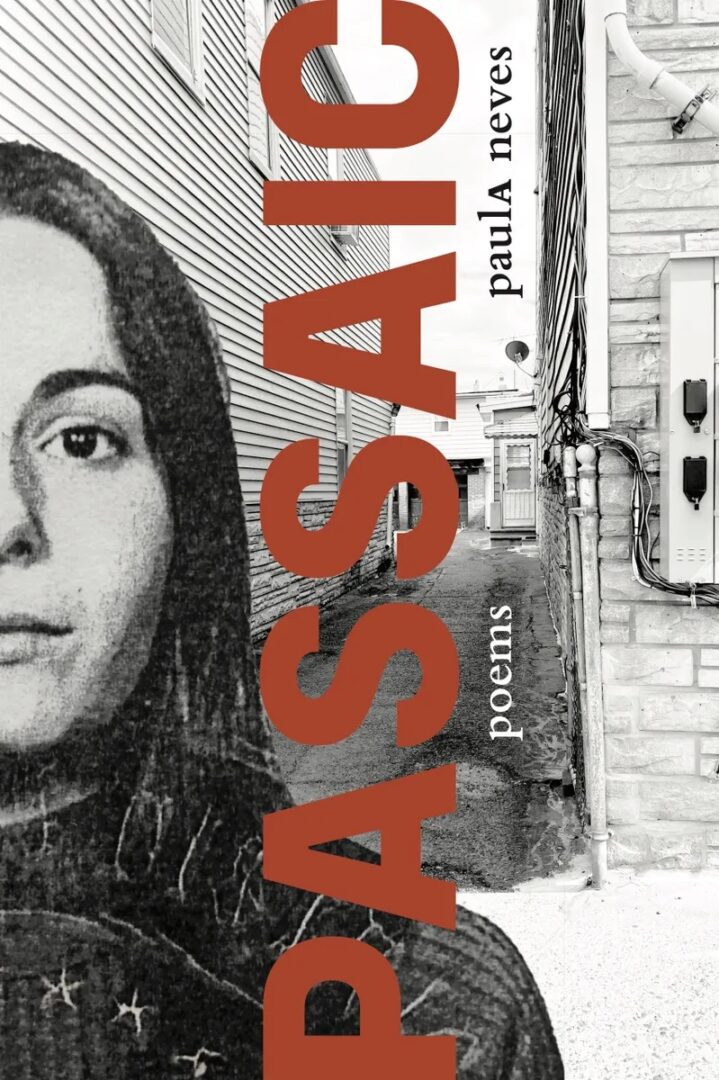
paulA neves’s Passaic is a corrective to that erasure. The collection insists on the river not as ruin but as a witness; not a boundary but a repository of names, labor, memory, and survival. From the opening poem, “Passaic,” neves establishes the river as a living archive. She braids Sunday fishermen, Ironbound[3] breezes, hooks caught in duck bills, chemical runoff, and erased histories into a single current. “How names were written on these currents,” she writes, anticipating a future in which developers will claim invention and ownership while the river remembers otherwise. The poem’s refrain, “Oceans rising, pray Passaic,” recasts the river as a sacred site whose fate is bound to our own.
What neves does so deftly throughout the collection is show how the Passaic is inseparable from the people who inhabit it; and how those people are, in turn, shaped by work. In “Three-Season Year,” labor becomes cyclical and improvisational: barbecues in summer and winter, wine made in basements, gardens planted almost as rumor. The poem resists sentimentality while honoring the ingenuity of working-class survival. Time is measured not in quarters or promotions but in smoke, weather, and repetition. Similarly, “Work” confronts the quiet humiliations and dignities of labor through a moment of denial at Burger King. The speaker’s refusal to acknowledge a mother at work opens into a deeper reckoning: “Not all work is work,” the mother says, a line that echoes across the collection as both warning and benediction.
Public spaces like parks, factories, and lunchrooms become moral landscapes in neves’s hands. “Independence Park” is especially resonant, rendering a neighborhood commons, known to the locals as Parque dos Mosquitos, where old men play malhas, wives worry through Mass and silence, and value is measured not by wages but by sunlight, ritual, and the fragile promise of Sundays. The park is not nostalgic; it is precarious, shadowed by factory closures and bodily risk. Yet it remains essential, a place where the community briefly coheres before dispersing back into labor: “to start over tomorrow, work and look forward / to chartered vacations too soon over.”
The river itself keeps reappearing, sometimes directly, sometimes through tributaries of memory. In poems like “Half Hour Lunch, Renco Toy Factory, 1969,” the Passaic becomes air, heat, and labor with women debating soup recipes while assembling America’s toys. Even when unnamed, “the dead river” saturates the collection, shaping immigrant geographies and emotional weather. In this sense, Passaic participates in a broader poetics of environmental justice without ever announcing itself as such. The poems understand that ecological damage and human exploitation are not parallel stories but the same one.
What makes Passaic so powerful is its refusal to flatten experience. Portuguese, English, and working-class vernaculars coexist without apology. Newark is neither romanticized nor dismissed. The collection understands that places like the Ironbound are built through accumulation of languages, of injuries, of small triumphs repeated over decades. neves preserves these layers with an archivist’s care and a poet’s ear.
In the end, Passaic reads as a love letter. Not a sentimental one, but a rigorous, clear-eyed offering to a place that has carried generations of newcomers and the old names they brought with them. It is a book that understands rivers the way Pessoa did: not by their grandeur, but by their intimacy. The Passaic, in neves’s telling, is a site of magic precisely because it has been overlooked. Because it has witnessed entire neighborhoods, eras, and languages being assembled into a new gospel of home. To read this collection is to learn how to belong to a place that never asked to be loved, but remembers who did.
***
[1] Caeiro, Alberto, Poesia (O Guardador de Rebanhos), ed. Fernando Cabral Martins, Richard Zenith. Lisboa: Assírio & Alvim, 2001, pp. 53-54
[2] My translation.
[3] The Ironbound is an immigrant community in Newark where Neves grew up. Many of the geographical references in the collection are to places in this neighborhood.
Purchase Passaic by paulA neves