


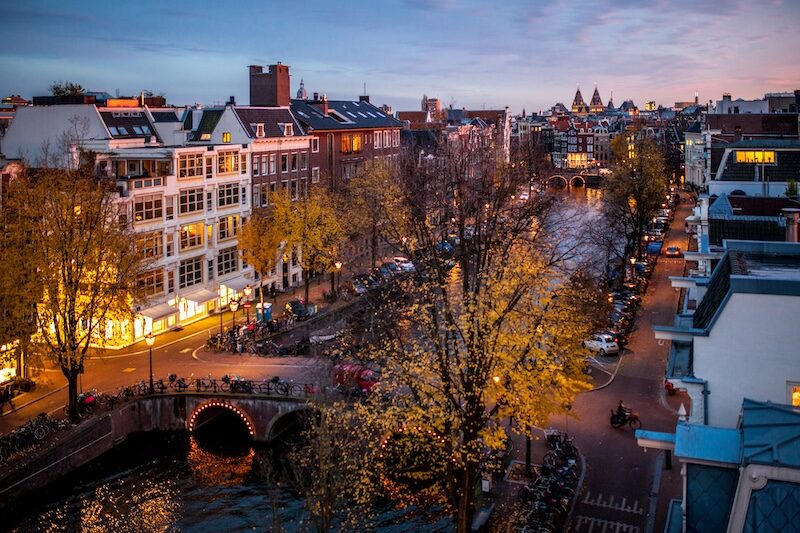
I had heard about Amsterdam’s De Negen Straatjes (The Nine Streets), a micro-neighborhood of cobblestone lanes that intersect the city’s grandest seventeenth-century canals. Some of the street names reflect trade that thrived there four centuries ago, especially leather tanning: Wolvenstraat (Wolf Street) and Huidenstraat (Skins Street).
The area is within the city’s Canal Belt, known as the Grachtengordel, a UNESCO World Heritage Site.
A Stone Theatre that Dates to 1638
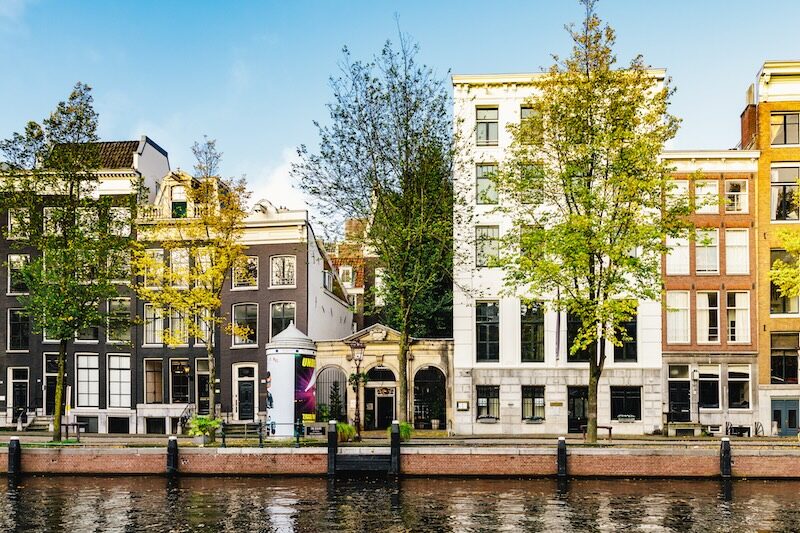
Located along the Keizersgracht, The Dylan Hotel embodies the essence of the area—the site was once occupied by the city’s first stone theatre, dating to 1638. Researching the building, I discovered that Antonio Vivaldi conducted the theatre’s orchestra when the establishment turned 100 in 1737. Decades later in 1772, a fire destroyed the theatre during a Flemish operetta performance. You can read a history timeline of the building here.

The current building dates to the late eighteenth-century; an annex was added in 2014.
The site became The Dylan in 2005, becoming a five-star boutique hotel. A recent multi-phase renovation saw 21 of its 41 rooms and suites renovated, along with other areas, including the property’s insulation and heating systems. The Dylan is in the Leading Hotels of the World collection.
After a 20-minute walk from Central Station, I arrived at the hotel, greeted by the original sandstone entrance gate, which had survived the fire. It’s inscribed with a quote from Joost van den Vondel (1587-1679), a well-known Dutch poet:

De wereld is een speeltoneel, elk speelt zijn rol en krijgt zijn deel
The quote fittingly commemorated the theatre’s opening: “‘All the world’s a stage, each plays his role and gets his share.”
The Hotel is Named After a Welsh Poet
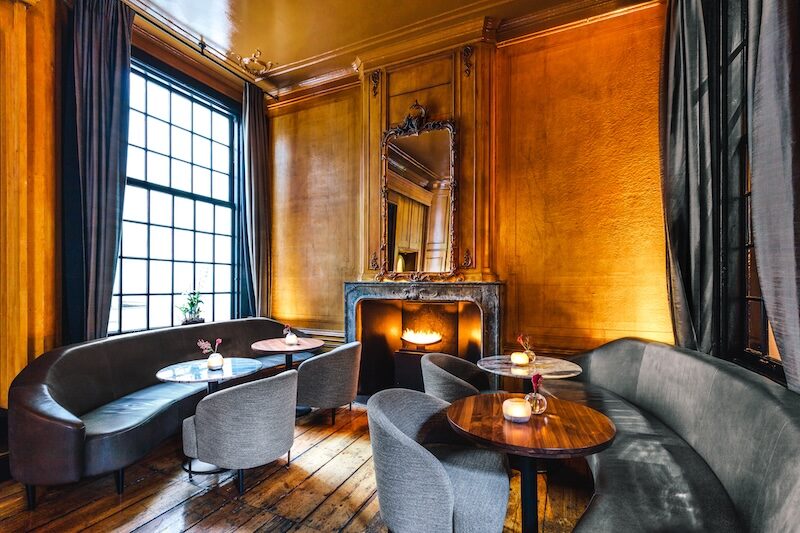
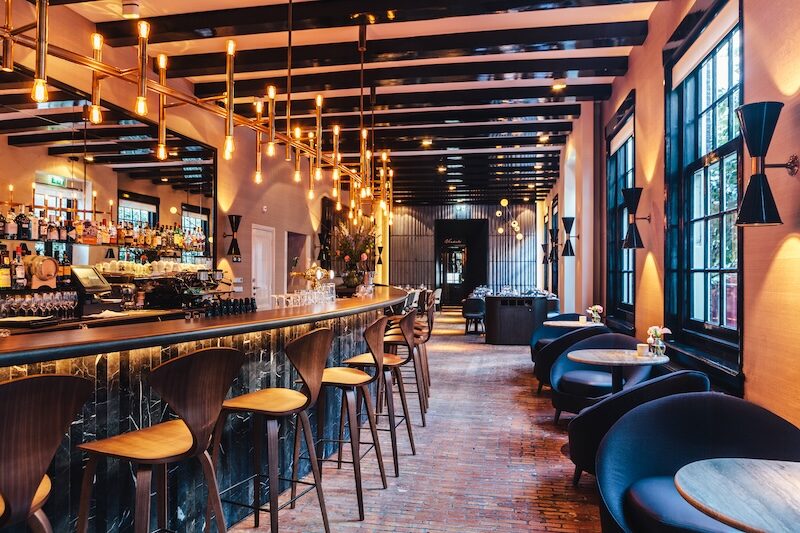
Inside those gates, concierge Ronald Flitz warmly greeted me beside the small lobby’s equally warm fireplace. The property had a venerable feel right from the start—the old wood and an attentive staff that was never overbearing. I was led through a hallway to a comfy sitting room with another fireplace, then through the Bar Brasserie OCCO with its brick floor and ceiling beams done in black lacquer. The beams are found throughout the hotel, their sleek look contrasted against the white. The style adds a smart accent to the property.
Flitz told me the hotel is named after the Welsh poet Dylan Thomas, in reference to when the site was a theatre, frequented by artists and writers. The property achieves a relaxed, refined artistic quality with nods to the past, like the velvet curtain that leads to its two-star Michelin Restaurant Vinkeles, recalling the site’s original theatre curtain.
(The restaurant is named for Reinier Vinkeles, an eighteenth-century Amsterdam printmaker who documented the city’s theatre culture—he drew the Keizersgracht with the entrance to the original stone theatre where the Dylan now stands.)
“What I like most about The Dylan is its history,” Flitz told me. “The story behind it, and that it retains a sense of warmth and welcoming. We have a lot of returning guests, which I think is one of the best compliments you can have. That’s got to do with the building, but also the people who work here, as well as the location, of course.”
The Dylan has Nine Room Types
The Dylan’s loft suites were renovated in late 2023, and I was set up in one. A few steps led up from the hallway, and another three steps led up to the front door. Once inside, a skinny, half-spiral staircase rose to the top. The experience is common to Amsterdam’s notoriously tall, narrow buildings.
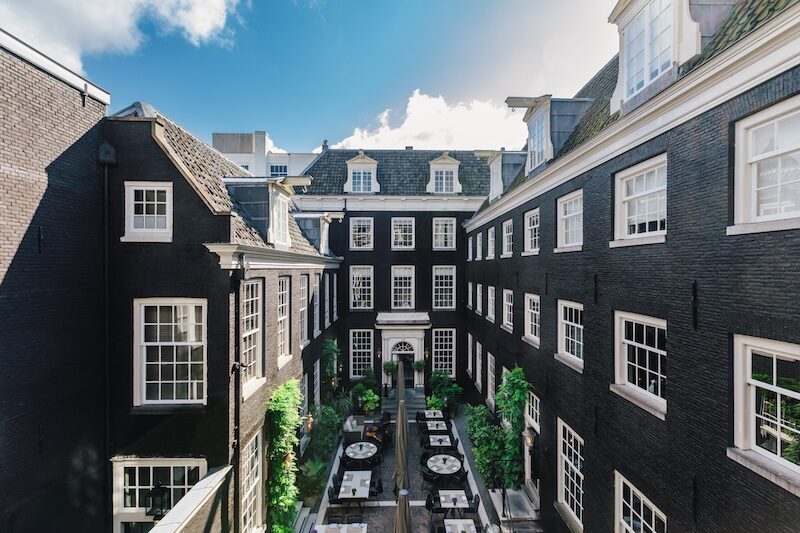
The loft was long and spacious, the A-frame wood structure exposed. A free-standing tub, along with sinks, a shower, and a toilet, was located at one end, and a lounge at the other. Windows looked out into the hotel’s courtyard, which is open for lunch, a drink, or dinner during the summer. The space also accommodates events up to 175, with weddings being especially popular.
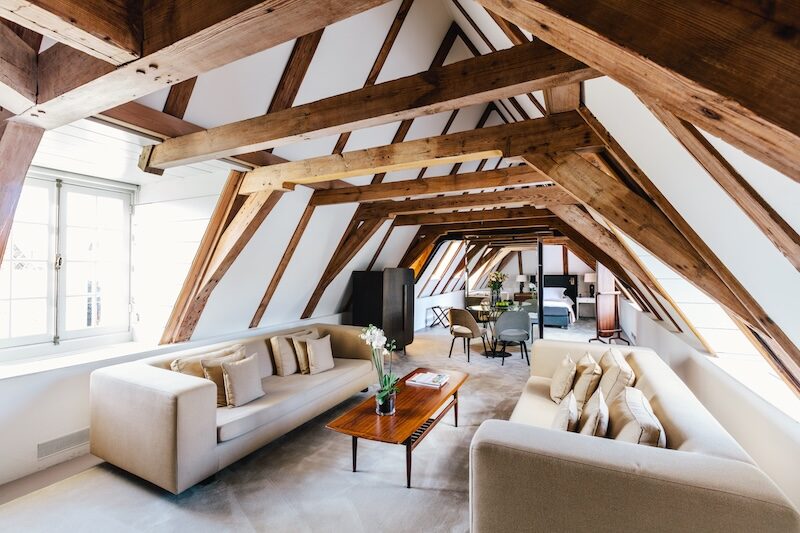
Two Amsterdam firms collaborated to achieve the hotel’s look: Studio Linse and Format Furniture. Studio Linse has designed gates for Amsterdam’s Schiphol Airport, and spaces in the city’s Rijksmuseum, along with London’s Royal Opera House. Format Furniture is known for its handcrafted interiors, some built by a lead craftsman named Riley, who’s featured on its site.
Along with the rooms, Studio Linse designed the hotel’s Bar Brasserie OCCO, and put finishing touches on Restaurant Vinkeles.
“Our aim is to create spaces that spark joy every time our clients walk in,” says Format Furniture’s craftsman Riley on the firm’s website. “Seeing their emotional reactions, even tears of happiness, is the greatest compliment we could ever receive.”
I didn’t cry tears of happiness when entering The Dylan’s loft suite, but I could imagine how some would, especially on the cold December days during my visit. The space has a cozy, cabin-like feel, and the effect is like hanging out in your best friend’s renovated attic, one with high style and modern conveniences.

Altogether, there are nine room types varying from single rooms to suites with garden or canal views. Their styles range from more authentically Amsterdam, like the loft suites, to modern styles. Some include wood drink cabinets designed for The Dylan, or custom pieces built from oakwood with quartzite tops. All luxury rooms have freestanding Vallone bathtubs.
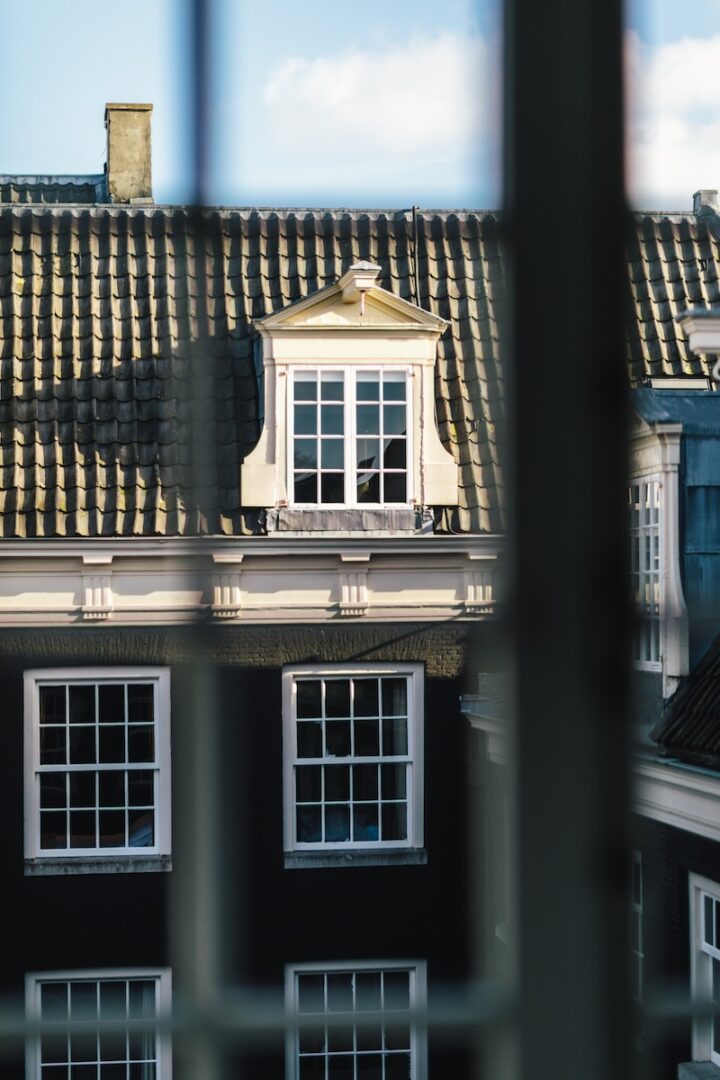
Other rooms were created by the Dutch interior designer Remy Meijers, who employed warm shades of brown and gray, ornamental molding, and soft carpets. Meijers designed the property’s annex, which was added in 2014; it was fully renovated in 2024.
Restaurant Vinkeles Was Once A 1700s Bakery
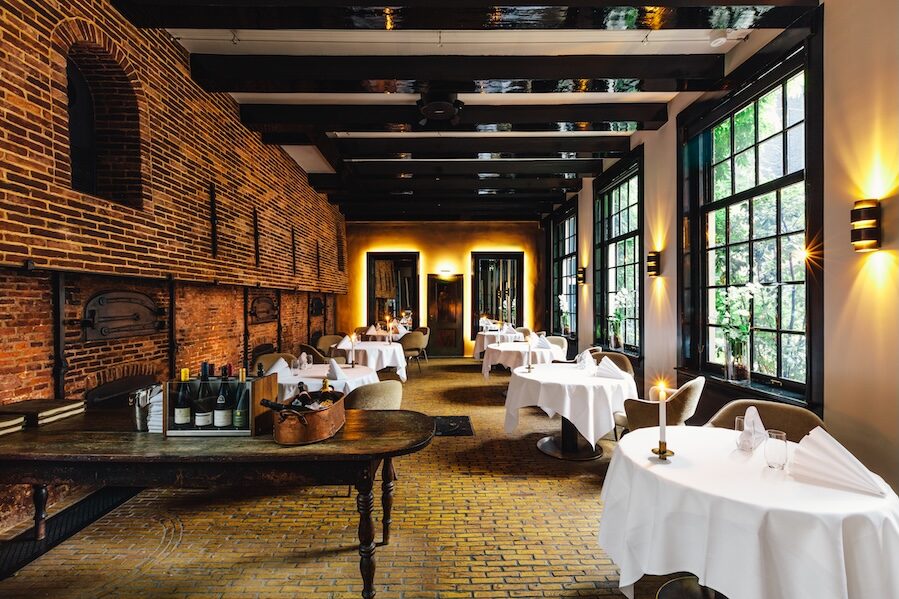
The breakfasts at Bar Brasserie OCCO had a good variety of choices, but the cuisine most come to The Dylan for is found at Restaurant Vinkeles, known for its French cuisine. The restaurant is located in a bakery built in 1787; a brick wall retains the original wood ovens that were used to bake rye bread for those in need. It’s a lovely historic detail, transporting diners partway into the eighteenth century. The bakery closed in 1811 and was discovered intact in 1975.
The restaurant’s executive chef, Jurgen van der Zalm, has been with The Dylan for an impressive 17 years. He leads a team of 22.
The chef calls dinner “the highlight of the day,” which requires “complete concentration, coordination, and intense attention to detail,” he says. “I oversee every dish and give it a final inspection before it’s served to the guests. Timing is everything, and I have to ensure that all courses are perfectly coordinated.”
Apart from the hotel’s standout cuisine, the area has some excellent restaurants. For a snack, try street food that’s around the corner: Fabel Friet, found at Runstraat 1. The shop serves thick-cut Dutch fries (never call them French fries) with savory toppings: parmesan, cheddar cheese, truffle, and spicy mayonnaise.
Renting a bike: the best way to see Amsterdam
With its central location, The Dylan is close to Dam Square, the Anne Frank House, the Rijksmuseum, and the Van Gogh Museum, among other main sites. I rented a bike to get around, always staying to the right as Amsterdammers are serious bike commuters—give them plenty of room.
I parked and locked my rented bike overnight outside The Dylan–on rails that bordered the Keizersgracht. Although it had good company (there were scores of similarly parked bikes around it), I later learned that it’s good practice to park in designated areas unless you want your two-wheeler carted off to the fietsdepot by local authorities.
The Dylan offers Roetz bikes for rental. Concierge Ronald Flitz recommends touring the nearby Jordaan neighborhood on a bike, or Oud Zuid, with its period architecture.
A City Card Offers a Gateway to Amsterdam
Taking a tram, bus, or metro is also convenient—the transport is included in the I amsterdam City Card, along with a one-day bike rental and access to more than 100 museums and attractions.
Besides the major museums, here are two other sites I recommend that lend an insightful glimpse into the city:
• The newly opened Suriname Museum is dedicated to Surinamese-Dutch culture and history, especially the Netherlands’ colonialist past and its role in the slavery trade.
• The Art Zoo, a showcase of Dutch taxidermy artists Jaap Sinke and Ferry Van Tongeren. The pair have elevated the art form to a rarefied height, resurrecting the passion of seventeenth-century Dutch painters with their striking displays.
_________
The Dylan Amsterdam is located at Keizersgracht 384 | + 31 20 530 2010 | hotel@dylanamsterdam.com