


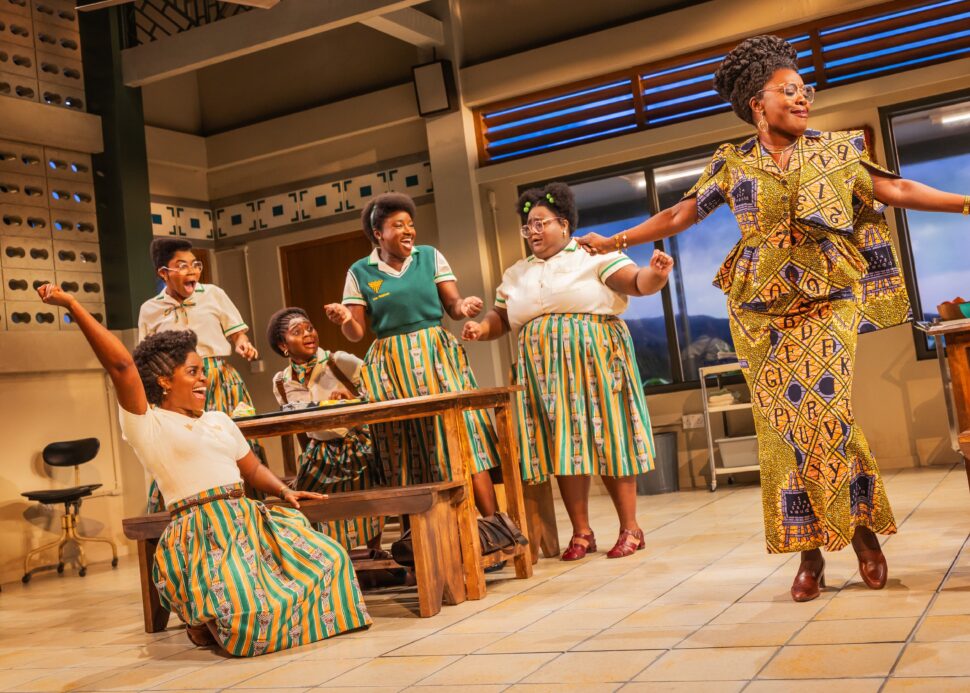
Jocelyn Bioh’s School Girls or, The African Mean Girls Play is much more than a variation on Tina Fey’s Mean Girls screenplay and musical adaption. Originally presented Off-Broadway at MCC Theater in 2017 and now in a vibrant, explosively comic Manhattan Theater Club revival on Broadway, Bioh’s clever play employs the basic template of a queen bee making life miserable for her classmates to explore themes of racism, colorism, sexism, and self-destructive behavior. She doesn’t merely transport the nasty power dynamics of Fey’s world and that of Heathers, the similar film comedy now running as a musical Off-Broadway, to an African setting. She gives individual riotous life to each of her characters and full vent to the issues that face them.
Credit: Matthew Murphy
Director Whitney White and a seamless ensemble deliver a rollercoaster of hilarity and pathos on a rollicking 80-minute ride. White’s tight and flavorful staging exhibits exquisite timing so that the laughs and the dramatic blows land solidly and build to a disturbing conclusion.
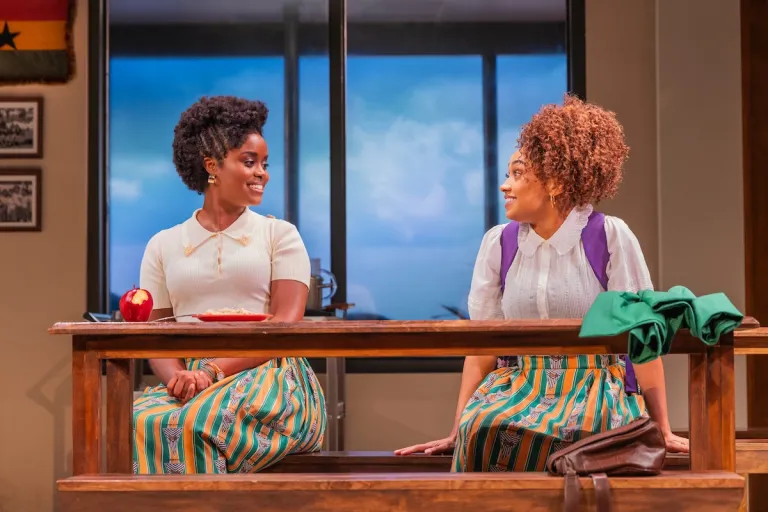
Set in a girls’ boarding school in 1986 Ghana and according to a playwright’s note inspired by real events, the plot revolves around the visit of a recruiter for an upcoming beauty contest. Bioh wisely rises the stakes of gaining a spot in a seemingly unimportant event like a pageant and makes the competition revealing of character and motivation. The main conflict is between dominating bully Paulina (enjoyably hissable Denee Benton) and new, friendlier girl from the States Ericka (steely Jasmine Amy Rogers).
Their struggles are more than skin deep, literally. The darker-skinned Paulina resents lighter-toned Ericka and applies toxic bleaching creams to “whiten” her complexion with damaging results. Despite her American advantages and wealthy family, we learn by play’s end Ericka is just as vulnerable and needy as Paulina. Benton and Rogers are equally versatile in conveying the shattered, vulnerable interiors of these seemingly combative social warriors.
Credit: Matthew Murphy
It’s particularly impressive to see how different these roles are from the actresses’ recent work. The Machiavellian Paulina is diametrically opposed from the altruistic, noble journalist Peggy Scott, the character Benton plays on HBO’s The Gilded Age. The confident Ericka is a far cry from the shy dictionary-lover Rogers enacted in the revival of The 25th Annual Putnam County Spelling and the cartoon-ish Betty Boop in that spoofy musical for which she won Drama Desk and Outer Critics Circle awards.
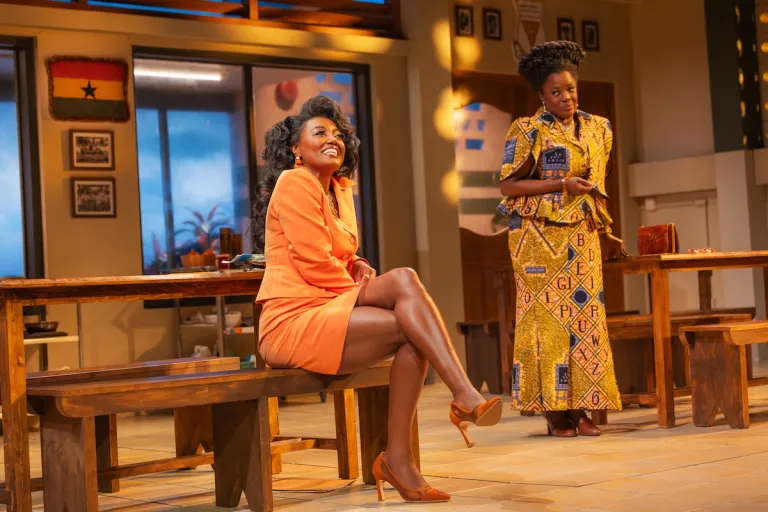
Paulina and Ericka’s clash is also reflected among the adults. Headmistress Francis (heroically commanding Heather Alicia Simms) desperately needs the funds that a winning contestant could generate and also roots for Paulina to represent and to boost self-esteem among her darker students. The recruiter Eloise Amponsah (comically shallow but ruthless Patina Miller) wants a lighter contestant to increase the chances of Ghana winning the overall Miss Global Universe crown and garnering her a promotion and higher salary. The ladies’ connection as former rival schoolmates adds to the tension.
Credit: Matthew Murphy
The additional characters are not merely supporting figures, but each has a personality and objective of her own. Heavy-set Nana strives to advance from the bottom of Paulina’s pecking order, enduring the bully’s body-shaming taunts, and eventually achieves self-determination. Erin Morton, who played a similar role in the musical version of Heathers, is heart-breaking and then triumphant. Likewise, Ama (ferocious and fierce Lucia Aremu) is tired of playing second fiddle to Paulina and ready to shed her lackey status. Cousins Mercy (bubbly Jordan Rice) and Gifty (endearing Nia Otchere-Sarfo) contend, respectively, with an overly frugal father and struggles with reading.
Qween Jean continues to reign as queen of costume designers, creating stunning pageant gowns, character-defining outfits, and appropriately dowdy school uniforms. Teresa L. Williams’ school-cafeteria set is open and flexible enough to denote several environments within the school. Stacey DeRosier’s painterly lighting shifts the mood from fantasy visions of beauty-contest glory to harsh reality, reflecting the journey Bioh takes us on from riotous comedy to uncomfortable observations on race, gender, class, and power plays.
School Girls or, The African Mean Girls Play. Sept. 28—Nov. 15. Manhattan Theater Club at Samuel J. Friedman Theater, 261 W. 47th St., NYC. Running time: 80 minutes with no intermission. telecharge.com.