


Dataland, at the Grand LA downtown, open to the public as of Saturday. June 20, is a most unusual museum in that its artworks are all virtual and AI generated.
The co-founders, Refik Anadol and his partner Efsun Erkilic, are both from Istanbul, Turkey, and for the past ten years they have been sharing a Los Angeles studio with a team of “wonderful minds.”
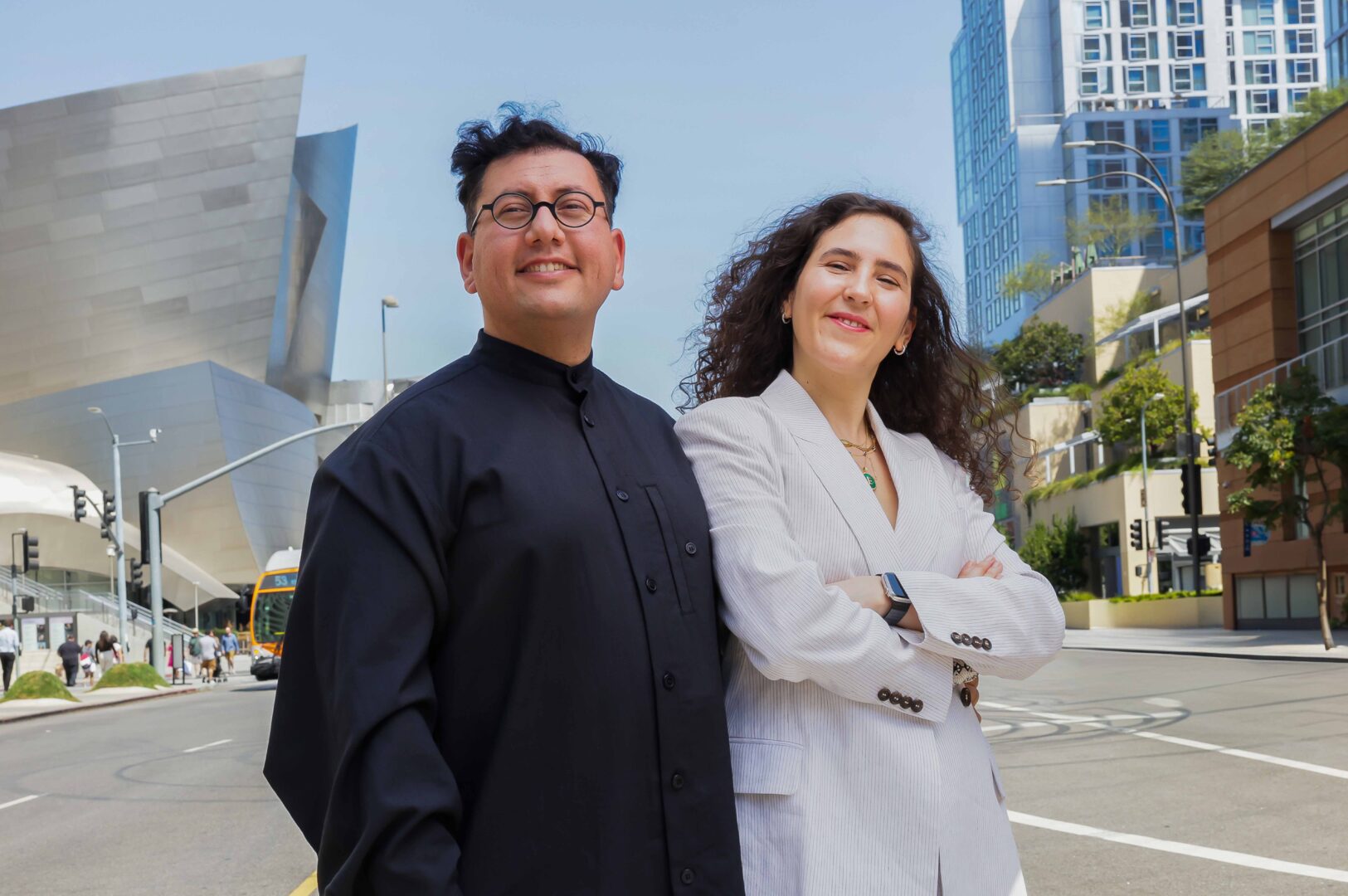
At the press preview of June 5, it’s Efsun who spoke first. She explained how it is fitting that Dataland be located on Grand Avenue, close to the other cultural institution: MOCA (Museum of Contemporary Arts), the Broad, Walt Disney Hall, and the Music Center, where works of art are exhibited, music and theater are performed.
Refik spoke next with great passion “from his heart” about the history of this groundbreaking project, “one of the world’s first institutions that truly understand the machine as a collaborator.”
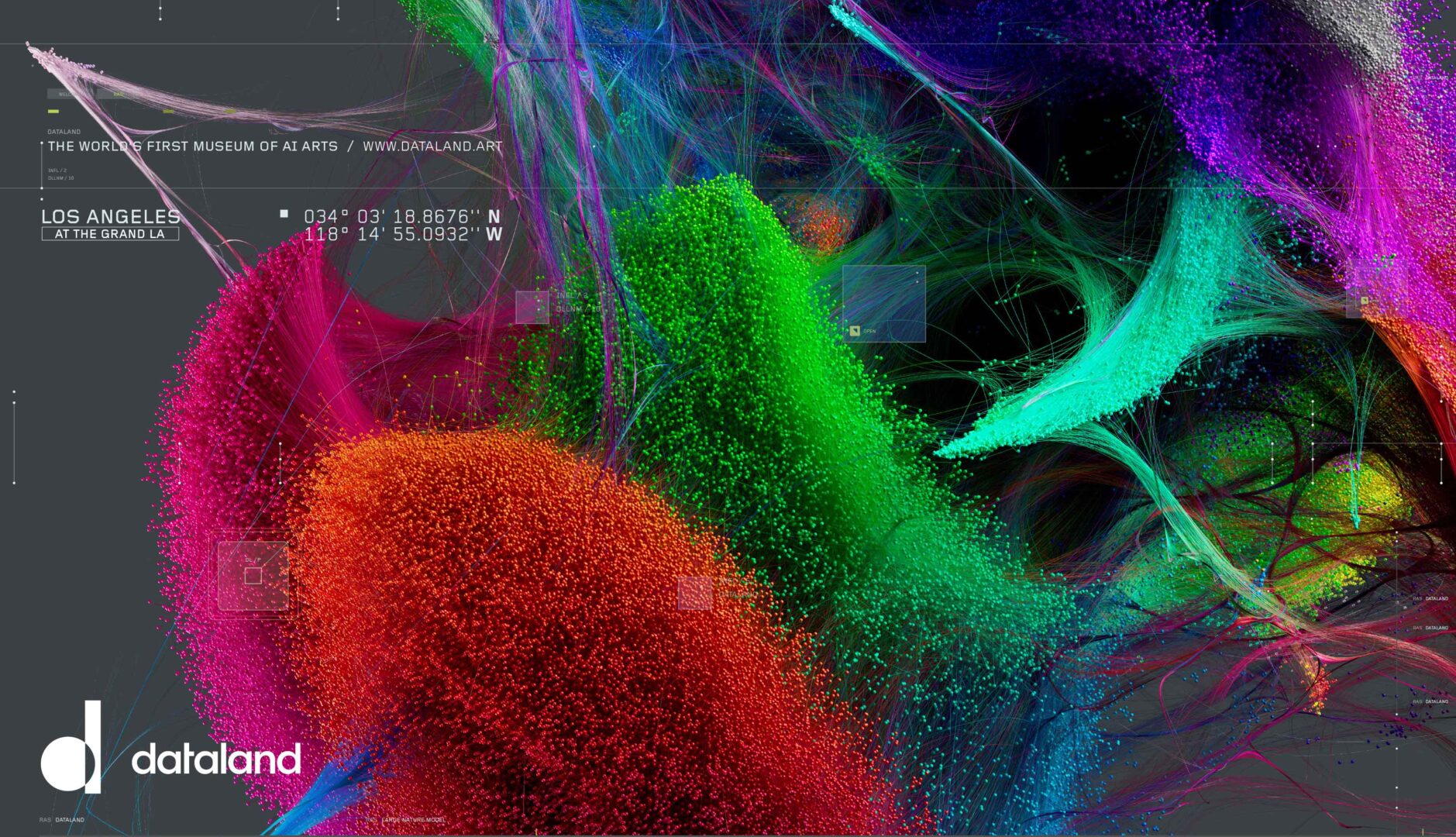
His first experience of Los Angeles came from seeing Blade Runner as an 8-year-old, the 1982 science fiction film directed by Ridley Scott, set in a dystopian future, that changed his perception of life. “As a child we don’t see darkness, we see hope, creativity and utopia.” He eventually came to Los Angeles in 2012 to study for a Master in Design Media Arts at UCLA.
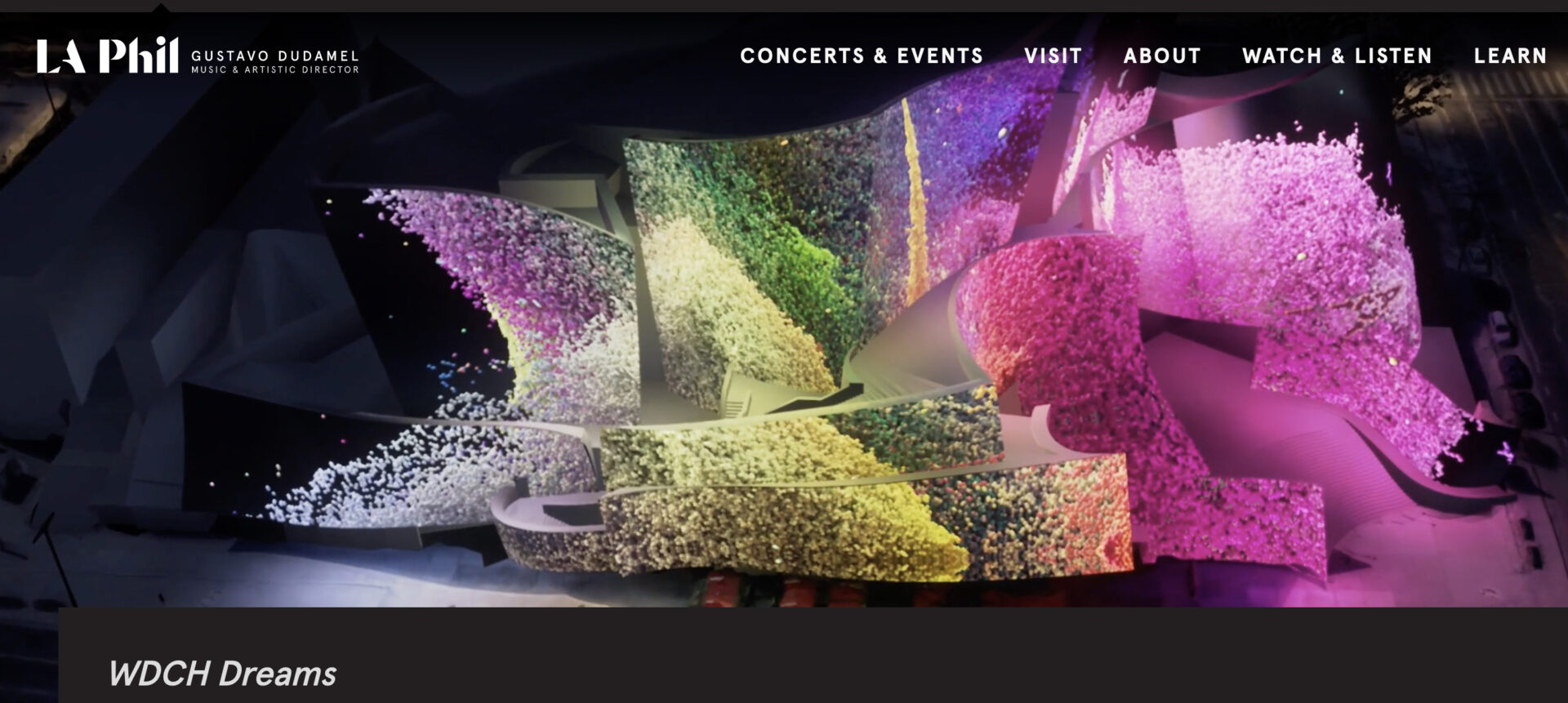
Refik recalled how in 2018, from the parking lot where now the Grand LA stands, he projected mutating images on to the shining surfaces of Disney Hall, designed by his hero, architect Frank Gehry. WDCH Dreams was commissioned by the LA Philharmonic to celebrate their centennial anniversary.
He said it was Gehry who suggested that Refik use this large 25,000-square-foot space inside the last building he designed for “a living museum following his legacy and his vision.”
After his very long speech it was Refik himself who guided us to the museum galleries.
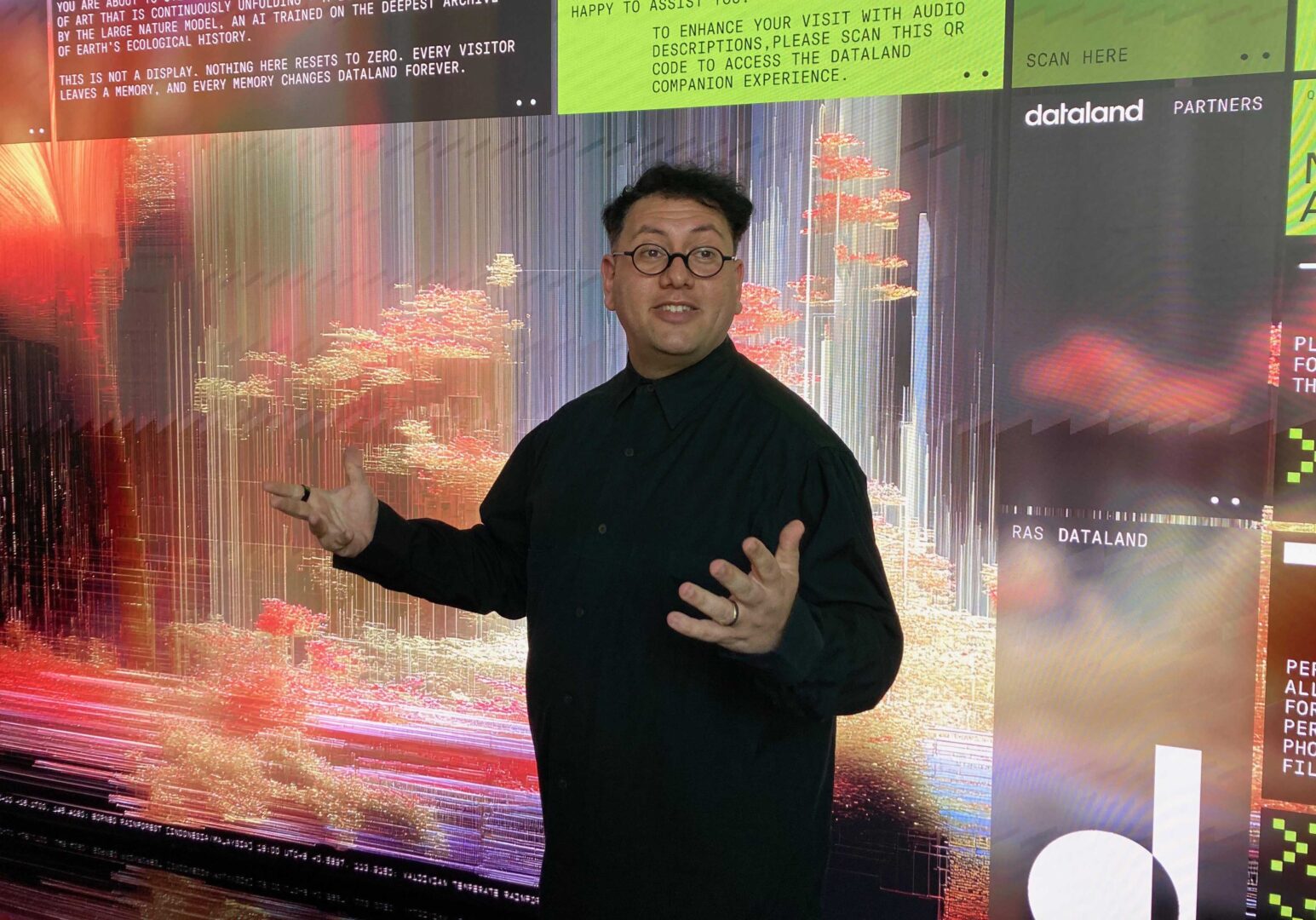
See the artist in front of a changing display of images, where you can read his intentions on the wall: “For 10 years, Refik Anadol Studio has pushed the boundaries of art by asking the question, if a machine can learn, can it dream? At Dataland, that inquiry goes beyond the limit by integrating machine learning, art, technology and science into its very walls. Your experience will engage all five of your senses. And the building itself will respond to your presence.”
Before entering we had to wear booties over our shoes, no spike heels allowed, because images are also projected on the floors for a surround feeling.
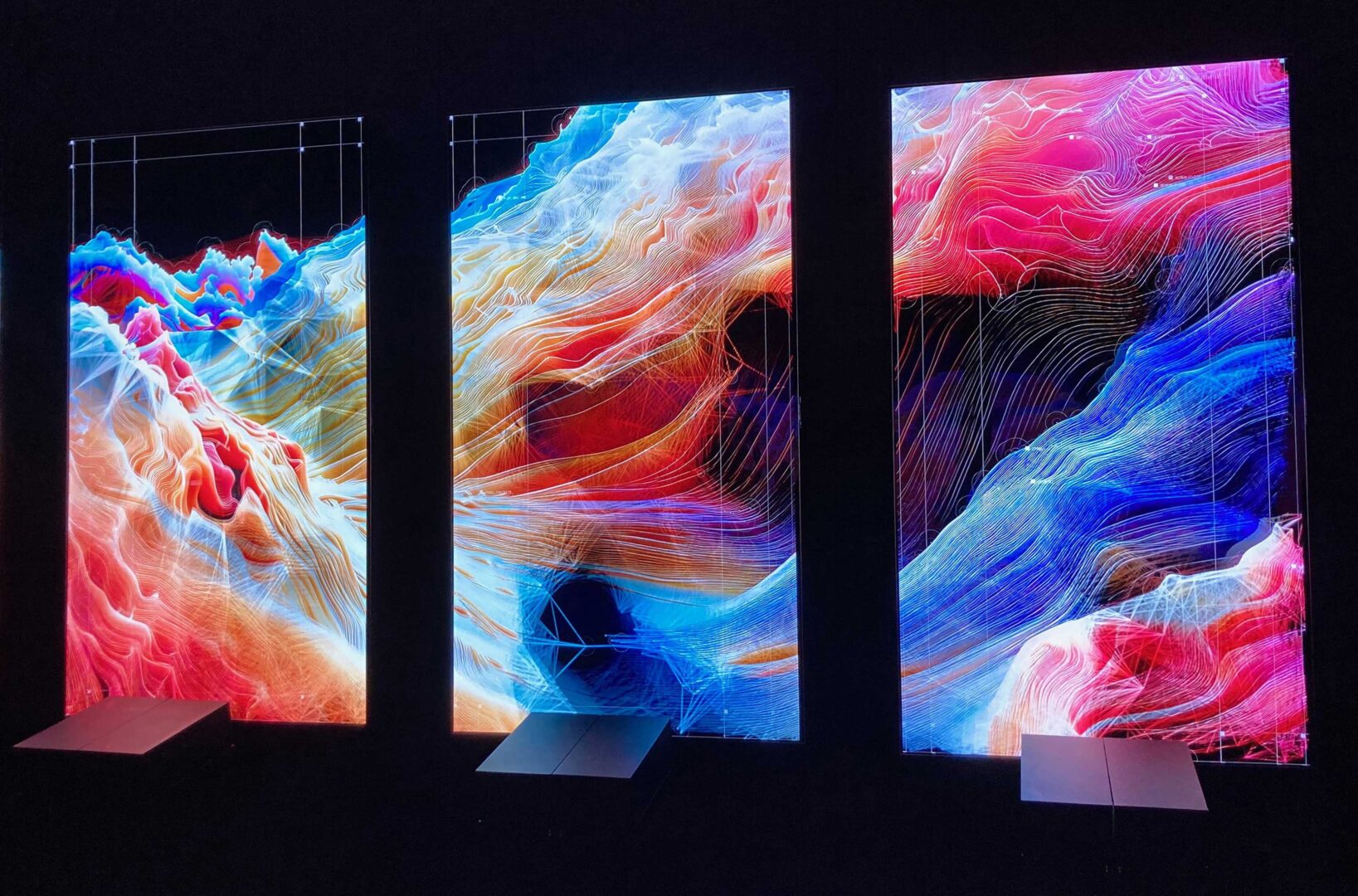
In the second room, Discovery Portal, we were outfitted with what looked like headphones, but you wear them around your neck, and they are connected to a wrist watch, that makes them emit different fragrances, created by L’Oreal from Paris.
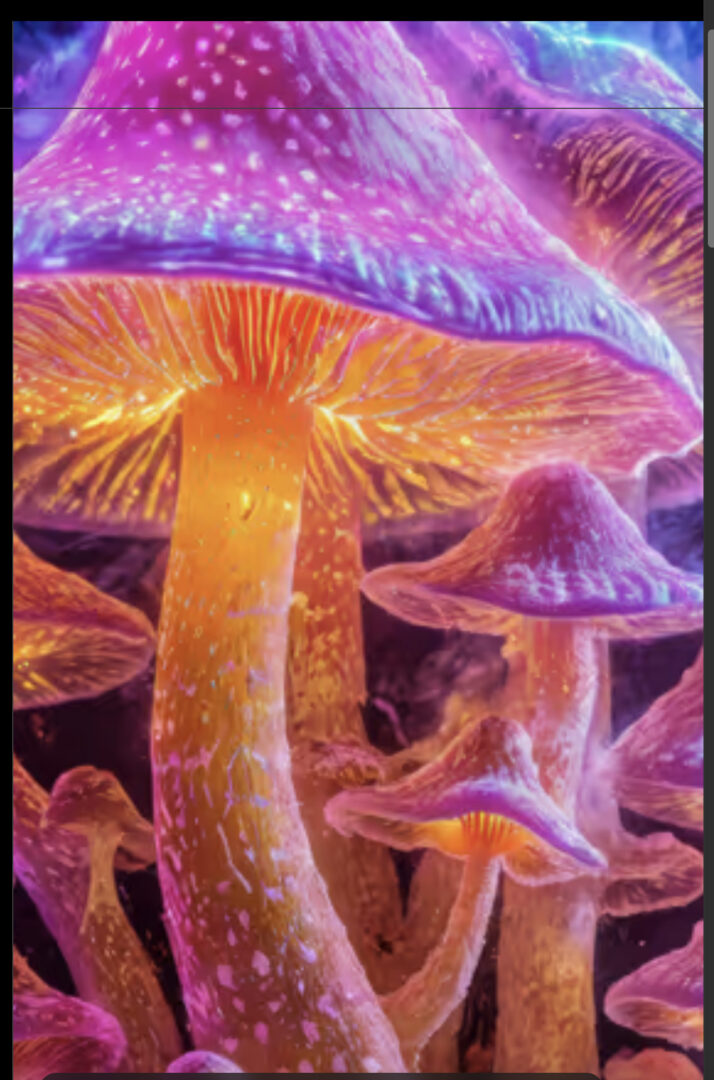
I recognized the images in this gallery, because the previous day I had examined the NFTs (Non-fungible tokens) that were for sale (at $5,000 they immediately sold out) on this page of the Dataland website under the name of Biome Lumina, in the categories of Flora, Fauna, Fungi. As an old hippie I was attracted to the mushrooms and focused on the one above. Sure enough its name was Luminosa Psychedelica. If you click play the image will dissolve into moving pixels while music plays.
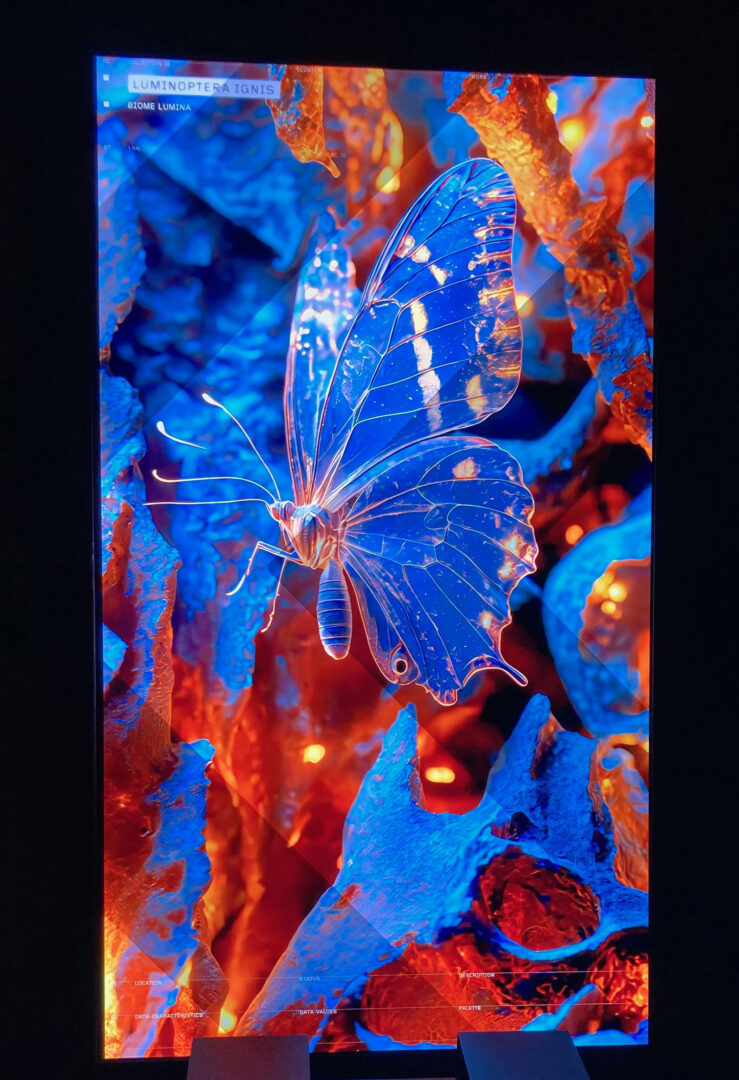
I also liked the butterflies, that I later saw in the actual room, where I photographed the one above.
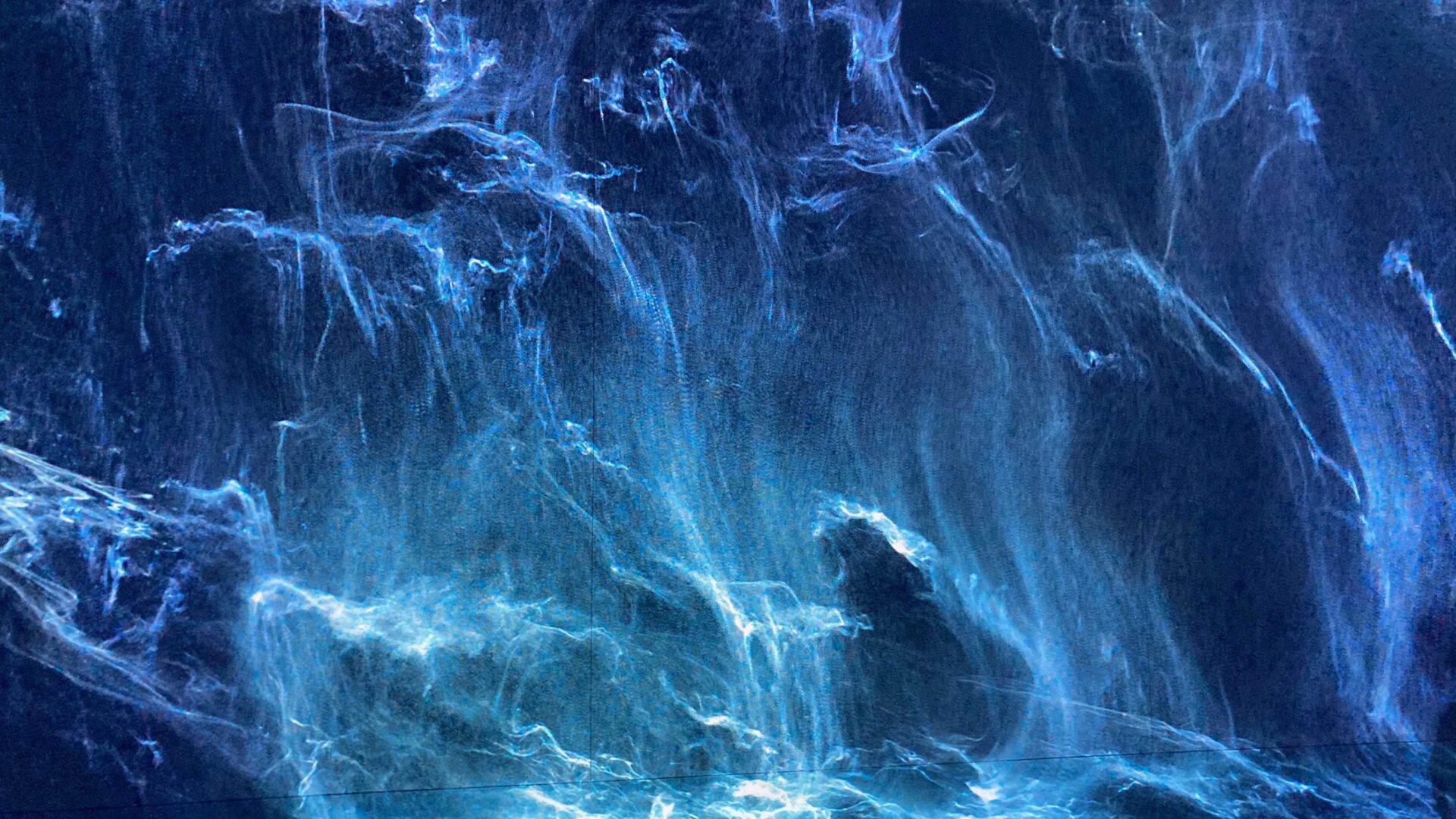
After that we stepped into a gigantic room called Data Pavillion-Latent Forest, and nothing could have prepared me for this truly immersive experience. A series of projectors and mirrors created constantly moving images from walls to floor to ceiling. At one point I had to lean on a mirrored column because I felt my head spinning.
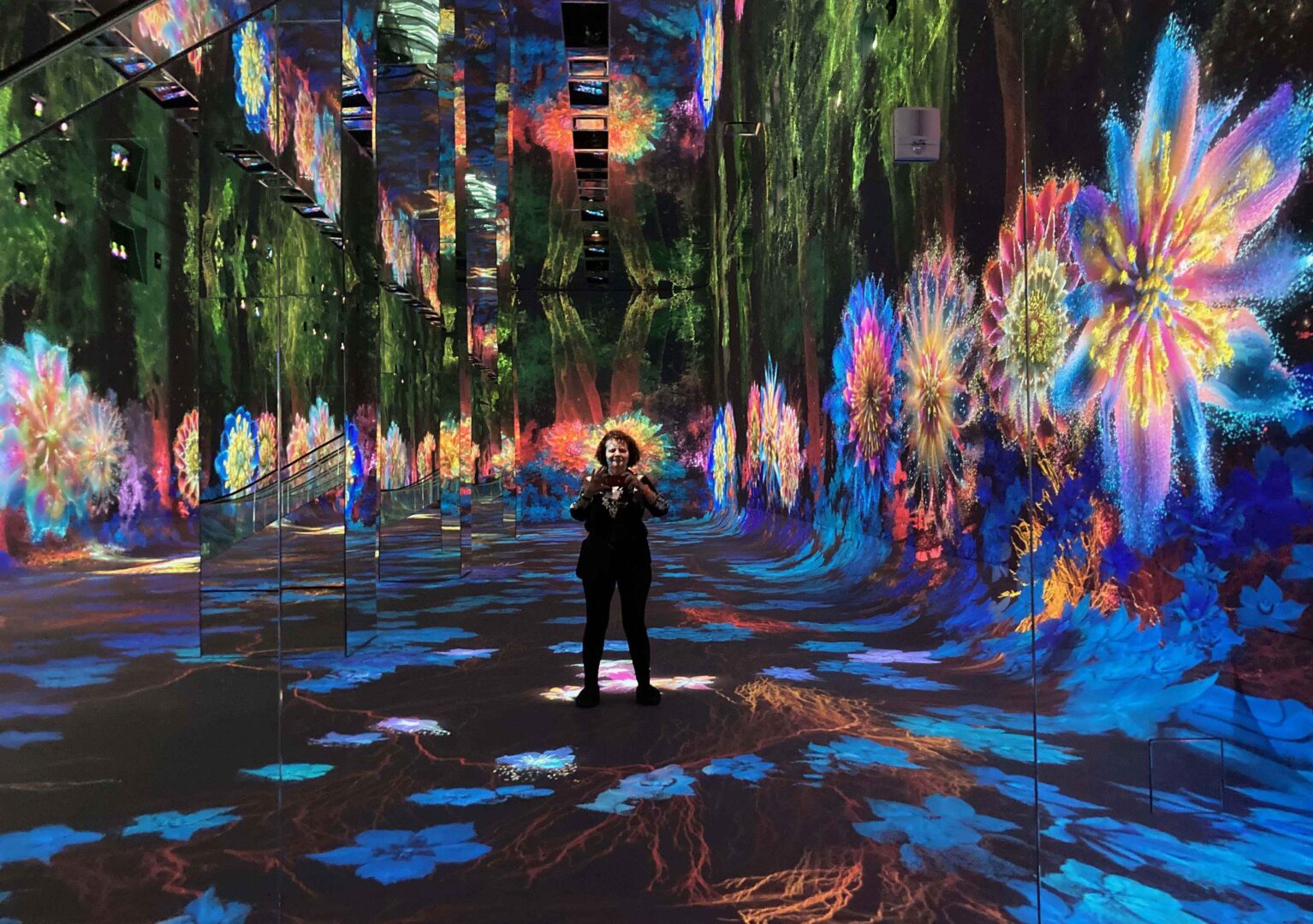
Refik said: “Our largest gallery has an ambitious feeling of what it means to be inside data, the overwhelming beauty of the vaste energy and the planetary data of the Earth.”
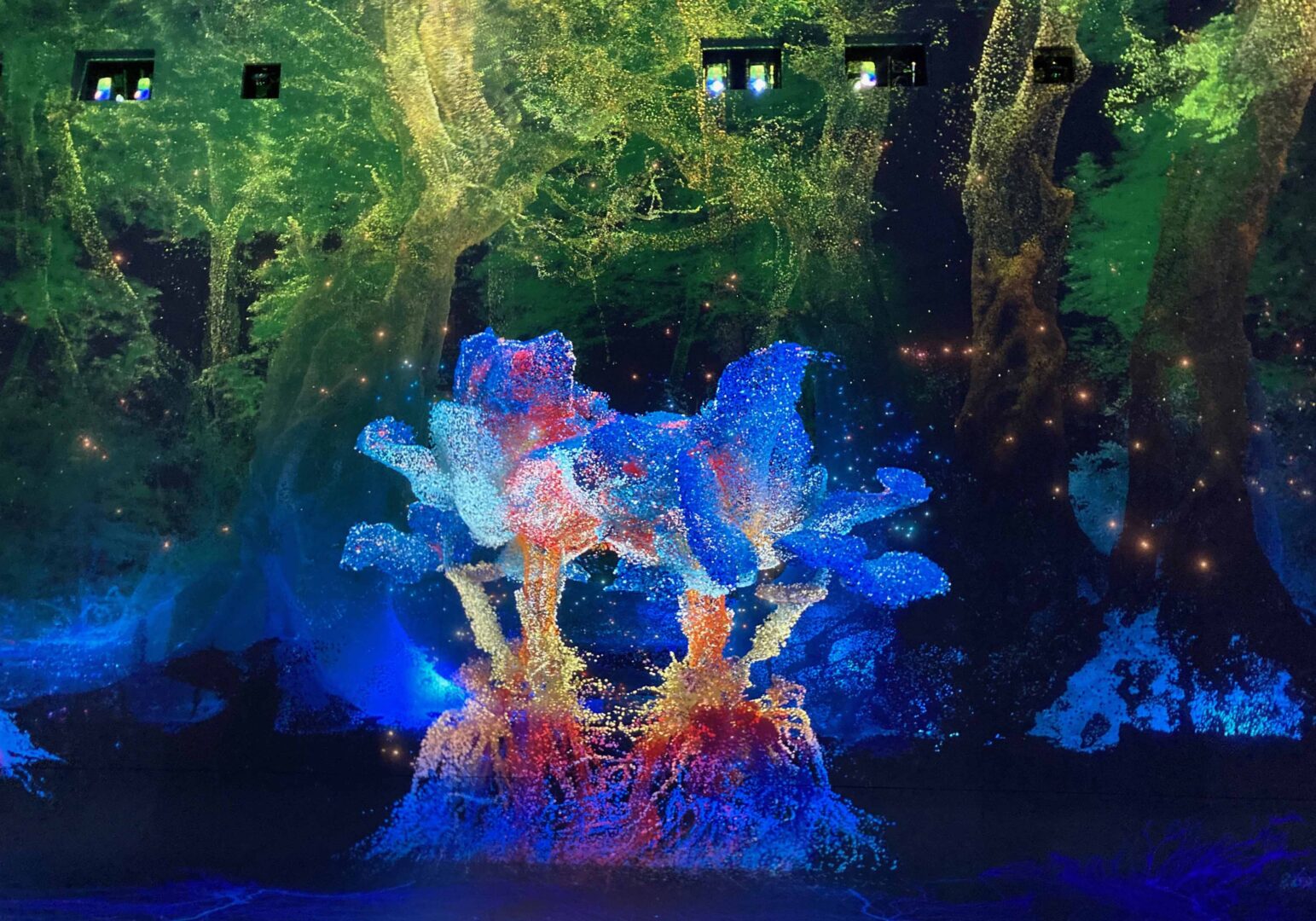
In another room called Latent Gallery we could access all the data, pull up any image, explore the AI System Living Encyclopedia: Large Nature Model (LNM) developed by RAS for Dataland.
Among the many other artistic projects of RAS (Rafik Anolik Studio), we should mention Unsupervised at MoMA (Museum of Modern Art) in New York (November 19. 2022-March 5, 2023) and Machine Hallucination at the Sphere in Las Vegas (September 1, 2023-On-going).
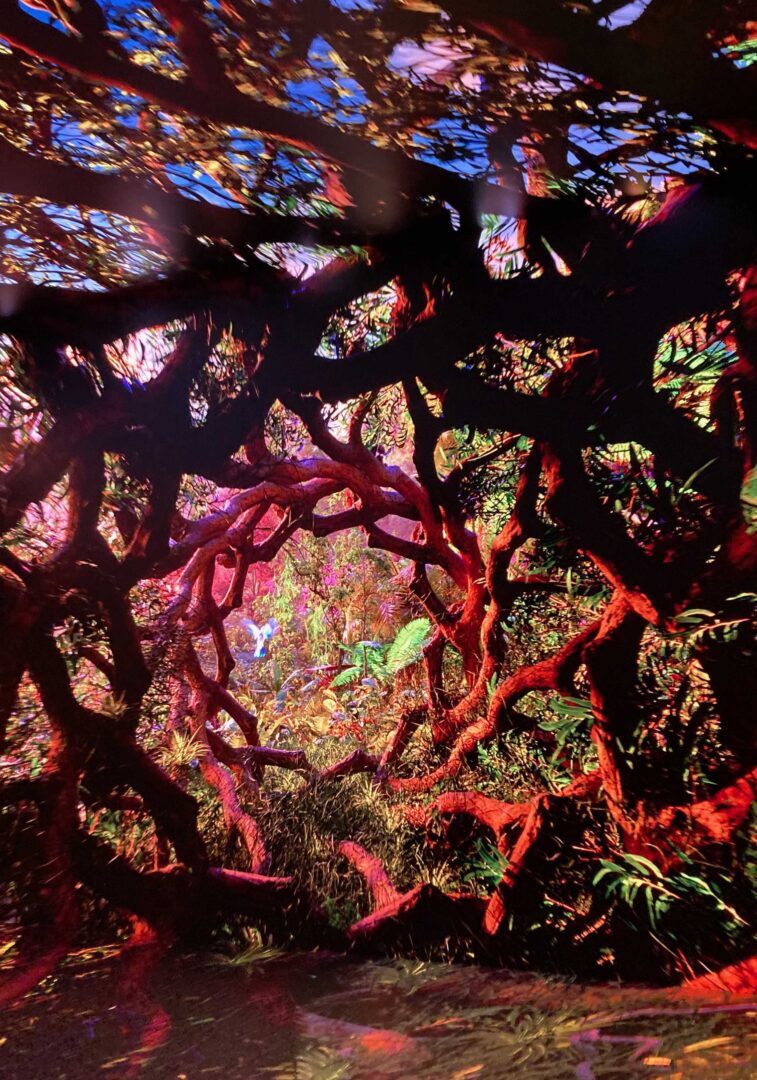
The name of the inaugural exhibition, Machine Dreams: Rainforest, that runs until January 31, 2027, comes from a real life experience that married couple Refik and Etsun had in the Brazilian Amazon. Five years ago they spent two weeks with Chief Nixiwaka of the Yawanawá indigenous tribe, resulting in the exhibit Winds of Yawanawá.
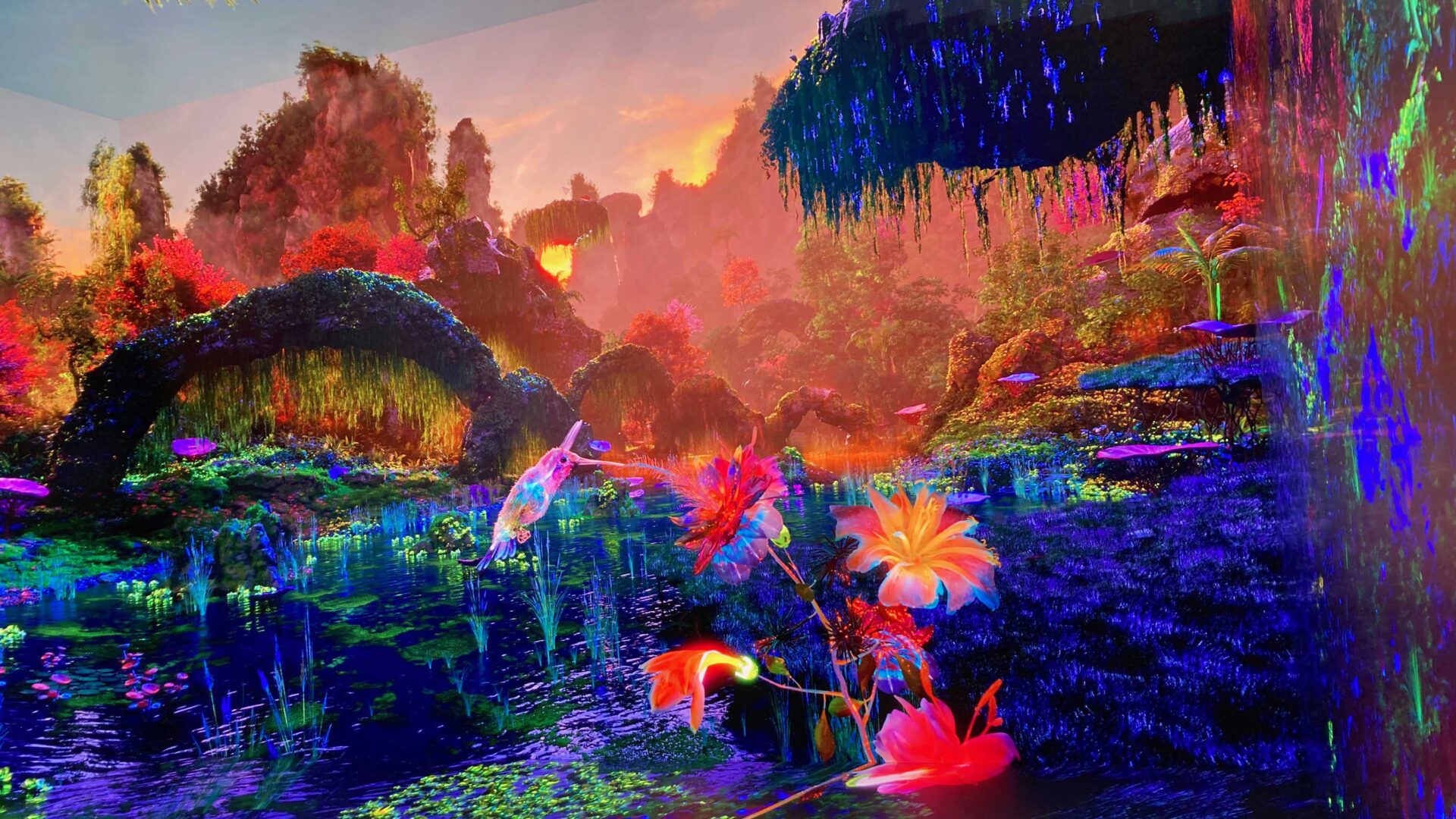
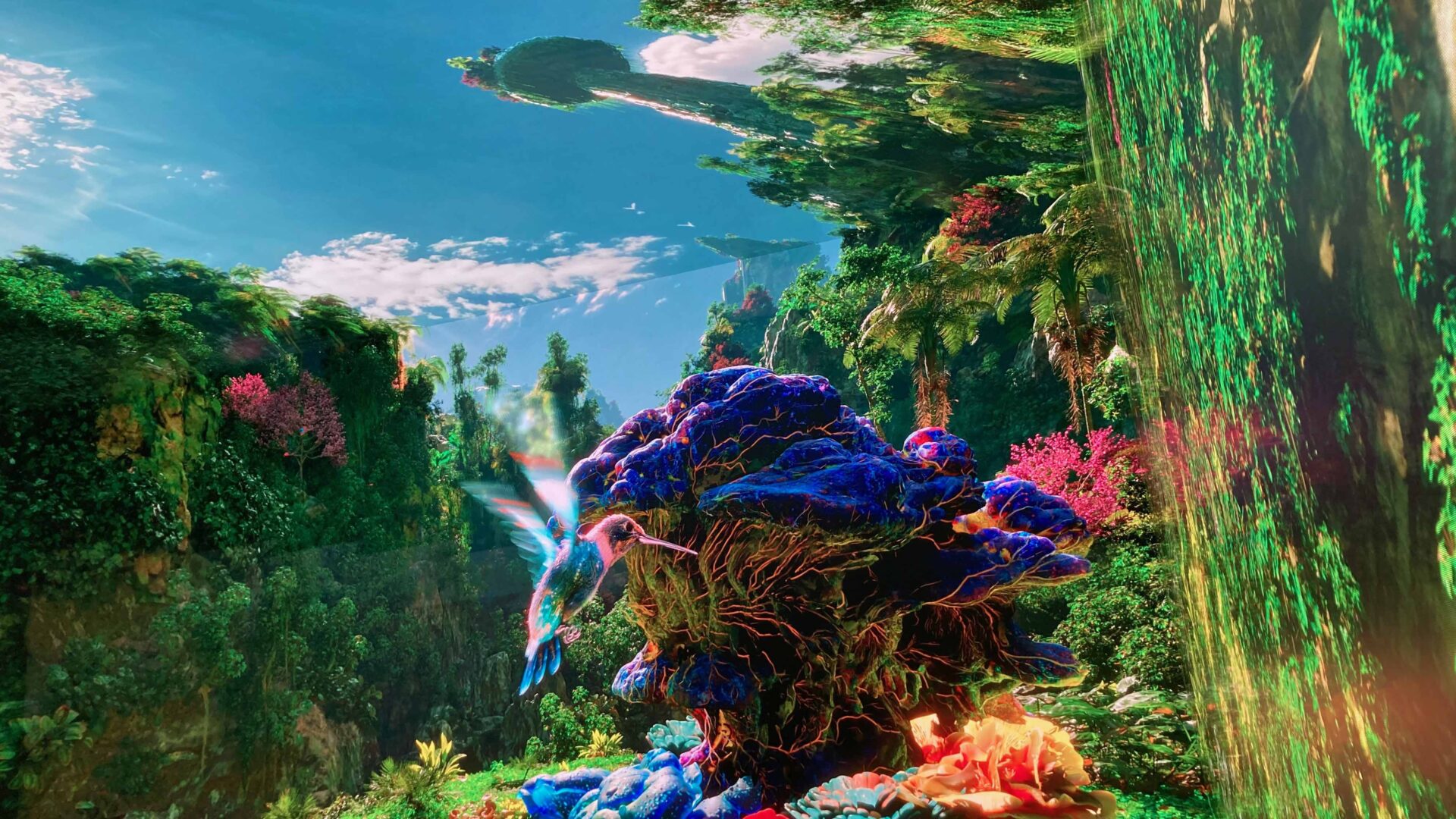
Refik prepared us for the pièce de résistance, the Infinity Room, by explaining its theme, The Dream of Ruwe Pinu. “It was an amazing experience when you start living in a forest, become a part of that culture. It created this incredible transformation in my life. I started having dreams, get these inspirations, I felt like I was becoming like a glass hummingbird flying in the forest. So I asked Chief Nixiwaka, my mentor, what did that mean. He said it was a spiritual bird, Ruwe in their language means glass, Pinu means hummingbird. They only see this bird fly in the forest to take the last breath of a wisdom tree, and that is a signal that nature is transforming.”
I started paying attention to A.I. only recently, two months ago, after seeing The A.I. Doc: Or How I Became an Apocaloptimist, when it was in theaters. You may now watch it on Peacock, and I highly recommend it. As the pro and cons of this inevitable technology have been constantly in the news, we have a duty to stay informed.
Refik said that three years ago, while planning Dataland, “we learned that there is a problem with ethics in A.I. People are concerned that A.I. cold be harmful and dangerous for nature. As an artist I love and respect nature, I find it very inspiring, and I do believe nature is a living intelligence on planet earth that is ready to be understood.”
“First we asked permission to receive half billion images of nature (from institutions like the Smithsonian and London’s Natural History Museum), then we traveled to 16 different rainforests of the world and collected our own data. We now have the largest open datasets recognized by the United Nations as the most ethical and sustainable.”
It gives me a hopeful feeling to realize that A.I. is not only used for military purposes to kill more efficiently in wars, but it could inspire us to dream of a better world through art.
Book your tickets now, pricey but worth it…
P.S. Still photographs do not do justice to these constantly moving images with sound. Click on this video.