


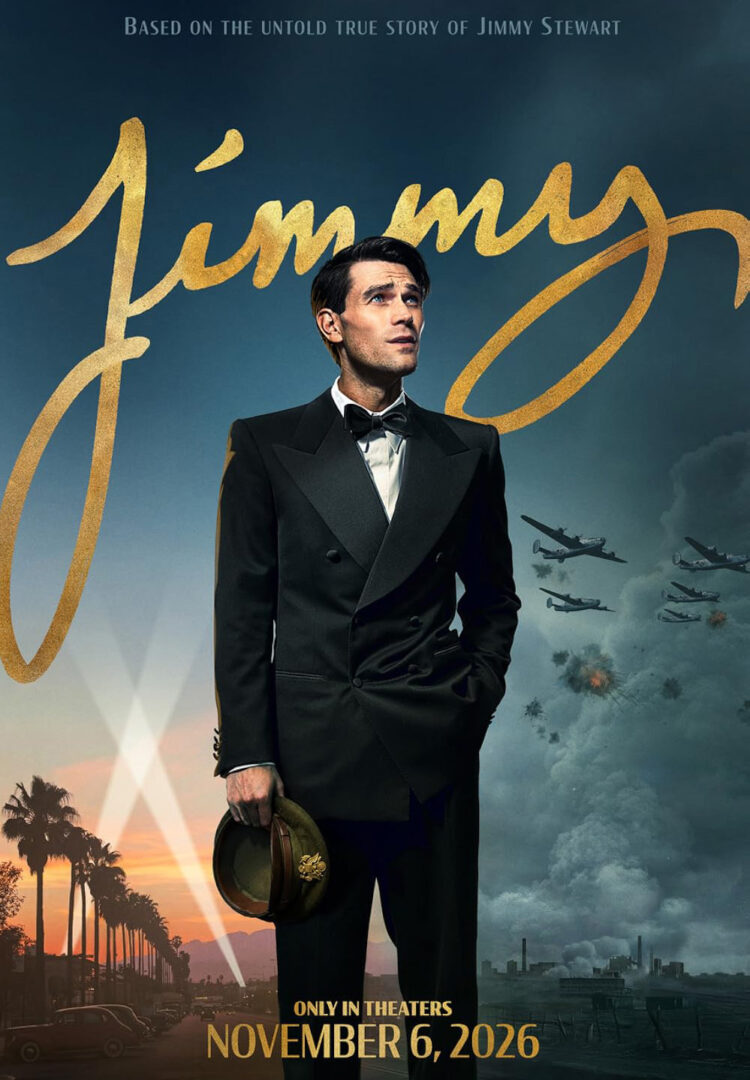
The movie simply titled Jimmy tells a semi-fictional story of James Stewart as an Air Force B-24 pilot during World War II, when he flew 20 bombing missions out of England. It starts in 1941, when he won an Oscar as Best Actor for The Philadelphia Story, directed by George Cukor, costarring Cary Grant and Katherine Hepburn, it ends with him shooting a pivotal scene of It’s a Wonderful Life in 1946 under the direction of Frank Capra.
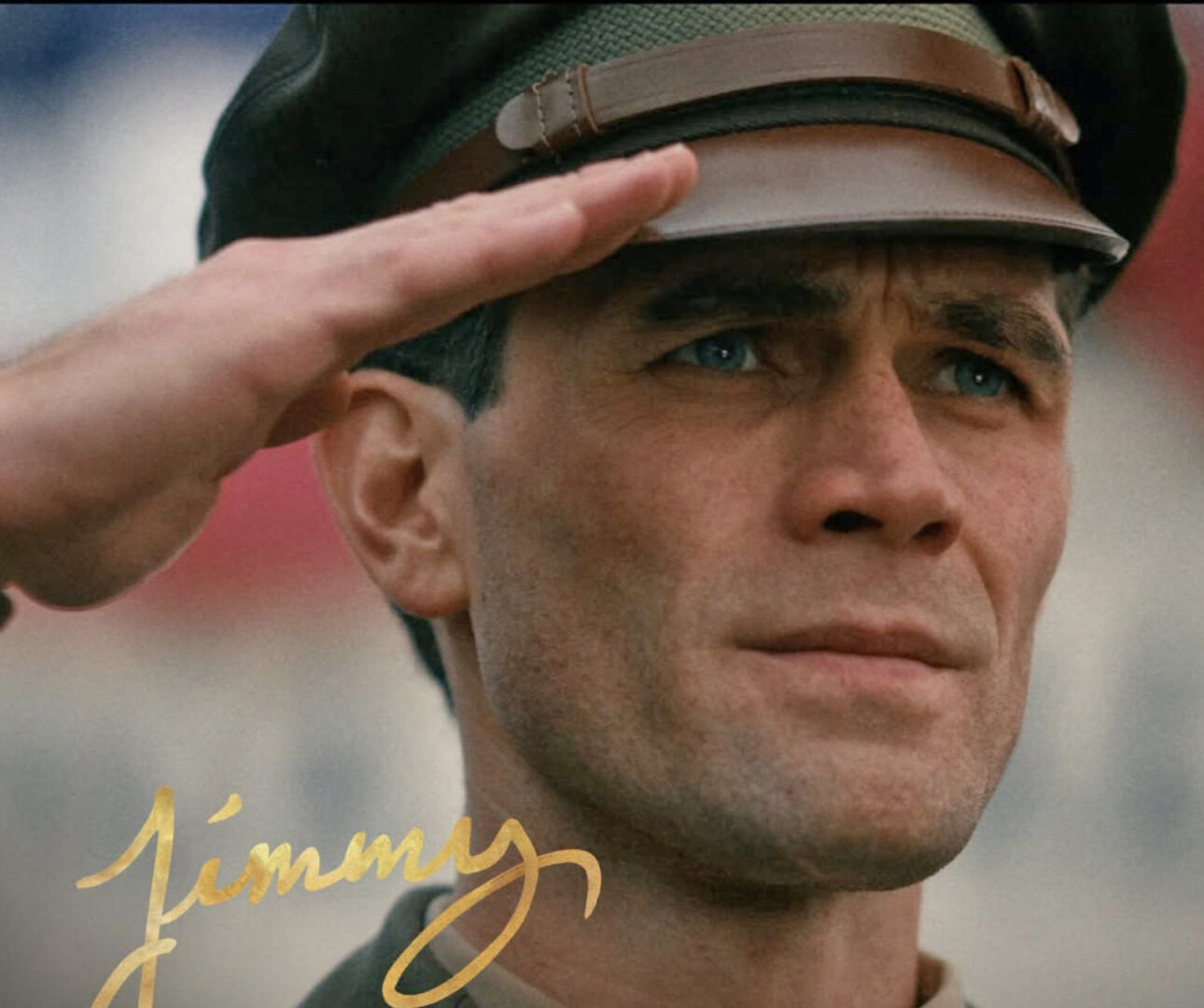
While interviewing New Zealand actor KJ Apa, who plays Jimmy, and Italian-American Max Casella as Frank Capra, I was reminded of when I met the real Jimmy Stewart at the Palm Springs film festival in January 1992.
I wrote a long interview that was published by Marie Claire in Italy, and chose one quote about war for Venice Magazine, when I was Film Editor from 1990 to 1992. Click here to see.
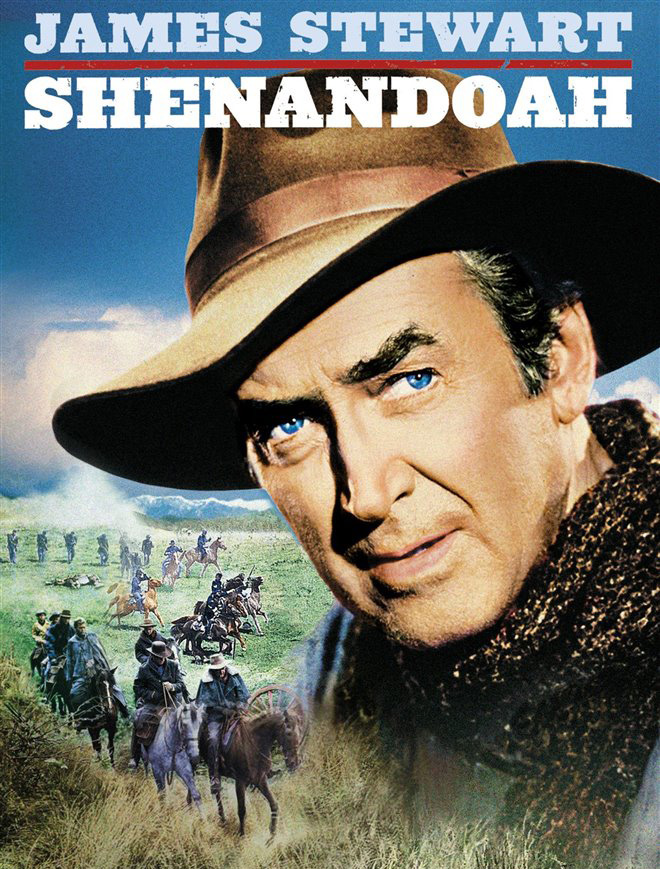
Q: In your 1965 film Shenandoah about the Civil War, mourning over the grave of your sons, you said “Governments will talk about glory and try to justify the need for war, but the soldiers just want to go home.” What do you think about the necessity of war today?
A: I first learned about war, what it means to a country, and to the individuals that take part in it, when my father came up one day in uniform during the First World War and he said: “I’m going to war. Won’t you, when you’re not in school, take care of things in the hardware store?” None of us in the family knew anything about it. So when the Second World War came, I got great encouragement from my father about serving in that war. Later on, after I married Gloria, she had two young children by a former marriage. When Vietnam came along, the older boy (Ronald) was determined to get in and joined the Marines, but was killed in action. So, having all this experience, both serving your country, then losing a member of the family, I have a feeling that war is something brought on by the human race, that probably isn’t going to disappear, certainly not in our lifetime. Human beings of our world seem to resort to war, maybe for bad reasons; but the good reasons to me overshadow all the other things, certainly present and true, the futility and the disgrace of war. So I think that serving in a war for your country is an honorable thing for a man to do.
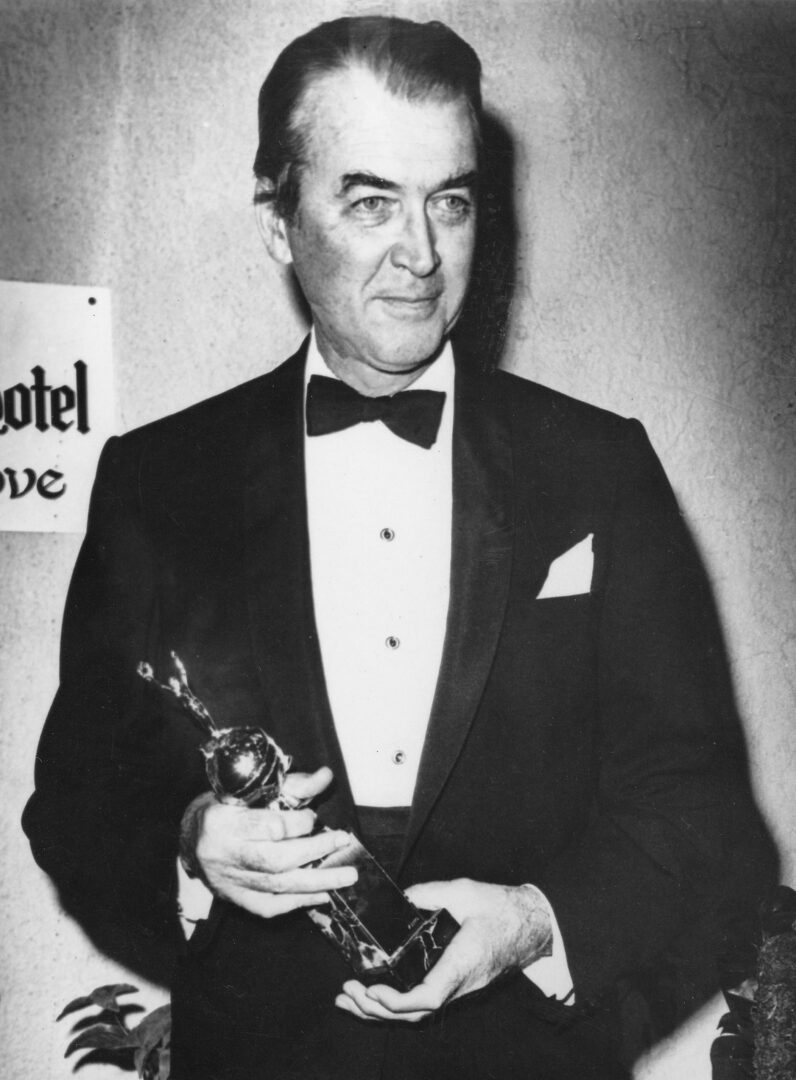
It was in 1965 that the Hollywood Foreign Press presented James Stewart with the Cecil B.deMille award for “outstanding contributions to the world of entertainment.” Read the nominee bio that I wrote.
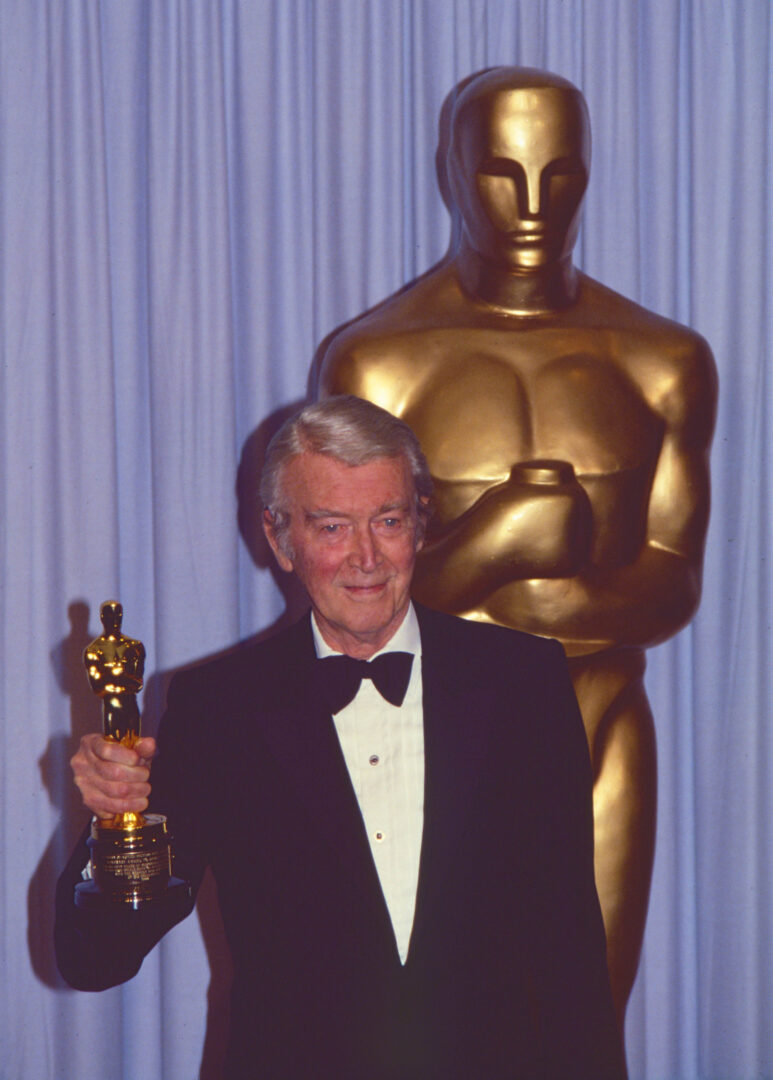
In 1985 I photographed Stewart at the Academy Awards, when he received an Honorary Oscar presented by Cary Grant. Watch here his acceptance speech where he said he was “especially grateful to Frank Capra.”
You may read below some more quotes from my 1992 interview.
Q: What effect did your military service have on your career?
A: I went over to Europe as squadron commander and got to be operations officer of a group; the Eight Airforce had three divisions, the first and third flew B-17s, we were in the second and we had B-24 (Liberators). My contract at MGM ran out while I was in the war. Henry Fonda, who had been my best friend since the days of the University Players, was the same way, so we’d fly kites and sit around, and we wouldn’t talk about the war very much. Frank Capra called me up one day and said: “I got an idea for a movie, why don’t you come down to the house and I’ll tell you,” so I ran the whole way. He went on for quite a while telling the story, after he stopped, I said: “If you want to make a picture about an angel that tells me the right way to do things, I’m your man.”
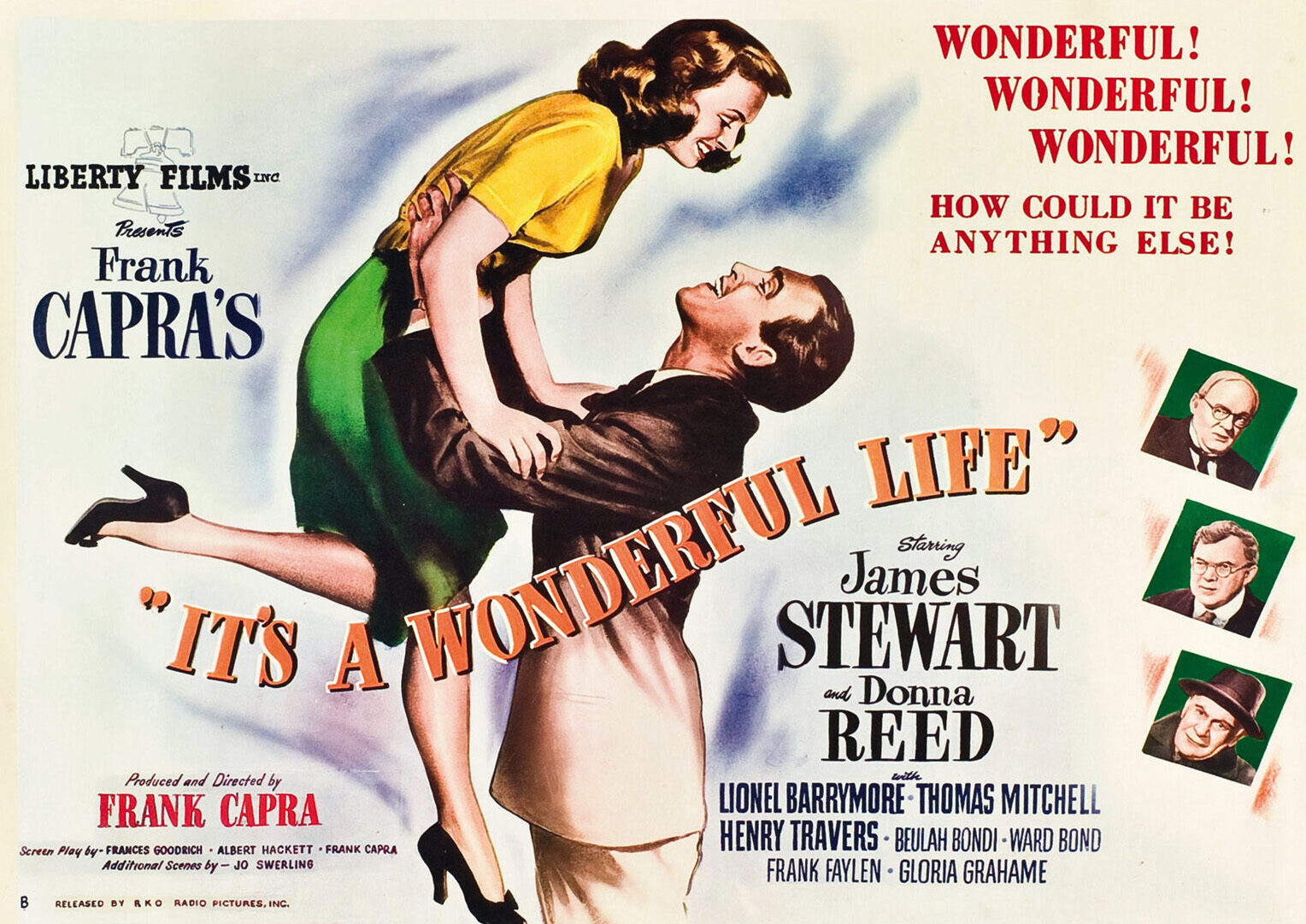
Q: What are your feelings about Frank Capra now?
A: To me he was more than just a film director, he was someone who came to this country from Sicily and he develop these strong values: love of family, love of community, love of country, love of God. He was able to get this type of values on the screen, and he never seemed to be preaching. The reason for that was this wonderful humor that he had, which was one of the great things about his talent.
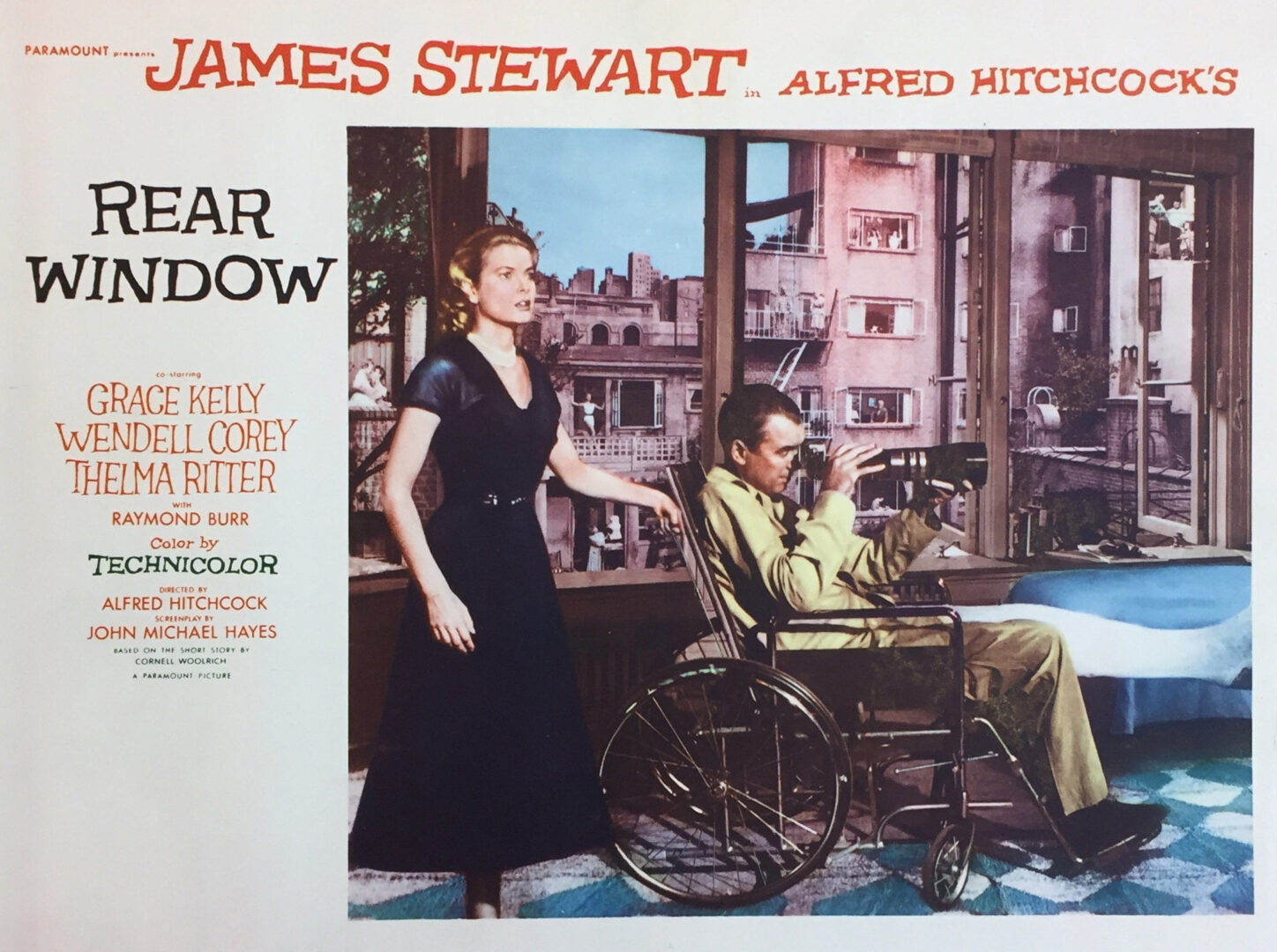
Q: You were directed by the legendary Alfred Hitchcock in four movies (Rope 1948, Rear Window 1954 with Grace Kelly, The Man Who Knew Too Much 1956 with Doris Day, Vertigo 1958 with Kim Novak). What was he like?
A: He was amazing, one of the most important directors of all times. He came to the first day of the shooting completely prepared, he had this complete control over the picture, over the crew and cast, because he knew exactly what he wanted. As we became conscious of this man’s precise objective in doing the picture, we all got into the swing of things and did it, it was very easy to work with him. He was a wonderful, interesting, fascinating man; he has a place for himself in movie history.
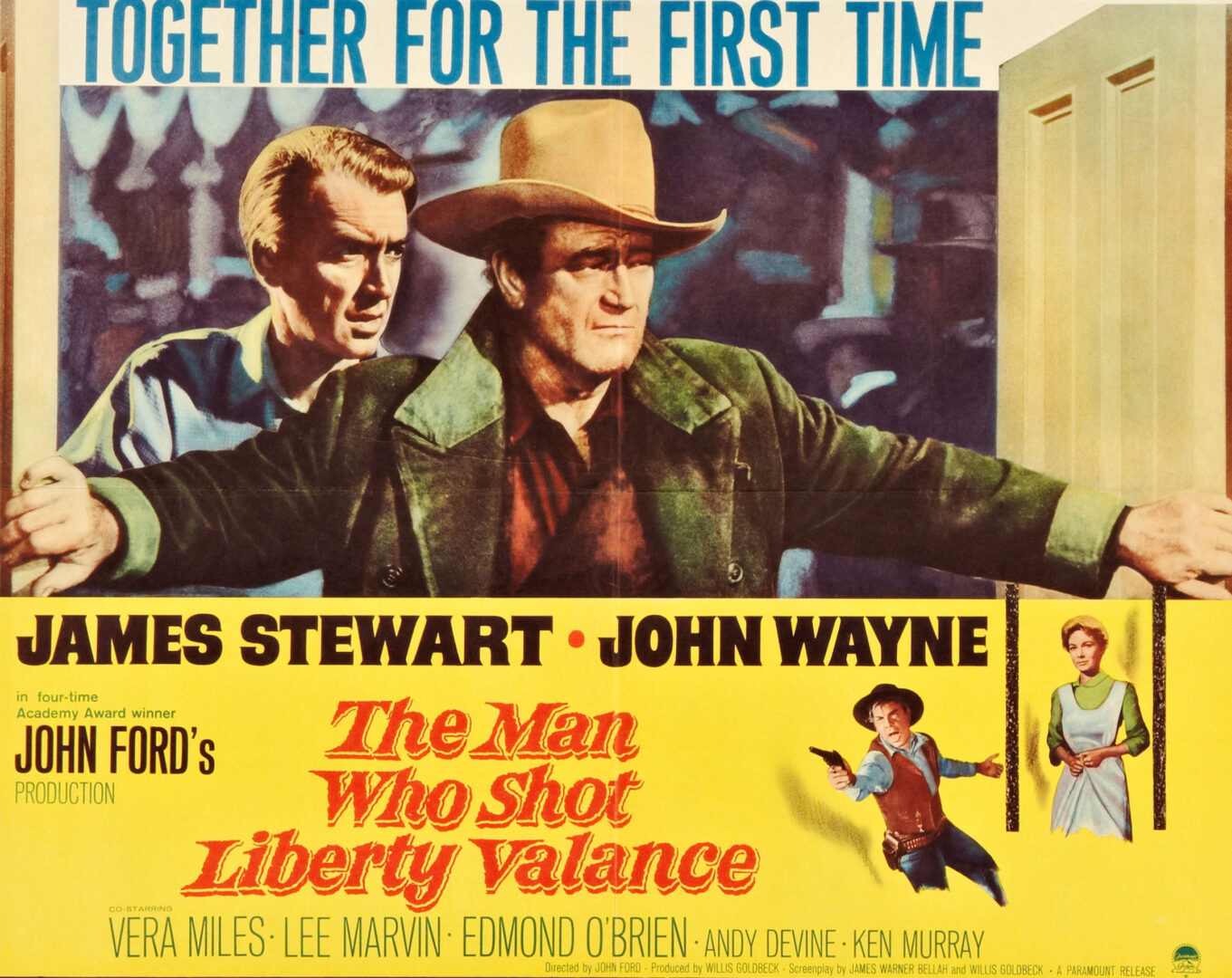
Q: You later worked with John Ford in three westerns (Two Rode Together 1961, The Man Who Shot Liberty Valance 1962 with John Wayne, Cheyenne Autumn 1964). Can you compare their shooting styles?
A: In a strange way Hitchcock had some of the same qualities that John Ford had, and that’s quite a comparison. He treated the movie as a vision, something that you understood by looking at it. John Ford said: “If you can’t get the idea of a scene up there visually, without the use of the spoken word, then you’re not using the movie medium correctly.” Hitchcock didn’t go that far with it, but he had the same idea.
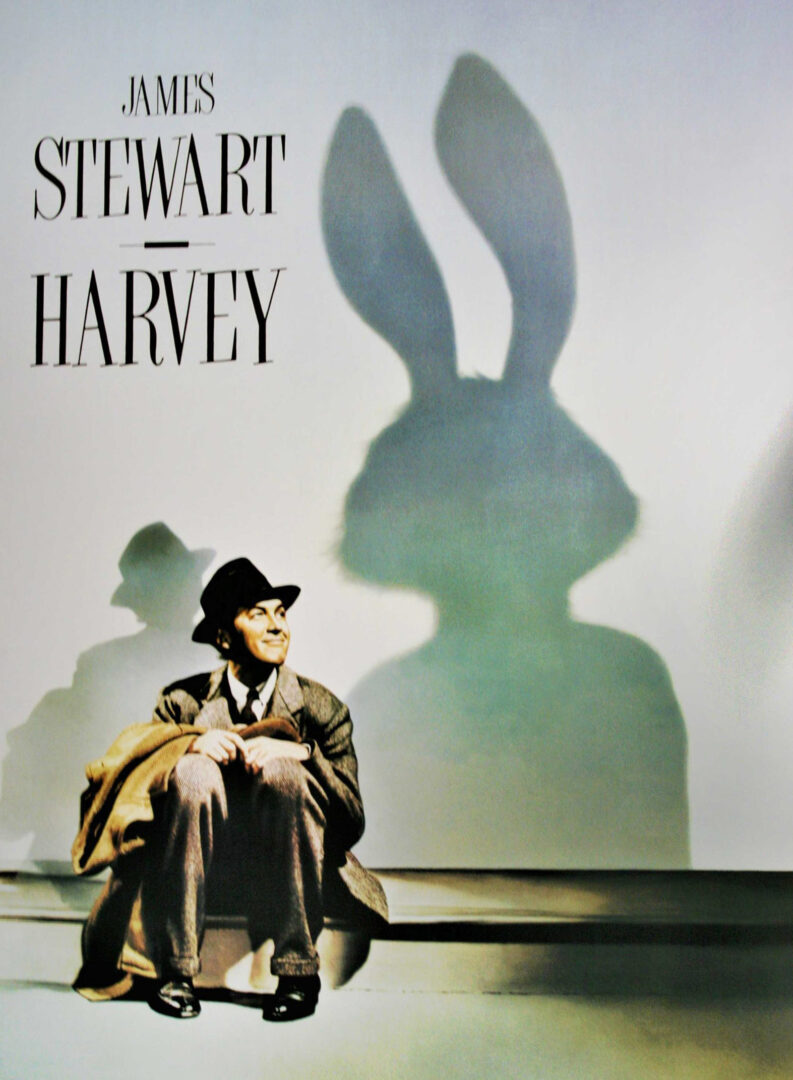
Q: Can you explain your affinity with Mr. Dowd, the character you played in Harvey, both on stage and in the 1950 movie?
A: I just had a love affair with it, the part astounded me. When I came back from the war, I went to see the play in New York and I thought it was absolutely wonderful. So when the producer asked me if I would like to play it while Frank Fay took a break, I said: “Of course, anytime.” But when I opened on Broadway, I got the worst notices I ever got in my life. The next year the producer called me and asked me if I cared to come back. Those reviews had upset me and made me a little sore, so I thought maybe I had gotten used to the rabbit, and it would be a little easier, so I agreed. He invited all the critics, and the reviews were worst than the first time; but, for some reason, it didn’t bother me, because I had become so fascinated with this character and the whole idea of the play that when Mary Chase sold the rights to the movie, I had the inside track on it and they gave me the part. Now that the film is on video and television, it still happens quite a few times that people ask me, ”Where is Harvey?” Every time I hear this and the person is serious, he really wants to know whether my friend is with me, I found that the best way is mostly to say: “No, he has a cold and he’s staying home for a couple of days.” It’s been an amazing thing the way people have absolutely accepted this myth.
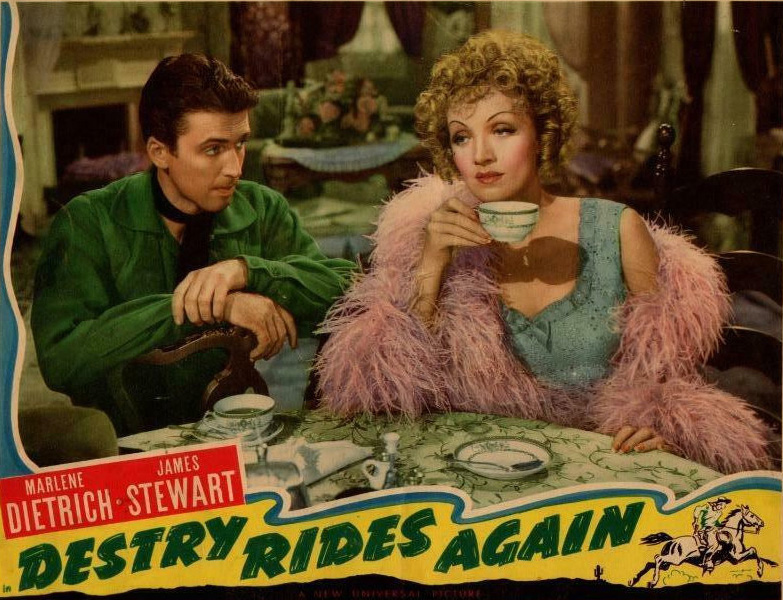
Q: Who was your favorite leading lady?
A: It’s hard to pick out just one, and a little dangerous… I’d say Donna Reed (It’s a Wonderful Life), Grace Kelly (Rear Window), and Marlene Dietrich (Destry Rides Again)
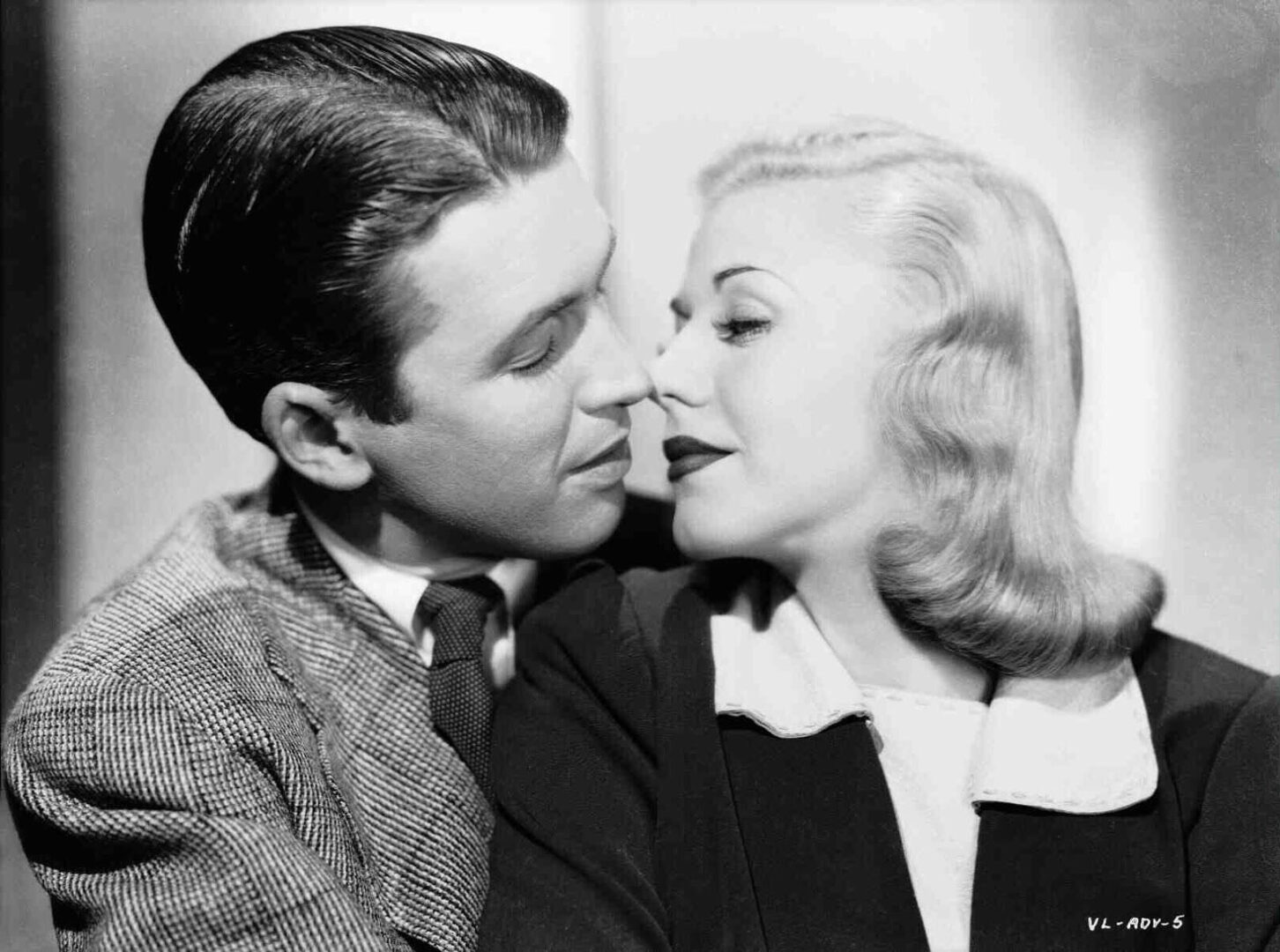
After seeing Jimmy, I was wondering if Stewart was in a relationship with Ginger Rogers in real life, and in fact he was, before and after they co-starred in Vivacious Lady (1938).
A new biography of Frank Capra, written by Sam Wasson, was just published.
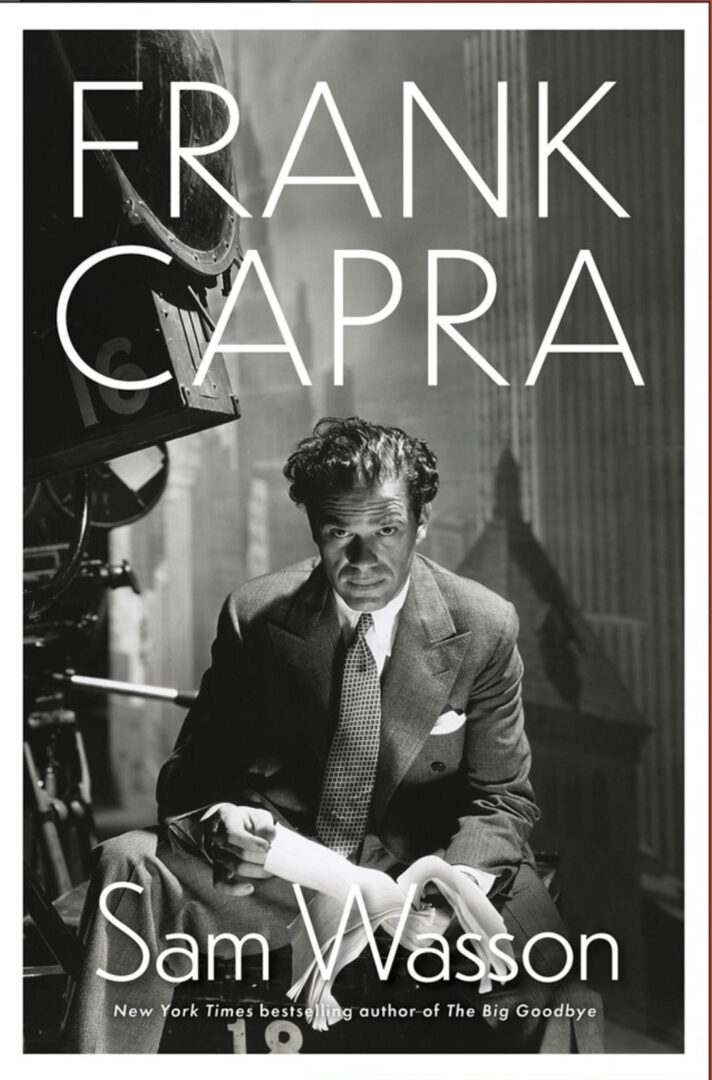
It is a pleasure to see these two legendary figures reimagined in the movie Jimmy, in theaters November 6.
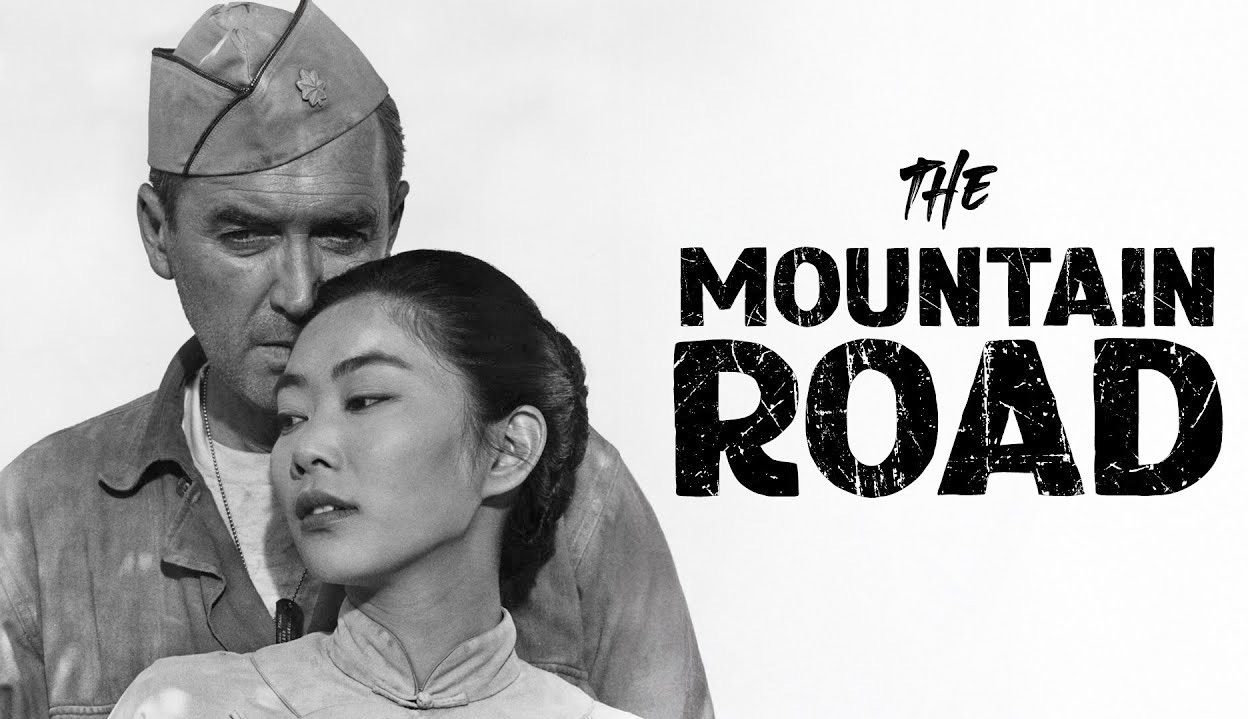
On November 1 TCM host Ben Mankiewicz chatted with James Stewart’s daughter Kelly about her “dad” while presenting two movies, Strategic Air Command (1955) by Anthony Mann, costarring June Allyson, and The Mountain Road (1960).

As I watched them, I was delighted to see this performance by Chinese actress Lisa Lu. I became Lisa’s friend when she joined the Hollywood Foreign Press as a journalist more than 25 years ago. On May 5, 2025 Lisa Lu, in her late 90s, was finally honored with a star on Hollywood’s Walk of Fame.