


“The 1960s—A Generation on Fire: Judy Baca’s Great Wall of Los Angeles” will be on view through February 28, 2027 at the Skirball Cultural Center.
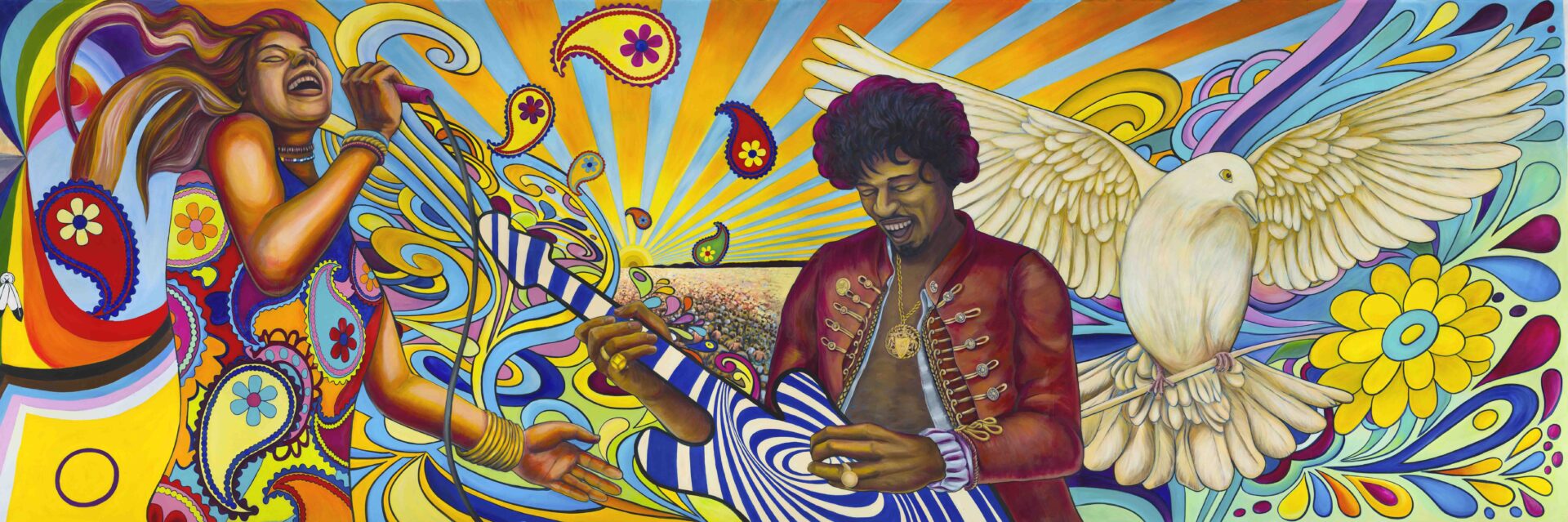
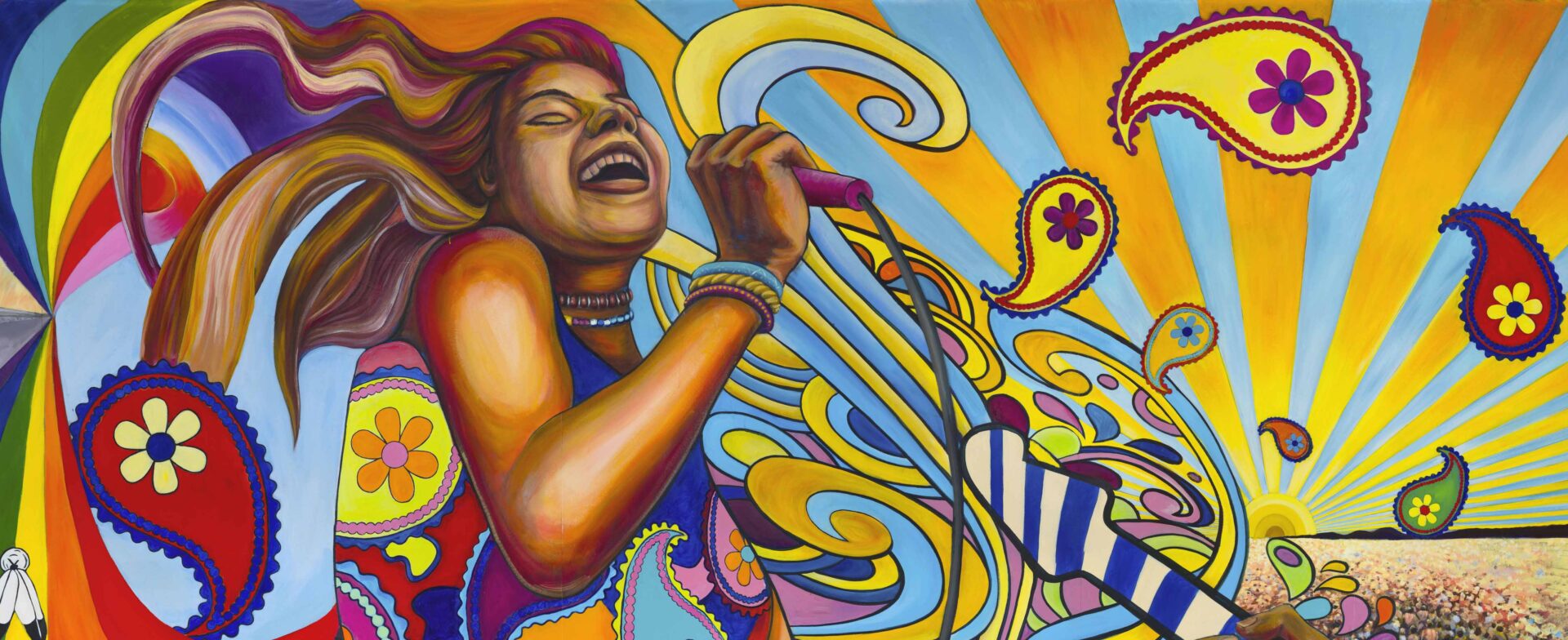
The segment portraying Janis Joplin singing was chosen to promote the exhibit at the Skirball. The entire panel includes Jimi Hendrix playing guitar and a dove symbolizing peace. It’s titled “Woodstock.” This landmark event of the late 60s counterculture took place August 15–18, 1969, and it concludes the 1960s decade.
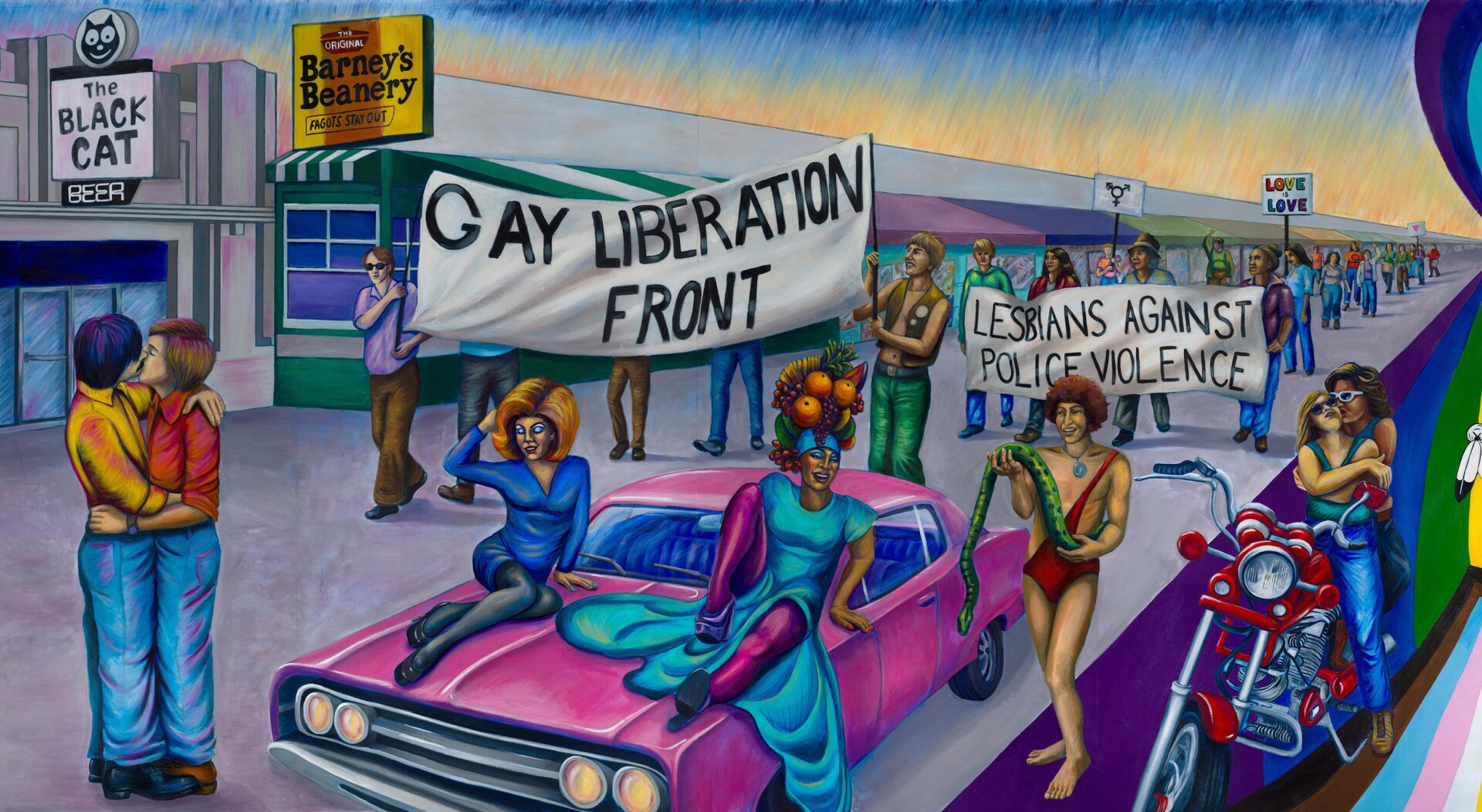
This mural painted on canvas will be installed at Skirball in January, next to the segment preceding it, “First LGBT Pride Parade.” Actually the first Gay Pride Parade in West Hollywood happened June 28, 1970. But this rendition also shows the demonstration of February 11, 1967 protesting the New Year’s Eve arrests at Los Angeles gay club The Black Cat.
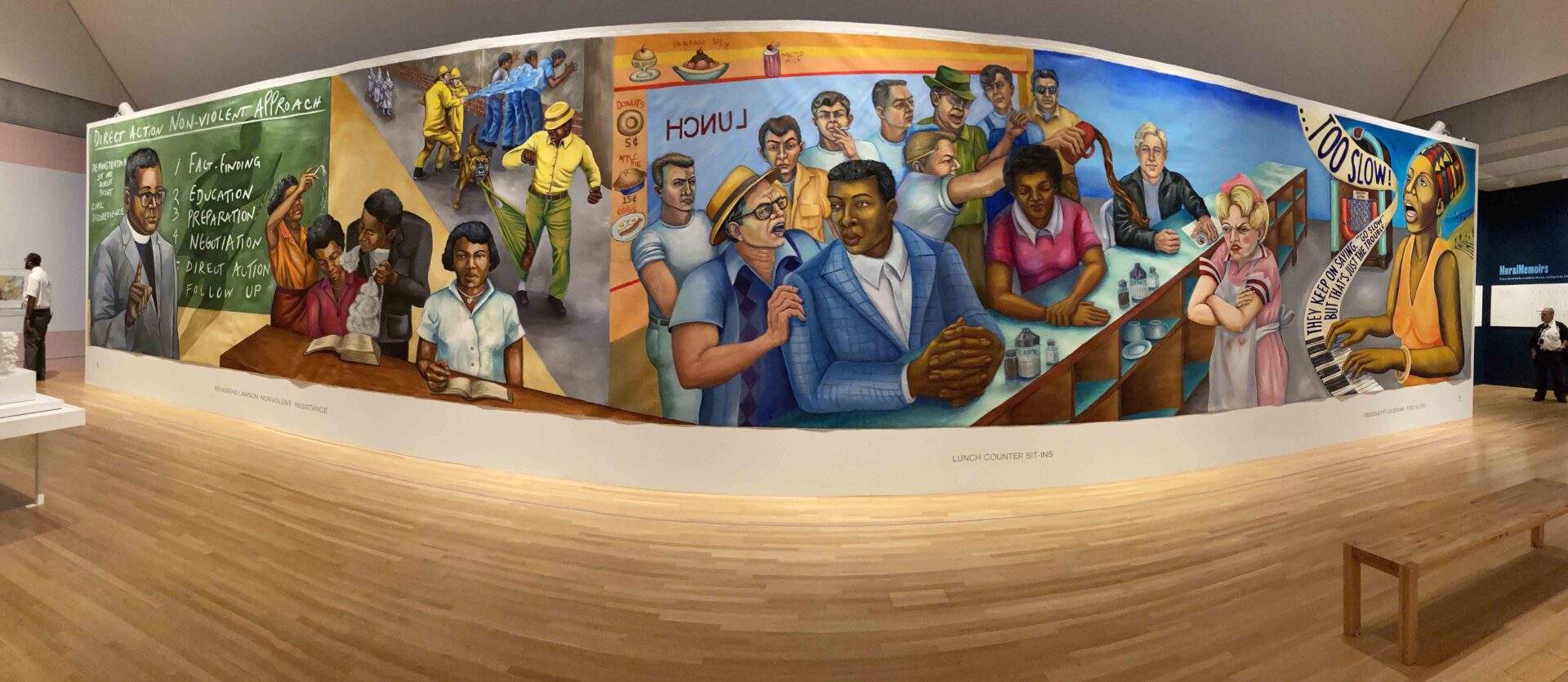
A different three-part panel is on view at Skirball as of October 22, and it’s quite impressive because of its size (12 feet high, 36 feet wide). I had to use a newly acquired skill of shooting it as a panoramic with my iPhone to get it all in. The resulting curvature of the image reminded me of the 16mm Fisheye lens that I used with my Nikons, when I was photographing with real cameras in the 1980s.
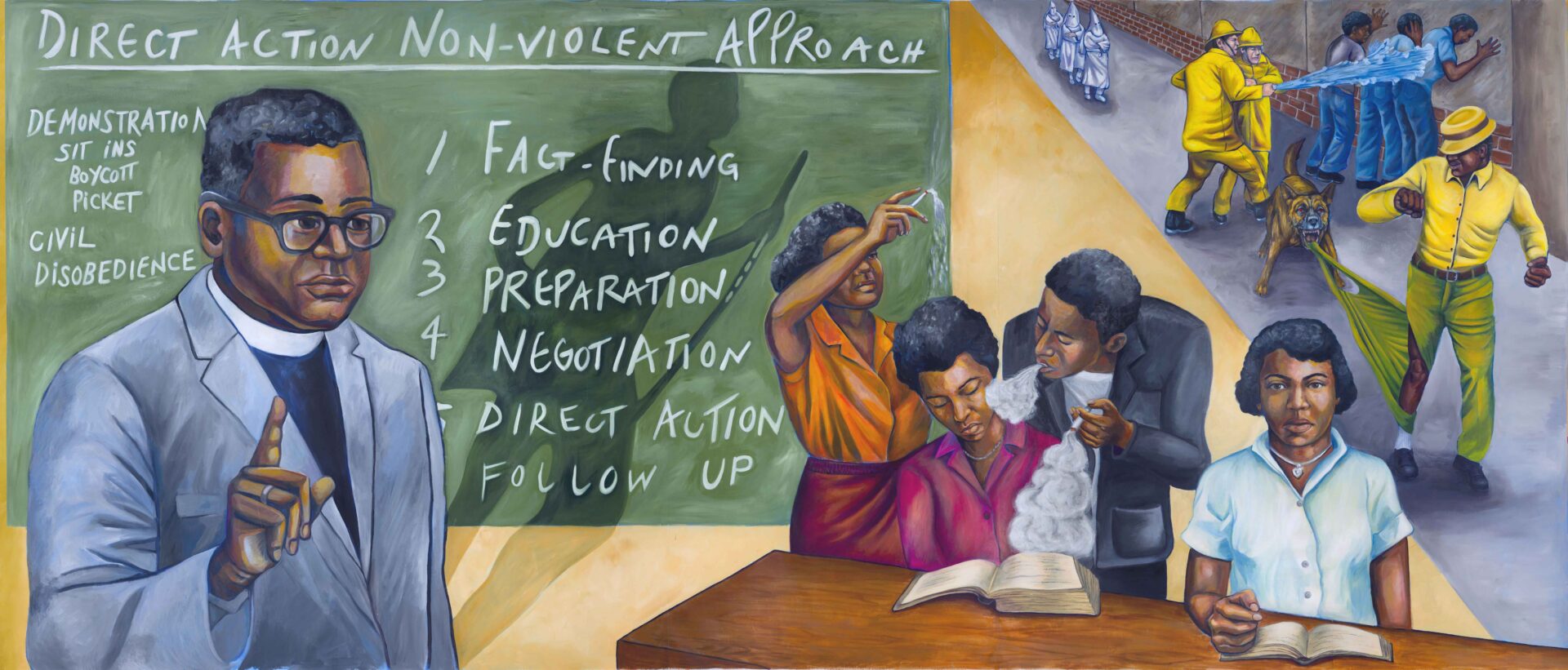
“Non-Violent Resistance” spells out the teachings of James Lawson, a Civil Right activist who studied Mahatma Gandhi’s method in India, and moved to Nashville, Tennessee at the urging of Martin Luther King
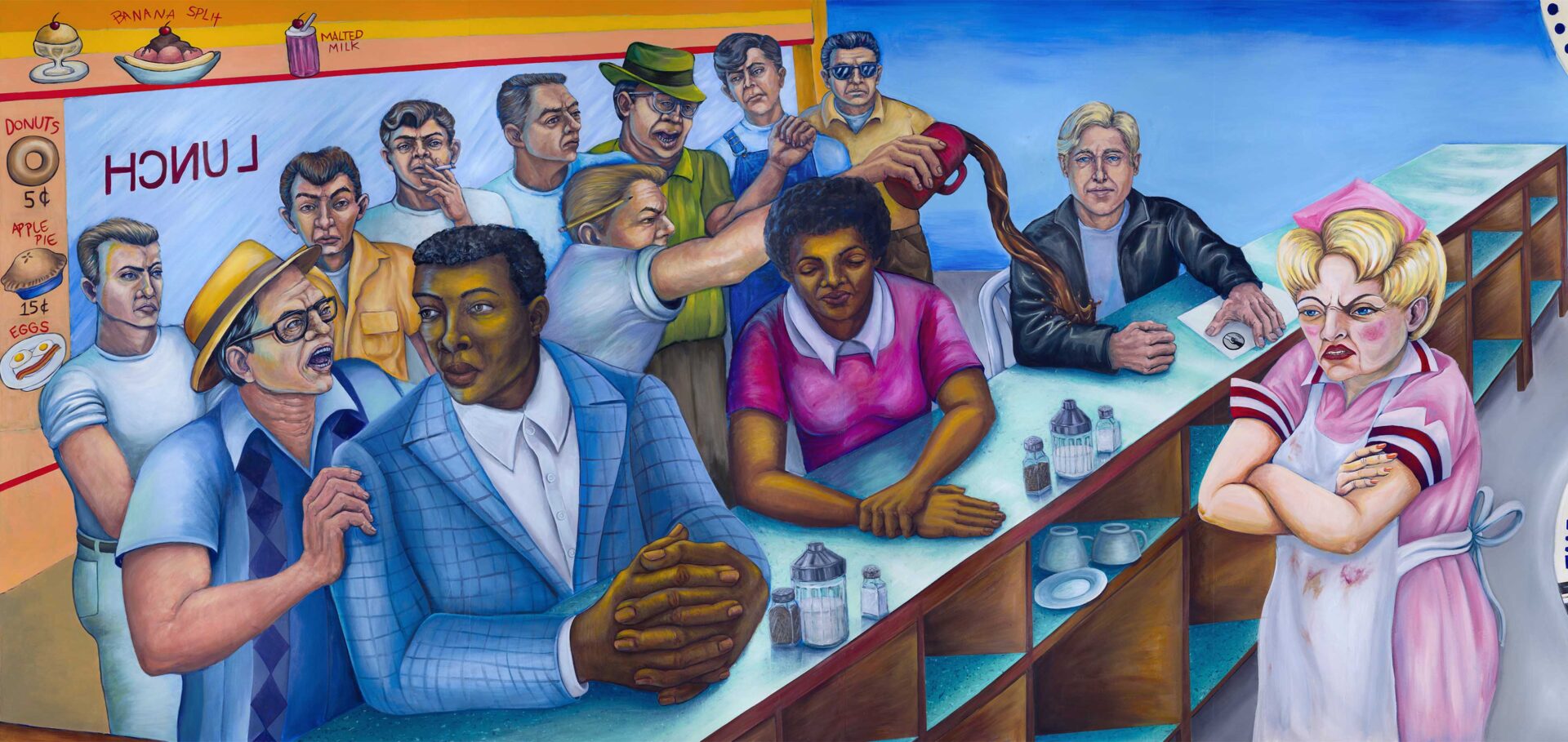
“Lunch Counter Sit-ins” refers to the May 28, 1963 incident at Woolworth in Jackson, Mississippi, when three black students sat at the counter where only whites could be served, and angry patrons attacked them. Depicted are Memphis Norman and Anne Moody. On the right is Jewish activist Paul von Blum from California, who traveled to the South to support the Civil Rights Movement in the 60s. In 1980 he became Professor of African-American Studies at UCLA. This year, in his 80s, he attended an anti-Trump demonstration.
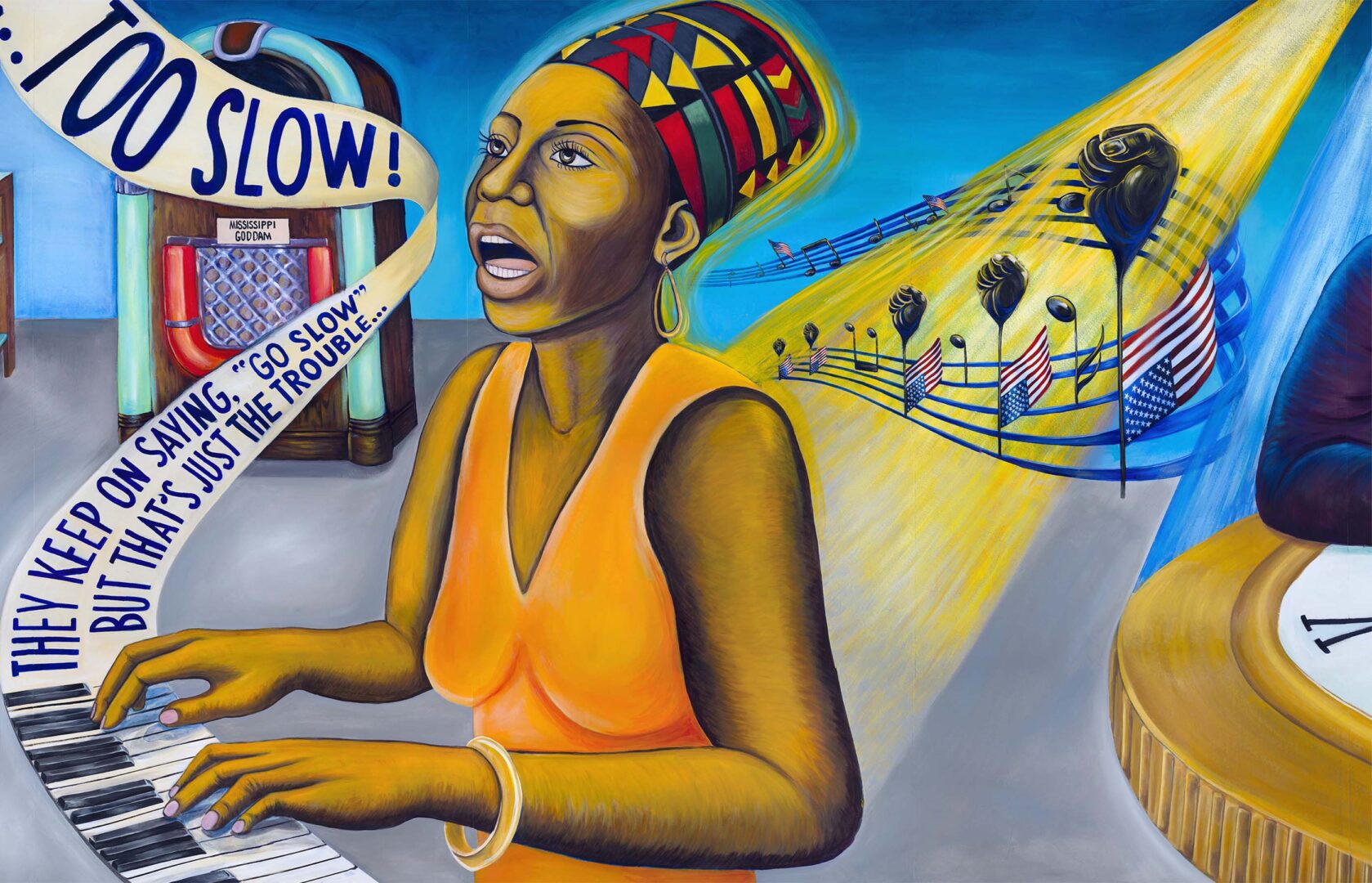
“Mississippi Goddam: Too Slow” is about the song composed by Nina Simone in 1963. You may watch the singer and pianist perform it at this link. “All I want is equality for my brothers and sisters and me.”
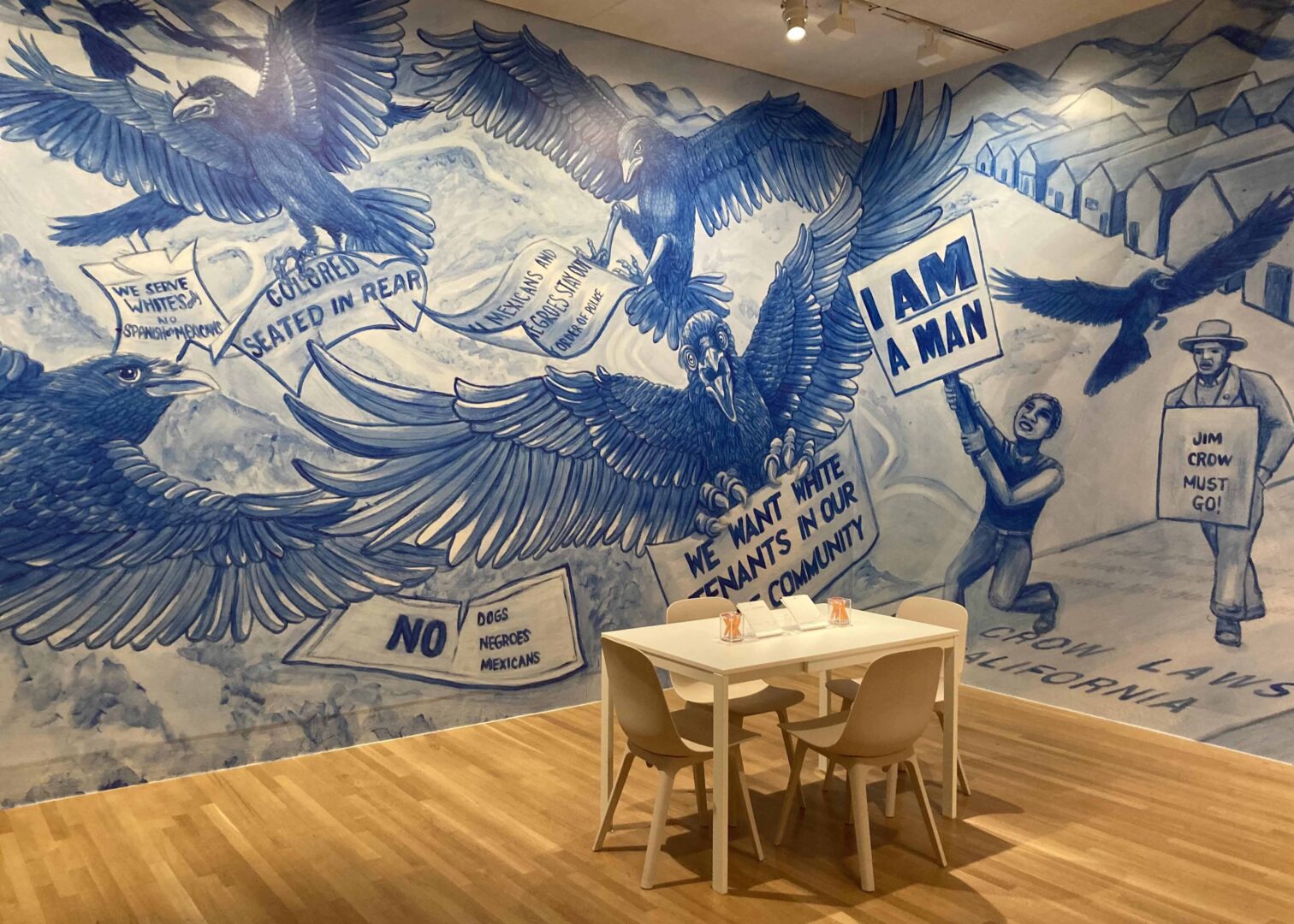
In a corner of the large gallery, you see the blue and white outline of the first segment of the 1960s, titled “The Murder of Crows: The ‘Ending’ of Jim Crow.” The Jim Crow laws that enforced racial segregation in the Southern United States were overturned by the Civil Rights Act of 1964 and the Voting Rights Act of 1965.
In case you wondered, read here why a flock of crows is called a “murder” and here why a group of ravens is a “conspiracy.”
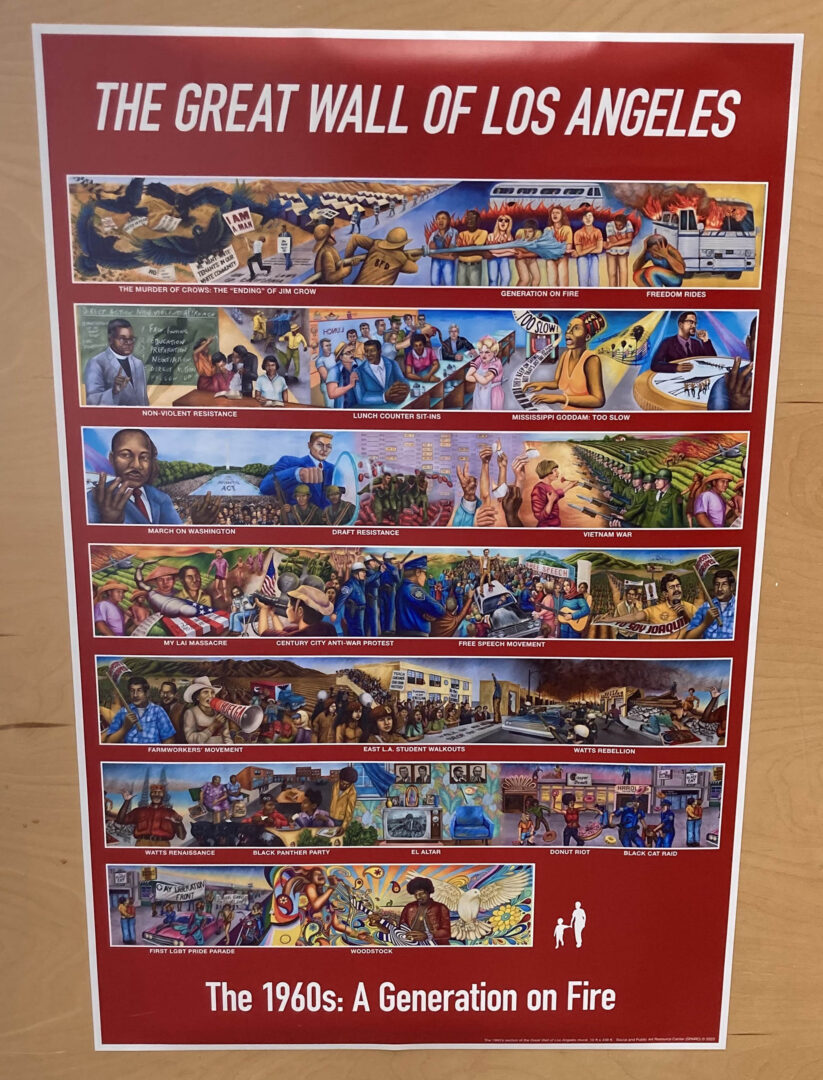
You may see all the 1960s panels in this poster. You will notice that they flow into each other, so there’s no clear delineation of where a segment ends and the next one begins.
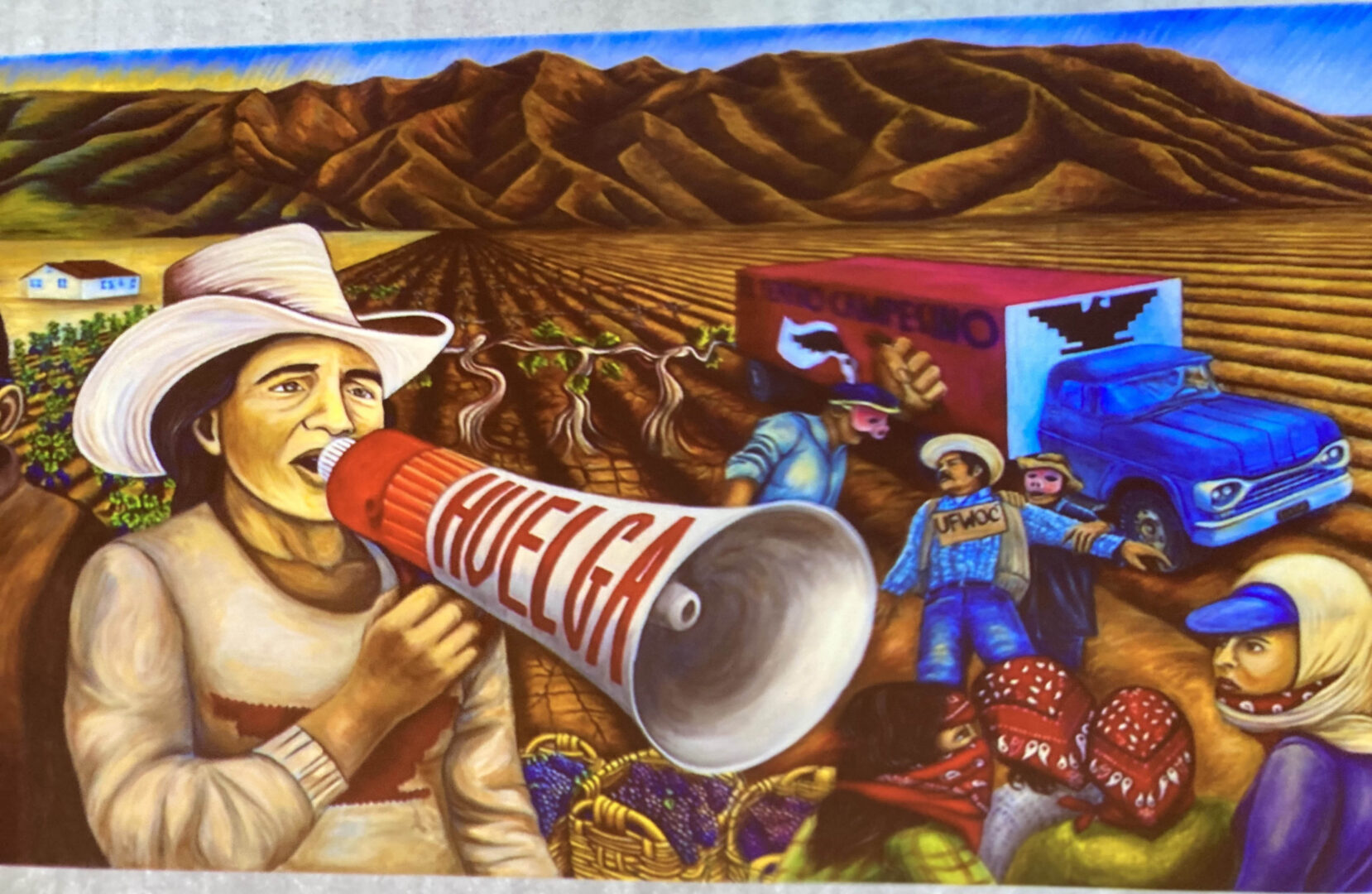
I selected Dolores Huerta leading the UFM (United Farm Workers) strike (Huelga), to honor this amazing woman’s accomplishments after she passed on October 28.
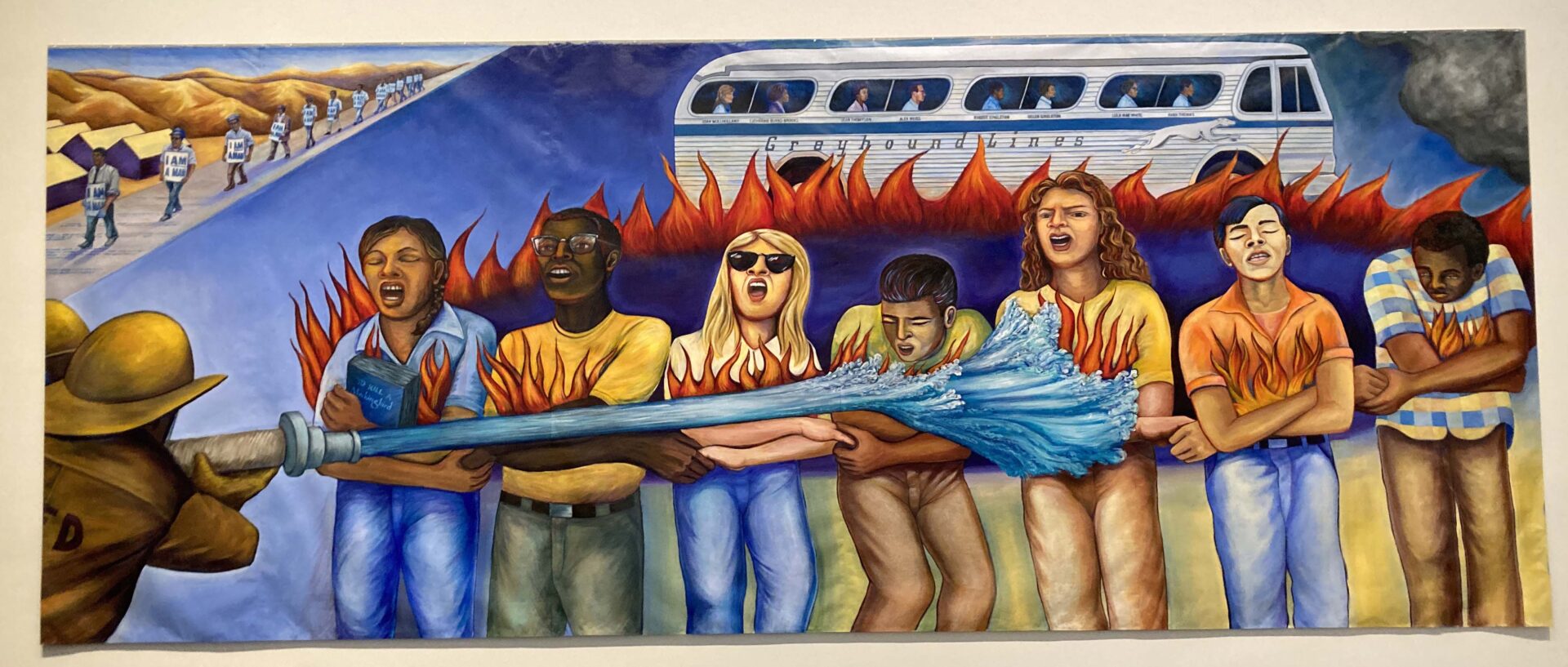
As for why the decade is subtitled “A Generation on Fire,” you may read my articles about when these panels were being painted at LACMA (Los Angeles County Museum of Art) from October 2023 to July 2024. That is when I could see with my own eyes the ingenious scrolling system where 40 feet of artwork can be painted on canvas indoors, be rolled up into a vertical cylinder, transported to institutions and galleries.
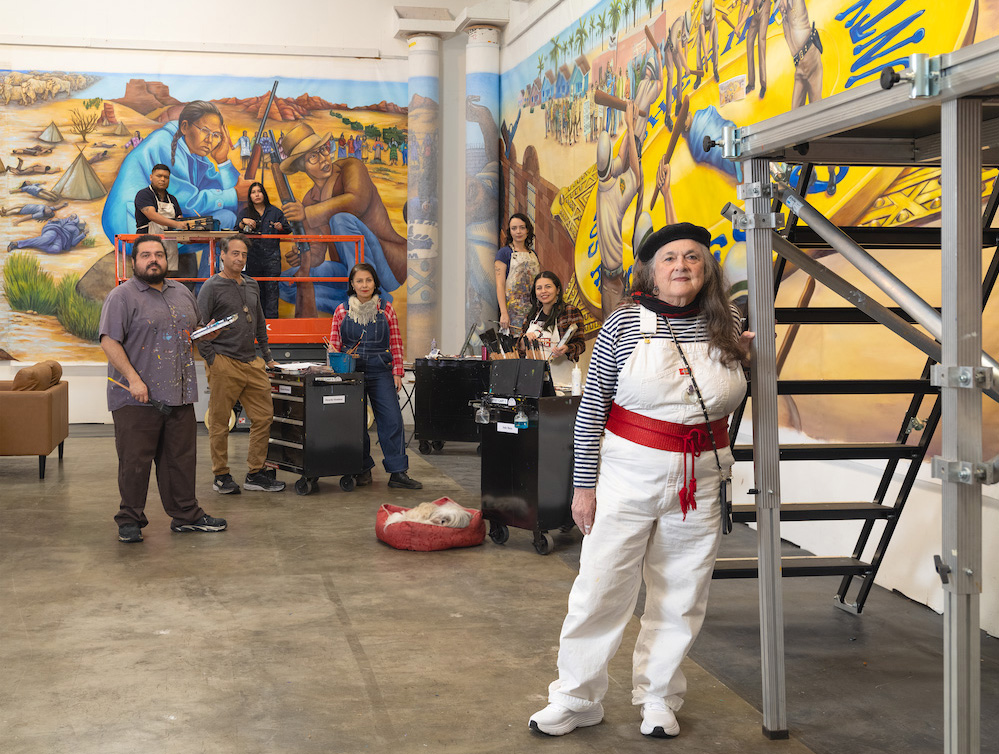
See Judy Baca and her team painting the 1970s panels. I had seen them when they were displayed at the Jeffrey Deitch Gallery from February 22 to April 4. Read my article here.
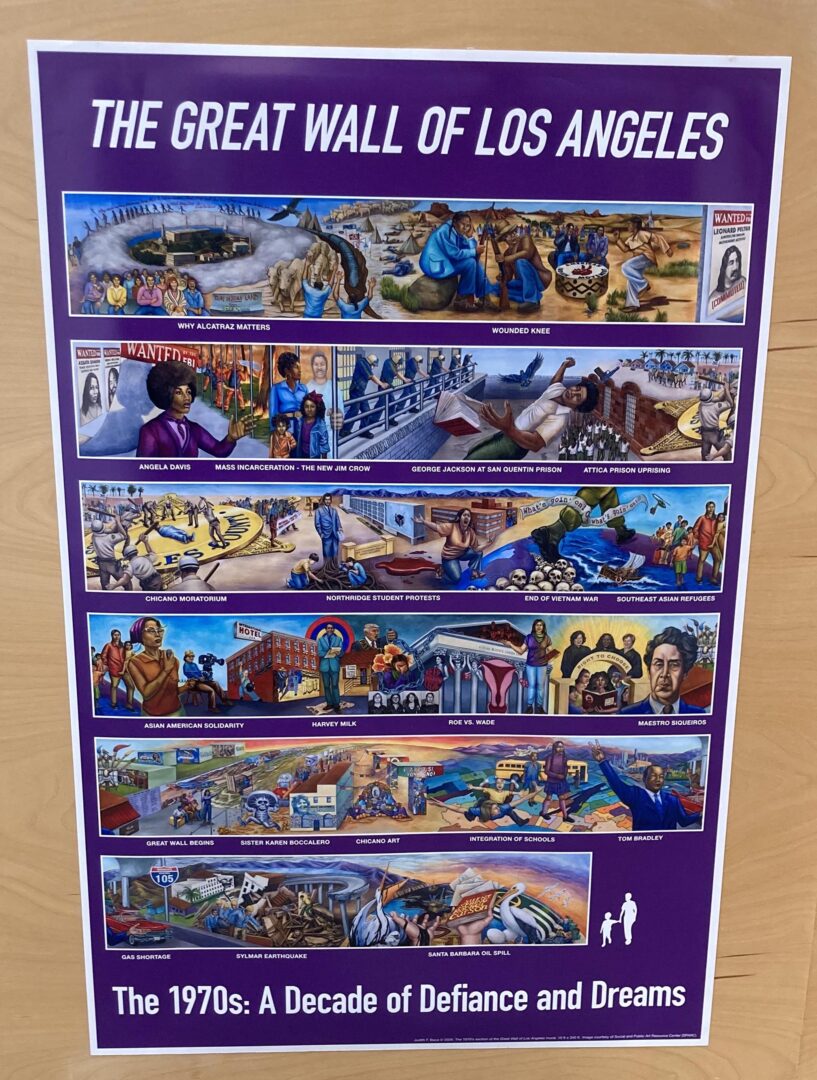
You may see them all in this poster. The 1970s: A Decade of Defiance and Dreams
The most exciting part of the Skirball exhibit for me was the video that showed the entire length of the Great Wall of Los Angeles. I had already seen a similar video at LMNA (Lucas Museum of Narrative Art), and you may explore every panel from prehistory to the 1950s in the photos and links included in my article “Judy Baca at LMNA.”
The bonus at this museum is that the video also included the decades that have NOT yet been added to the actual wall along the Tujunga Wash in the San Fernando Valley, but have already been painted on canvas: the 1960s, the 1970s, and the 1980s: The Taste of Bitter Fruit.
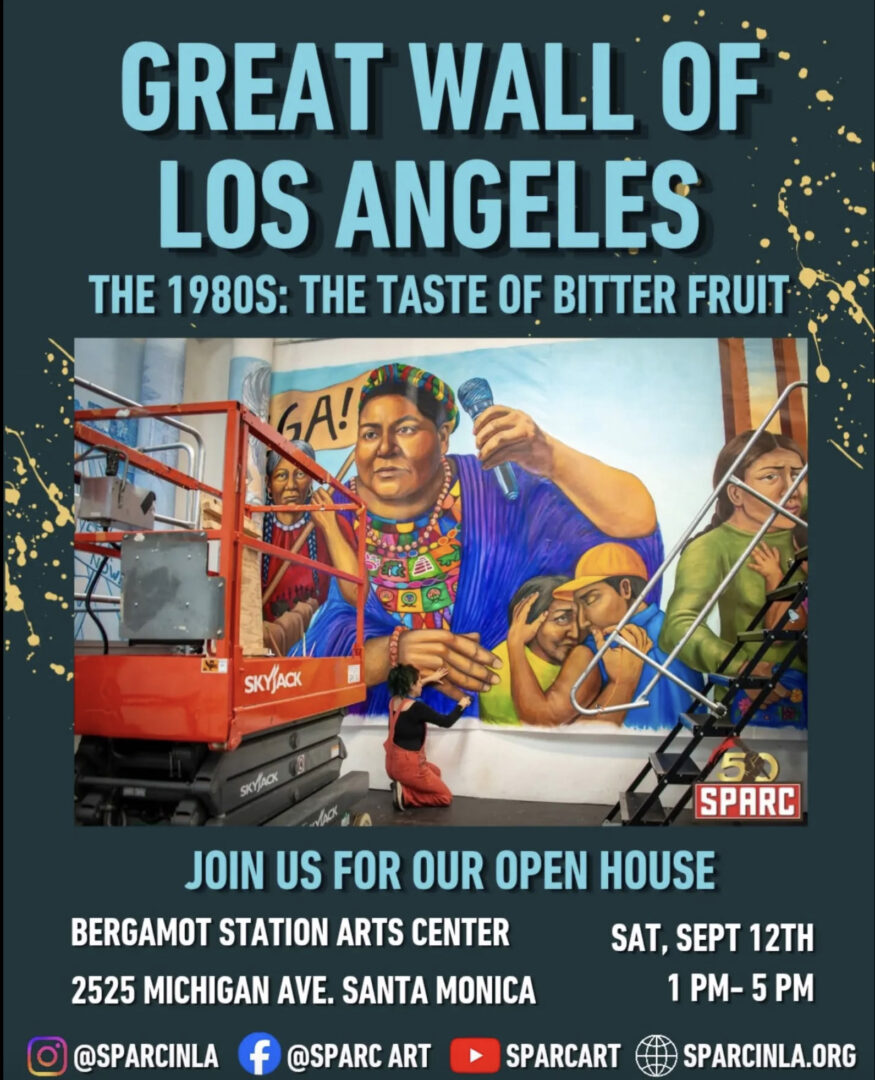
I did go to SPARCS at Bergamot Station on October 9 to photograph the 1980s panels that were still being painted. But I will wait for them to be publicly exhibited to write about those.
Judy Baca explains: “I envisioned a long narrative of another history of California, which included ethnic peoples, women and minorities who were so invisible in conventional text books.”
Please click on underlined words for additional info.