


Louisville, Kentucky, was not on my map of places to visit, but forces conspired to get me there, including several friends who once lived there. “Be sure to check out NuLu,” was the refrain.
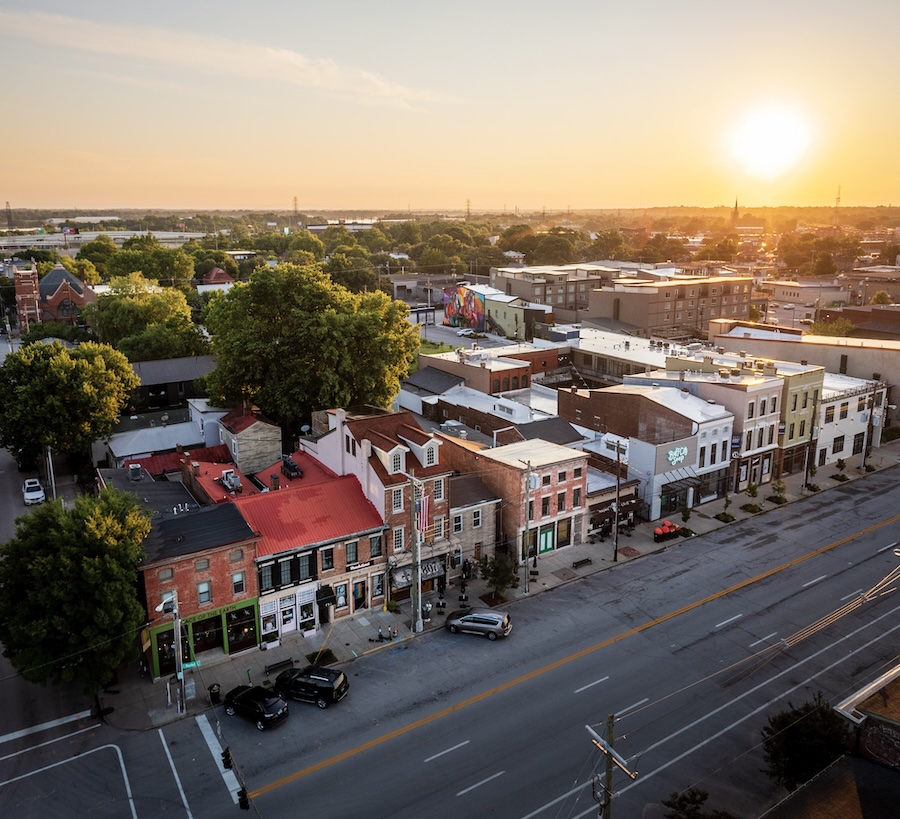
I learned that NuLu (New Louisville) is a happening strip of East Market Street, less than a mile from downtown. It bustled from the 1850s onward—nearly all commerce moved through the stretch. By the 1950s, most companies had relocated, and through the 70s, 80s, and 90s, the industrial area was largely left to deteriorate. That all began to change in the early 2000s.
The Newest Downtown Hotel
I set myself up near NuLu, as I wanted to be able to walk to the district. I checked into downtown’s newest hotel—Hotel Bourré Bonne, a Curio Collection property that opened in 2025 (133 W. Market Street). It’s about six blocks from NuLu, and a block over from Whiskey Row, which I explored after checking in.
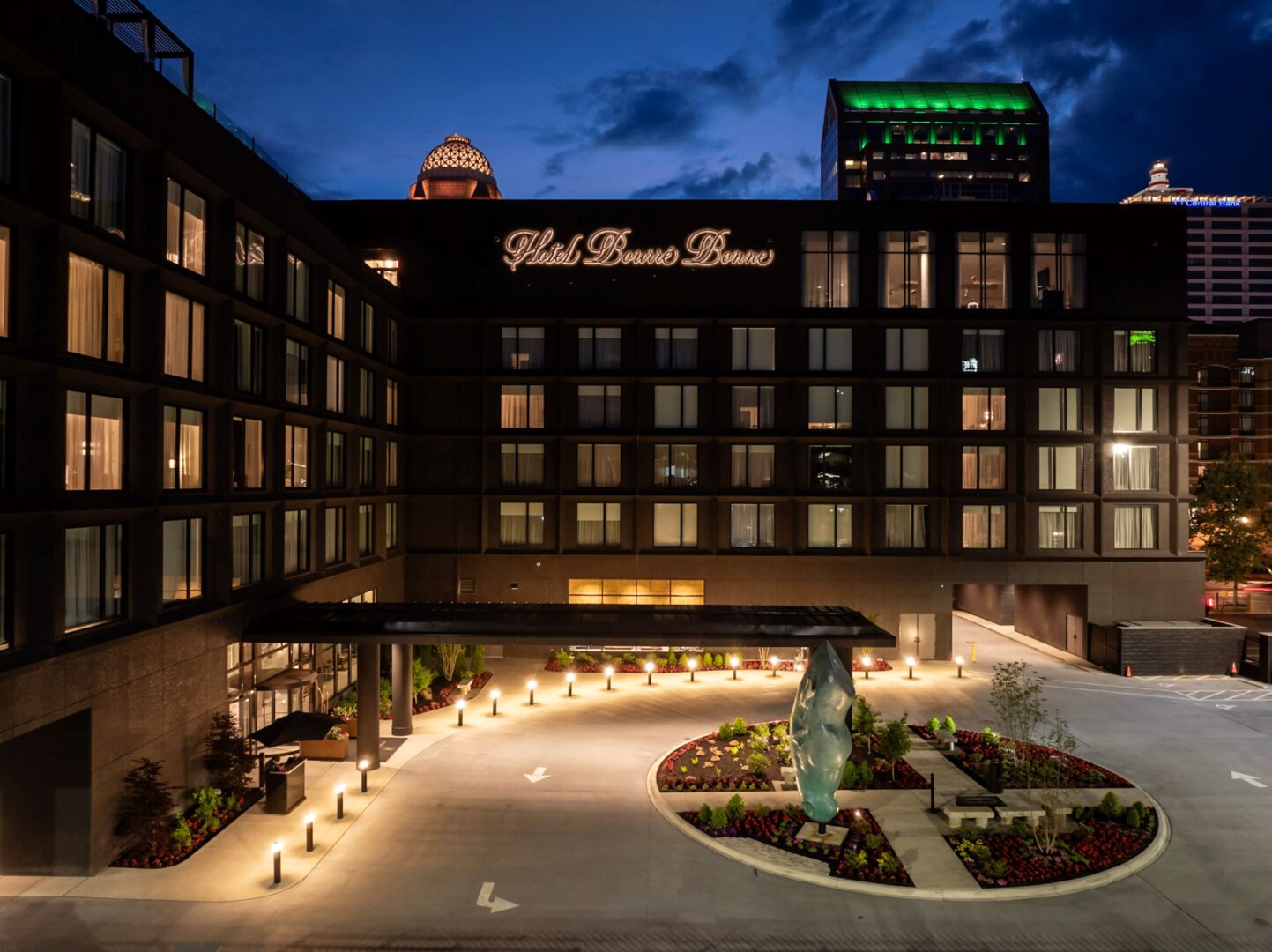
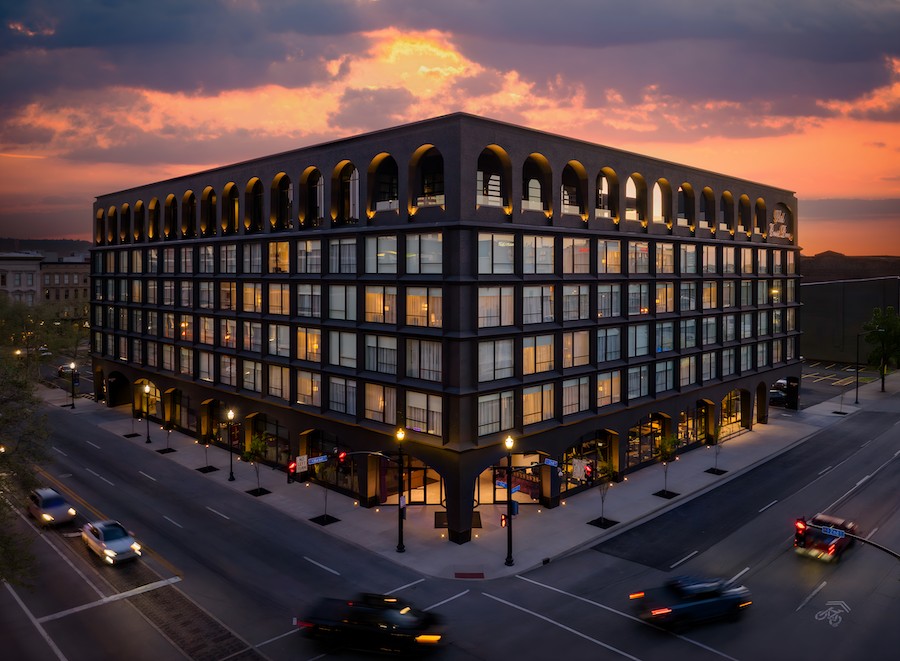
The hotel’s black sculptural facade mimics stone (management says it’s reminiscent of igneous rock). The material gives the building an elegant, monumental look. The six-floor structure is set with wide arches at the top and bottom that recall Louisville’s historic cast-iron architecture. A large oxidized horse head sculpture greets you outside the entry.
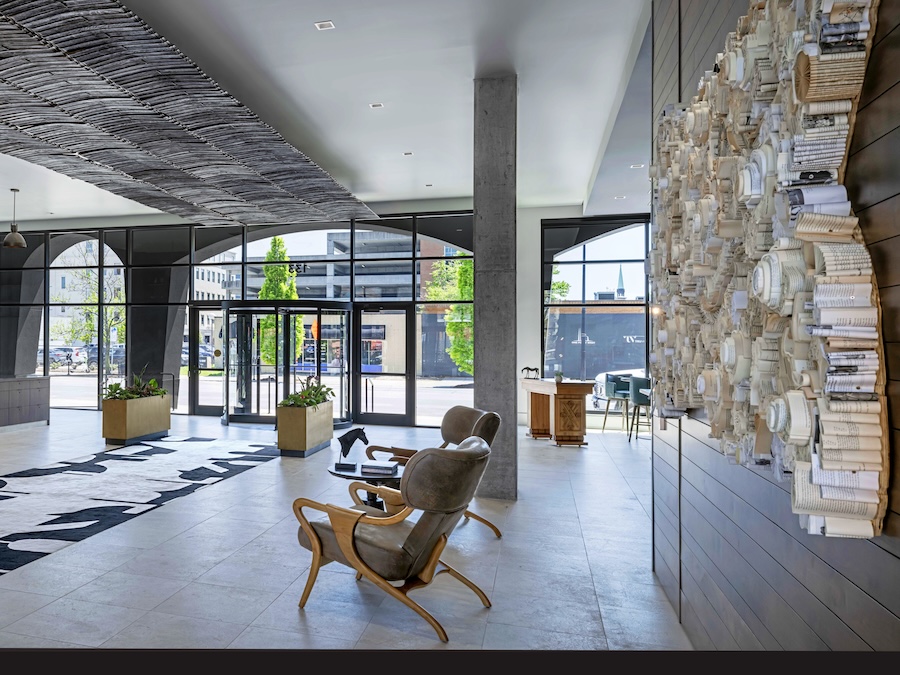
Looking up after entering the lobby, I saw deconstructed bourbon barrels (called staves), lining the ceiling—a tribute to Kentucky’s distilling legacy. My short walk around the lobby, the rooftop pool, and bar turned up interesting art I wanted to explore. But first, I strolled Whiskey Row, a block spanning Main Street that dates to the mid-1800s. As the name suggests, the trade here included Kentucky bourbon, but also spirits from other states, including West Virginia and Pennsylvania. The liquor was blended along the row, warehoused, and shipped downriver to New Orleans, and also to the West.
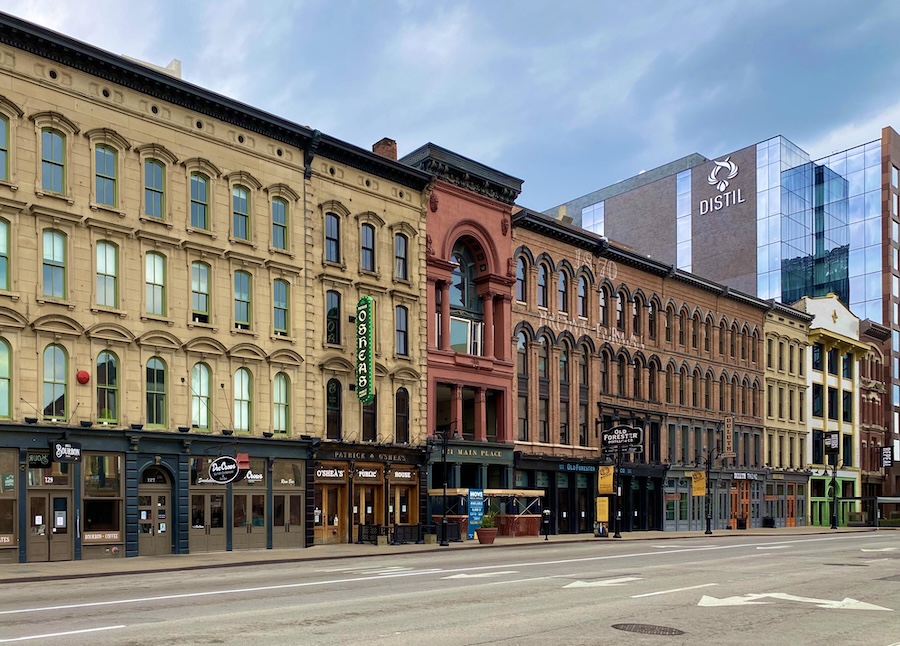
Along the stretch, also called the Iron Quarter, there are numerous cast-iron facades—it’s one of the largest concentrations outside of New York’s SoHo. Now, the Row is largely a tourist district with hints of a bourbon theme park feel. Tasting rooms are lined up with logo-branded merch crowding doorways: glassware, leather flasks, Derby hats, and bourbon-infused chocolate.
“Bourbon was born here,” is a boosterism slogan you’ll often hear. The statement stretches the truth a bit—what is true is that Louisville and its Whiskey Row were the legitimate commercial center of the bourbon trade in the U.S.
What’s also true is that the bourbon is damn good. Hotel Bourré Bonne’s Beverage Director, Davy Butterworth, set me up with four tasters, all of which shamed the cheaper whiskey I buy at a grocer in L.A.
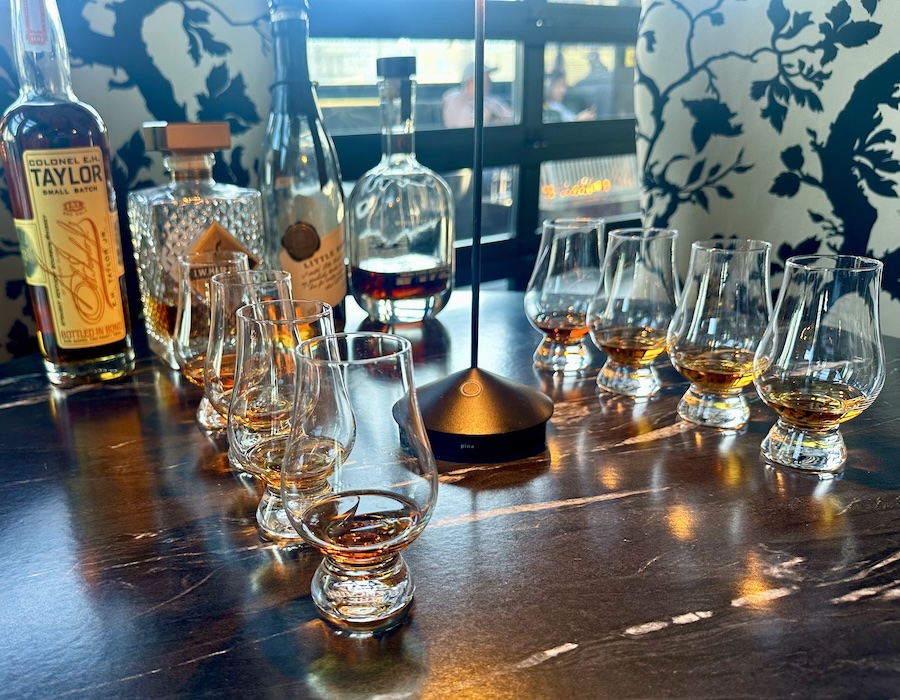
A Tasting of Four Bourbons
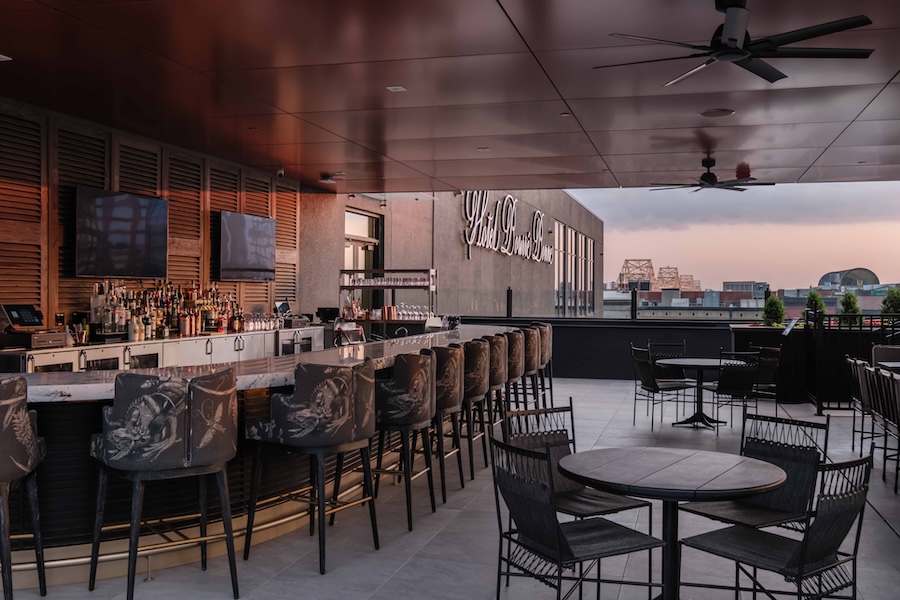
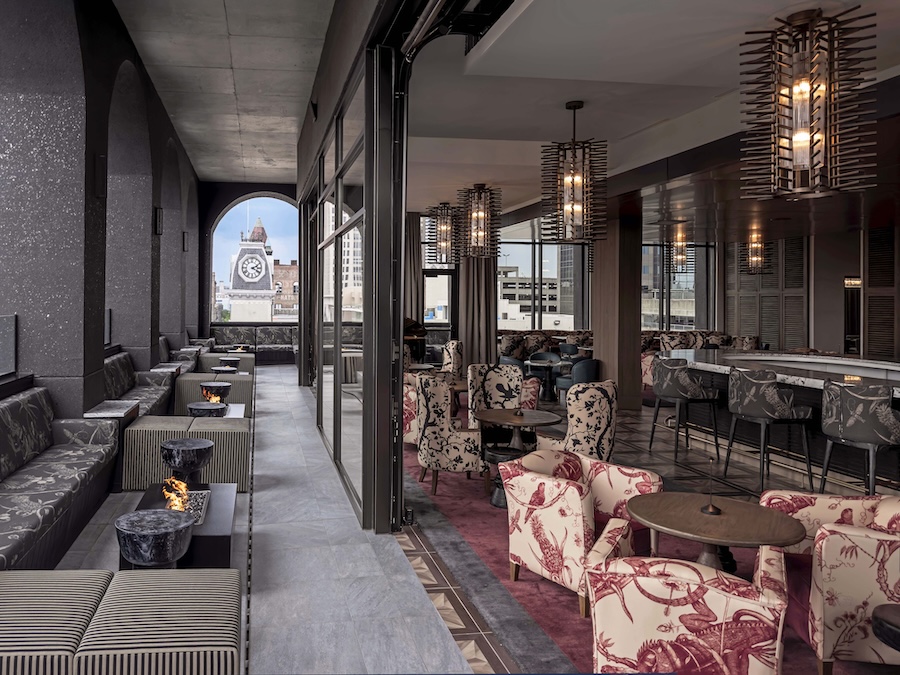
I joined Butterworth at a table near the hotel’s rooftop bar, an expansive space that includes a pool, a cabana, and a hot tub. All told, the area’s about 6,000 square feet. Sleek garage-door walls roll up when the weather’s right, exposing urbane views of downtown. The outdoor seating areas, all with skyline views, are set with fire elements. When I arrived around 6 p.m., the place was moderately full, and by 7 p.m., it was packed, folks out for the night, laughing and having more fun than I’ve seen in a long time.
Butterworth and I were having our own private party; his extensive knowledge of bourbon-making was vast. He explained that barrel proof, also known as cask strength bourbon, is known for its fiery nature. “It’s going to give you what we call a Kentucky hug,” said Butterworth. “It lights the esophagus on fire, makes you feel warm from the inside out. After you get past the first sip or two, it settles in with a nice, smooth, rich, concentrated flavor profile.”
Among the bottles we sampled was I.W. Harper, a 15-year bourbon with rich, tannic notes. “A spicier, bolder extraction,” Butterworth explained. “Nutty, spicy, and rich and robust. It has an oaky tannic finish. Sort of a granola, grainy mouthfeel.” He was spot on with the description.
We also tried Little Book by Jim Beam Distilling—a blend of different barrels, and more intense than the others we sipped. I felt the burn the moment the liquor hit my tongue, which seemed to be on fire in a good way. As Butterworth savored his taste, he weighed in: “I get a little cherry wood smoke going on—a lot of heat.” We waited a few moments, letting the taste linger. He cocked his head and ticked off what he was sensing: cherry, smoke, fire, and toasted marshmallow.
“I definitely get the cherry and toasted marshmallow,” I said, tipping my glass.
“Yep,” he said. “It’s a really rich profile.”
How will I ever go back to the cheap stuff?
The NuLu Food Scene
That night, I walked back to NuLu—about a 20-minute walk from Hotel Bourré Bonne. NuLu sits roughly between Hancock and Baxter Avenues. I was told it’s now also stretching out to either side of Market Street. The weather was lovely for the end of March, with the high about 68 degrees.

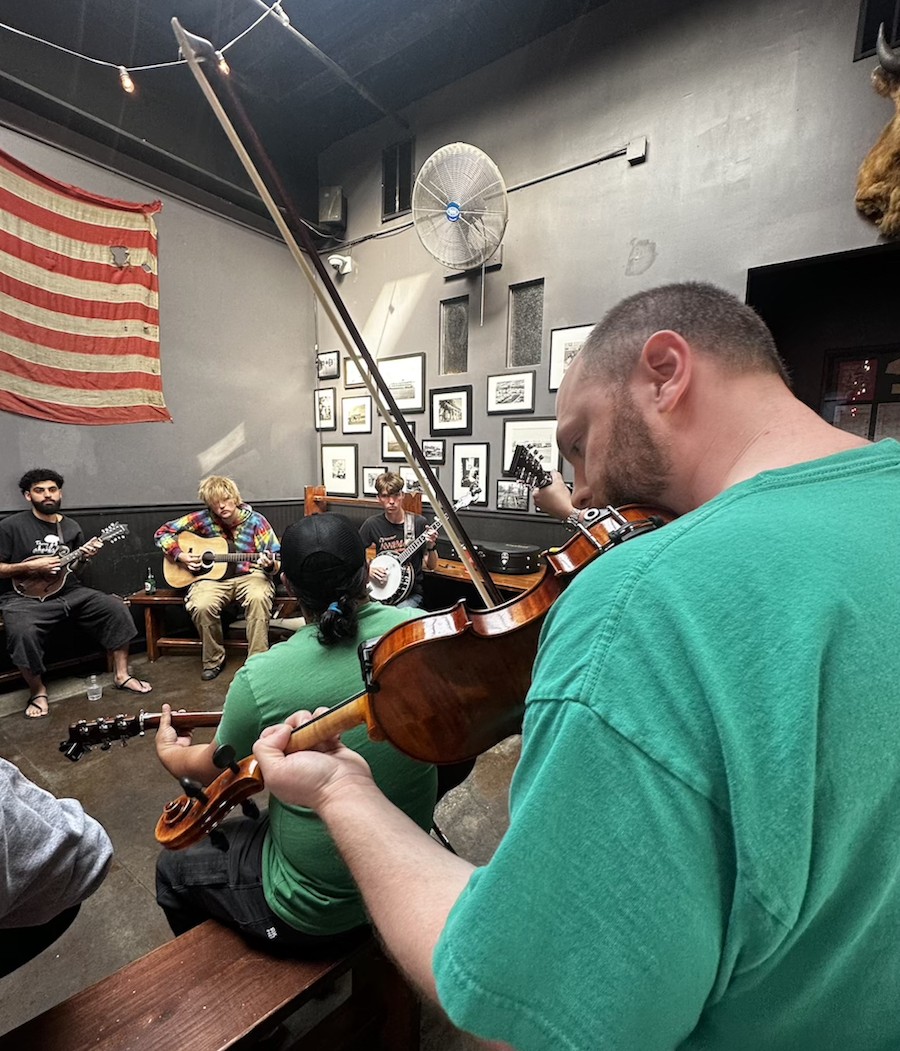
I had read about Feast BBQ, set on the further end of the strip at 909 E. Market Street. It’s been a top contender in the LEO Weekly Readers’ Choice awards since it opened in 2015. The look of the 1920s building, a former mechanic shop, is honest and unpretentious; they kept the industrial bones of the place. Still, there’s something homey and right about it all because here, the main point is the food.
At the front counter, I ordered the pulled-pork sandwich and a pint of beer. They serve a bourbon slushie that I hear is legendary, but unfortunately, I heard about it the day after I visited. The meat is hickory-smoked, and the sides are made daily. I sat at a counter overlooking a circle of a dozen musicians playing bluegrass. The sandwich arrived on a potato bun served with coleslaw inside. Sorghum added some sweetness, and the coleslaw cut it all cleanly, a good combo.
The musicians sat on benches backed by a large, tattered American flag on the wall. As I ate, the easy music pulled me in. It might have been the beer, but I kept thinking, “This city is growing on me.”
Among other eateries, Mayan Café has long been a neighborhood cornerstone, championing farm-to-table dining. Also: the James Beard-nominated MeeshMeesh Mediterranean and Sake a Gogo, which is getting noticed.
Overall, AFAR magazine has named NuLu one of “The Best Food Neighborhoods in the USA.”
The High Church of Bourbon
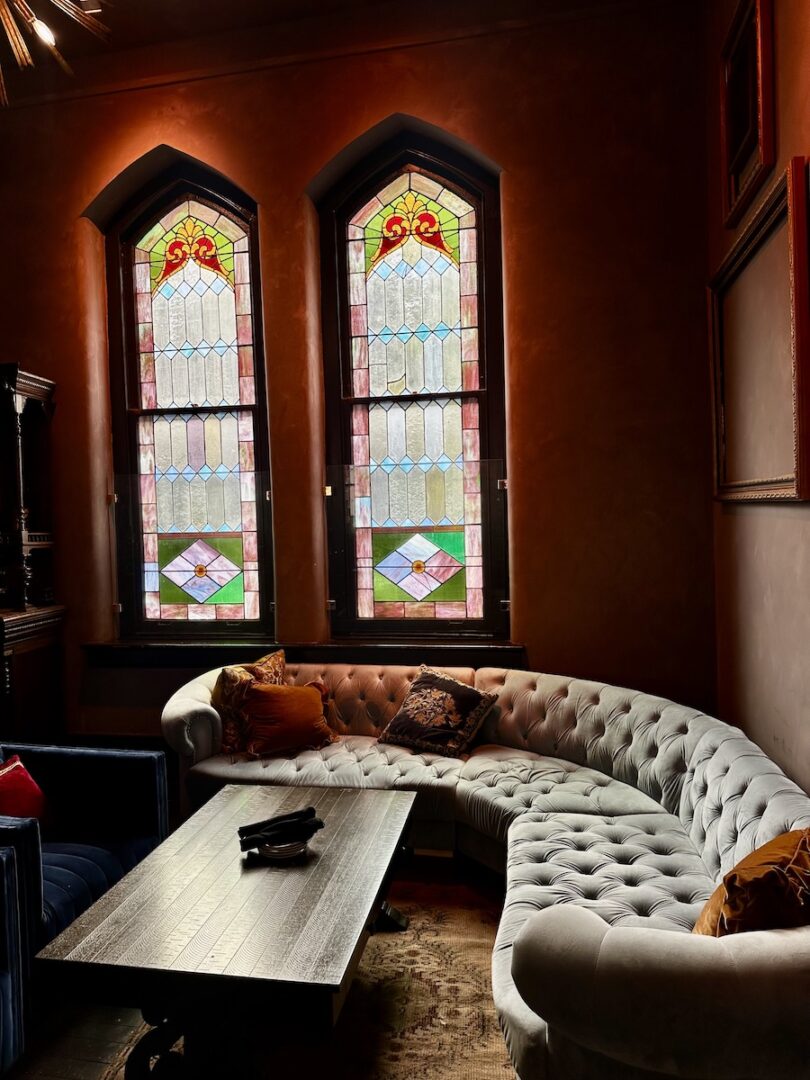
Walking back to Hotel Bourré Bonne, I stopped at the Last Refuge, housed in a renovated 1880s German Methodist church. Billed as a “High Church of Bourbon,” it has towering stained-glass windows, vintage chandeliers, and a vaulted ceiling. Religious statues and altar candle stands are placed here in corners and niches.
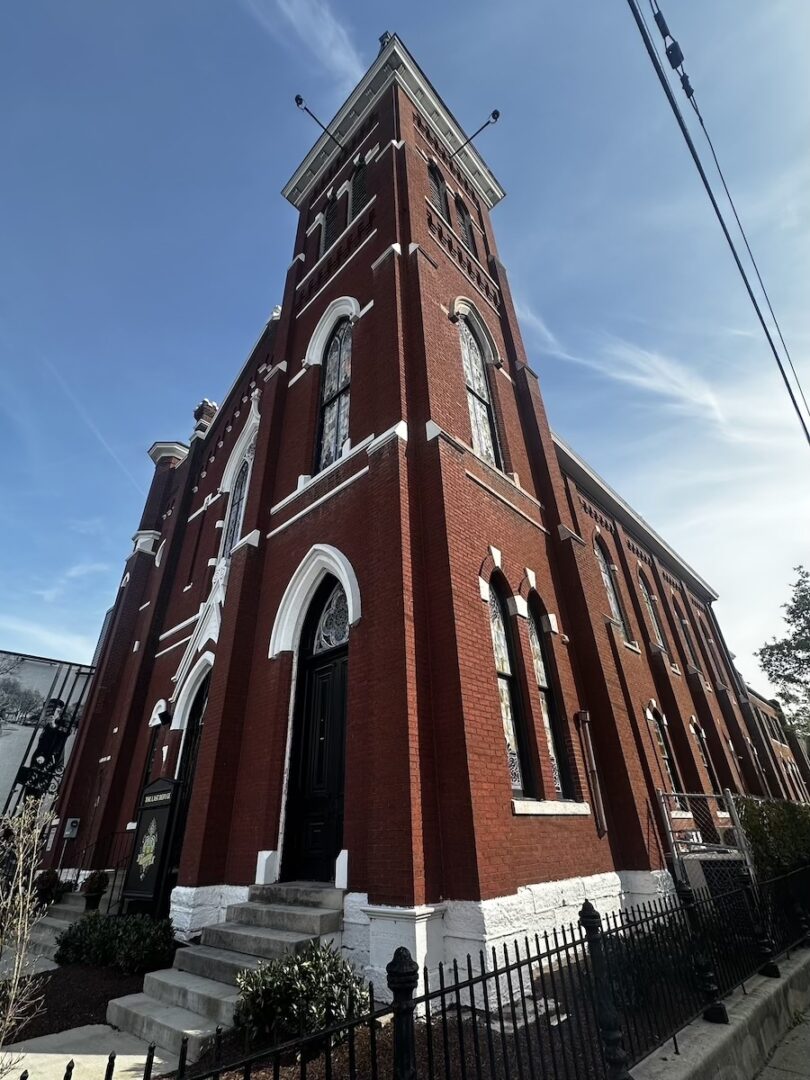
The Last Refuge is the flagship venue for Bob Dylan’s Heaven’s Door Spirits brand. The property includes enormous black-and-white murals of Dylan painted on the building. You get the feeling that he’s watching over the place.
The bar area’s towering walls are stocked with a collection of over 1,500 American whiskeys. There’s also dining and live music.
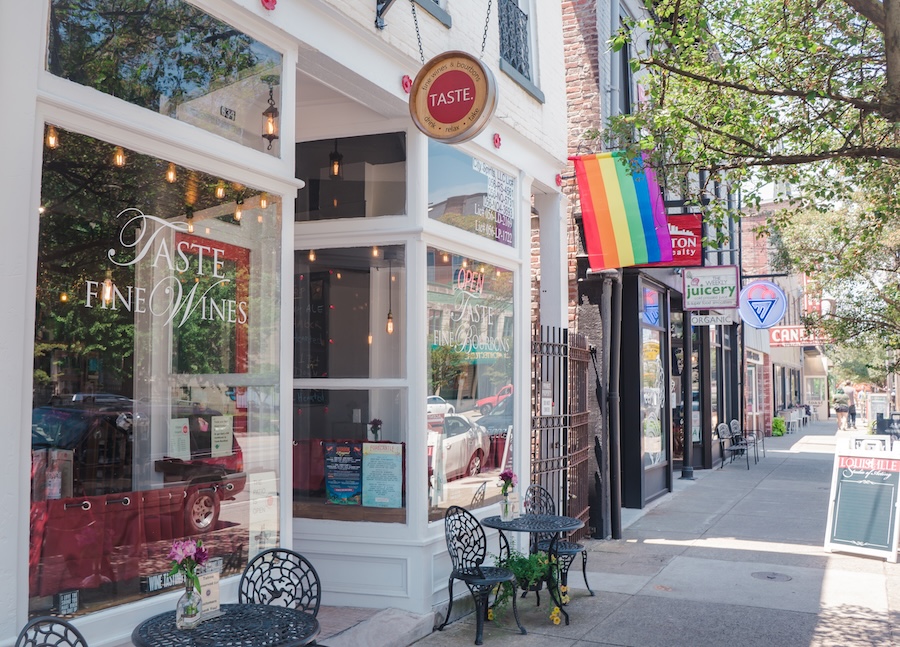
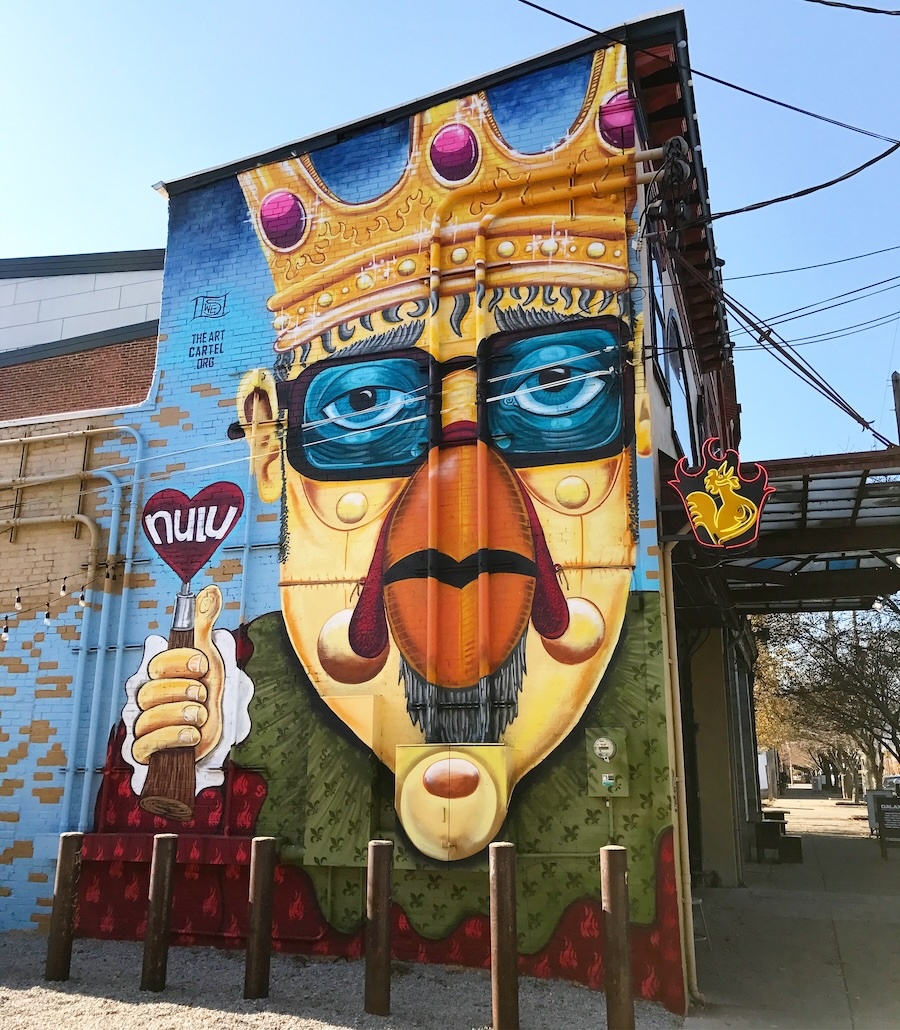
Walking back to the hotel, I noted the area’s architecture: Victorian and pre-Civil War federal buildings, Italianate, and some townhomes on adjacent streets. Muth’s Candies is a fixture along Market Street. It’s been around since 1921, now run by a fourth generation of owners. Also, the Red Tree home furnishings shop has a lovely mural of flowers on the side of its building. And two more (among many more): Pappy & Company (bourbon-inspired products), and Clayton & Crume, which makes leather goods.
If you’re interested in a great overview of NuLu, the NuLu Sites and Bites Walking Tour offers an “immersive experience” along with insider stories.
Beyond Nulu, it was good to learn that the city has five major arts institutions: The Louisville Orchestra, the Louisville Ballet, the Actors Theatre, and the Speed Art Museum, which I visited, impressed by its size and holdings that span ancient Egypt to modern art.
The Hotel’s Collection of Kentucky Art
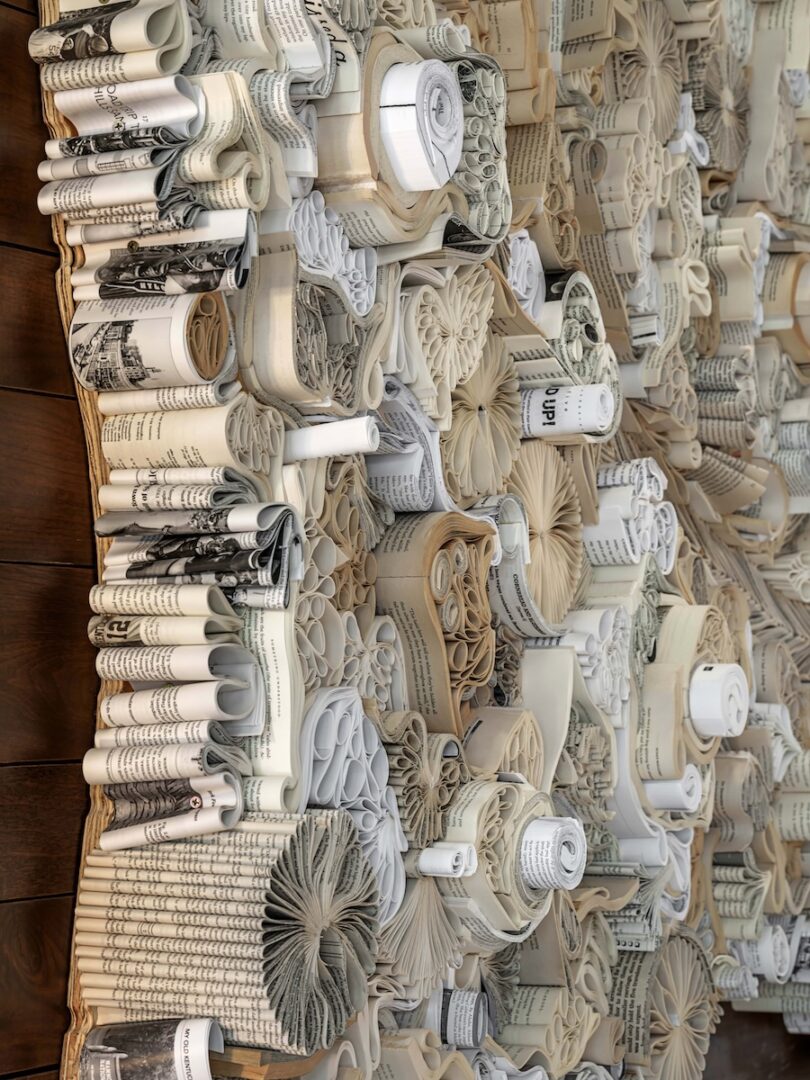
Back at the hotel, I perused the property’s art, beginning with the lobby’s curious sculptural piece that stretched about 10 feet across. It looked to be made of curled reams of paper, and drawing close, I realized they were books. Hotel Bourré Bonne manager Tyler Burns told me the artist, Nikki Liovich, took bits of Louisville history and wove them into the creation. Included are stories about the Ohio River and native son Muhammad Ali, along with cocktail recipes and Churchill Downs race day programs. The work lends a sense of soulful history to the lobby.
Opposite Liovich’s work, I spotted a large, somewhat moody mural of a sitting jockey created by local artist Tyler Robertson. His work is also featured in guest rooms. Robertson is the official artist of the 151st Kentucky Derby, held in May 2025. A former elementary school teacher, he uses bold strokes and vivid colors to depict the raw energy of the sport.
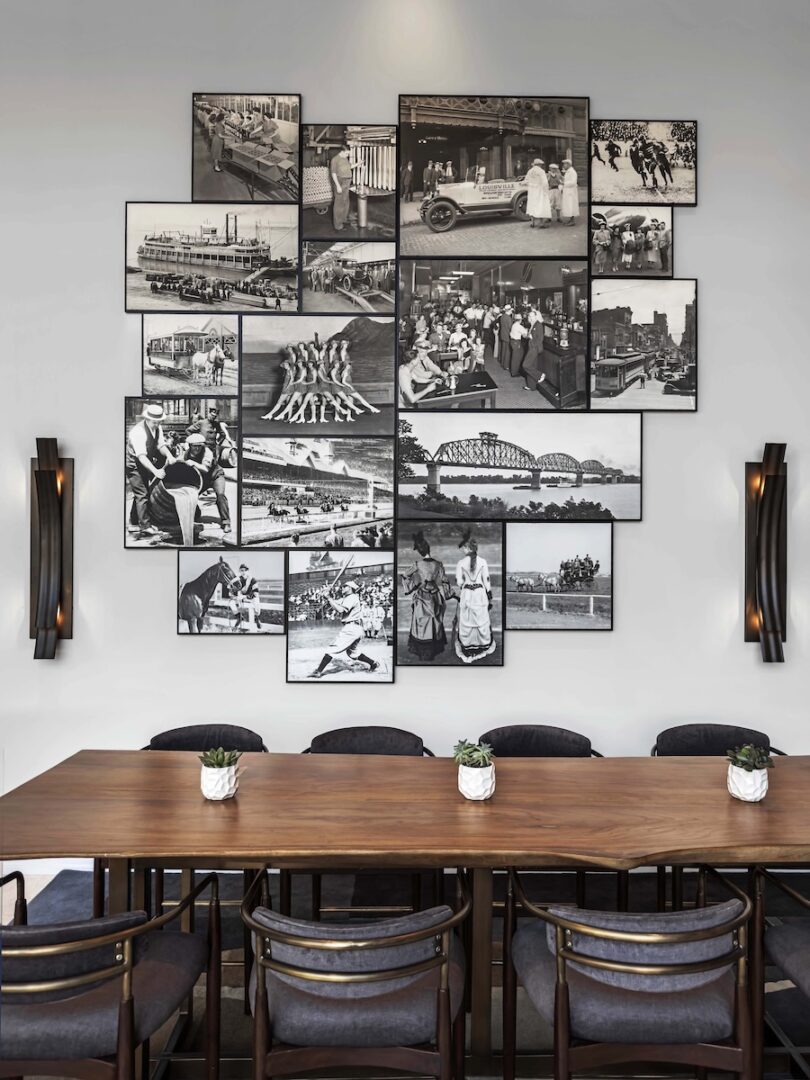
I found artwork referencing Kentucky history throughout the hotel, but appreciated that it wasn’t overwhelming. For example, there’s a collage of historic photographs just off the lobby that, every time I glanced at it, gave me context for my stay.
The lobby has a boutique with high-end brands including Maui Jim, Yves Saint Laurent, Chanel, and Gucci. Also, Clayton & Crume leather products—I spied a beautiful sleeve case that would fit my laptop. It was all a bit pricey for me, but the wealthier Louisville set and well-heeled travelers will appreciate it.
Nearly all of the relaxed, easy-looking furniture in the hotel is sourced from Bali. It’s an unassuming look that’s at once stylish and comfortable. Manager Burns calls the property’s experience “warm and engaging but not overpowering by any means.”
The 168 guest rooms are comfy—polished raw concrete floors are set with rugs, and there’s custom woodwork and earthy tones throughout. There are 28 suites and four corner suites, along with 16 corner king rooms. The gym is large by hotel standards. I appreciated the drink dispenser with various flavored waters, some with caffeine.
A Steakhouse with Standout Appetizers
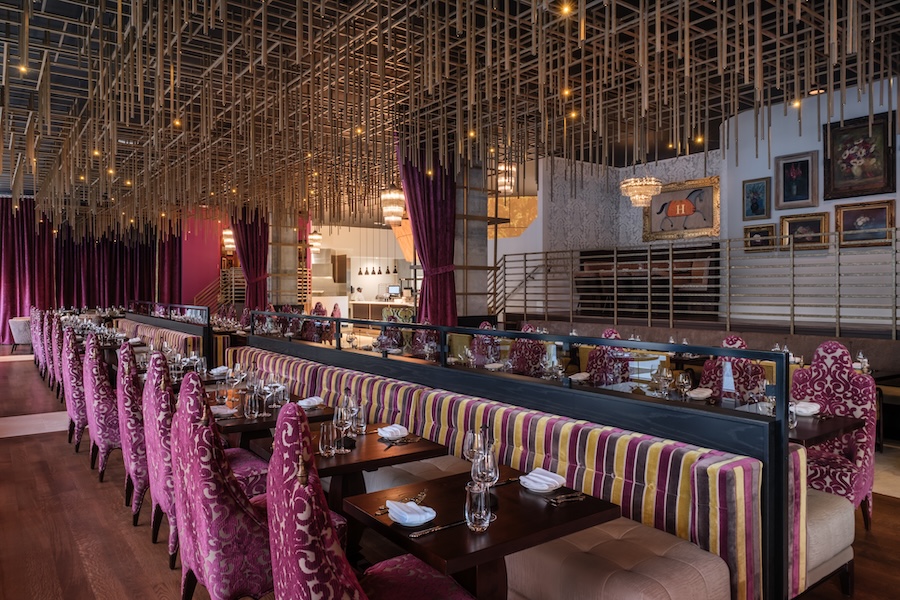
On my final night, I dined at the Steakhouse Bourré Bonne, a stylish sort of glam space set with large brocade chairs, its ceiling a mass of light fixtures that descend like artful pipes. The look is decidedly chic and elegant, but not too studied.
The French-inspired menu has a good selection of appetizers—smoked fish dip, lamb meatballs, and tuna tartare, among others. Steak choices include Fischer Farms filet mignon, Black Hawk Farms Wagyu strip, and Australian Wagyu Picanha. I chose the latter, served with truffle butter—delectable. But even more so, my starter: the braised octopus with five-spice sweet potato, fried kale, charred onion aioli, and garlic chili crisp. It all worked wonderfully, the warm sweetness of the potato, the crackle of kale, and the smoky aioli blending with the heat of the chili crisp.
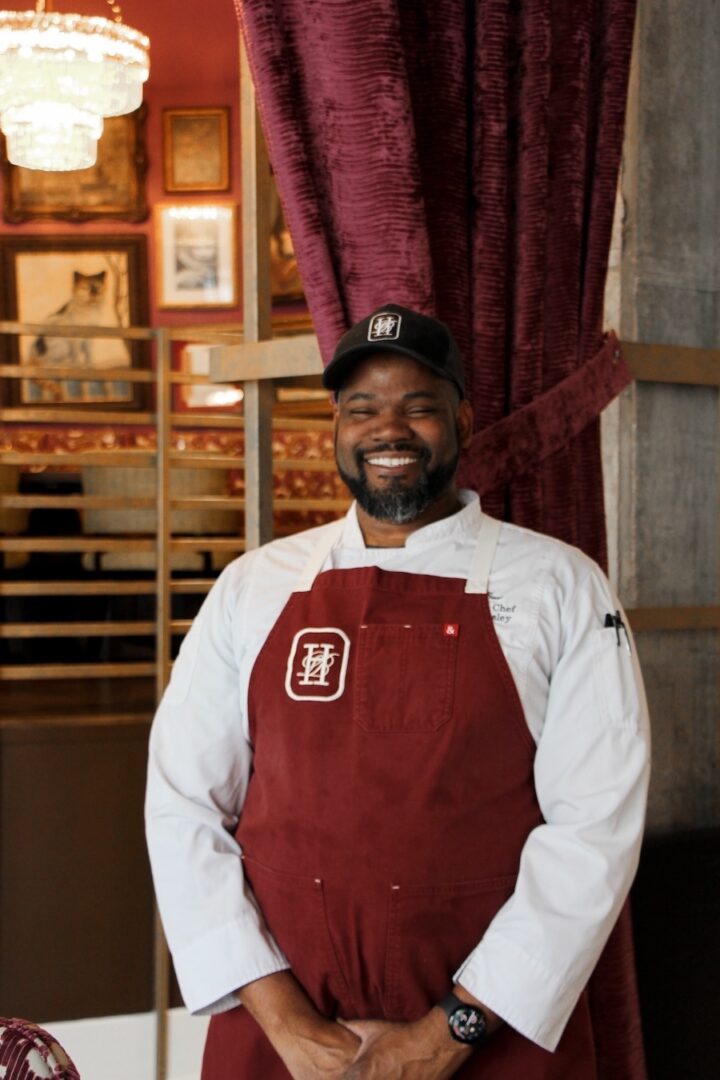
Executive Chef Henry Wesley oversees the menu. He’s led staff at various Louisville restaurants, including Le Moo and the Village Anchor.
Back on the plane headed to L.A., I reflected that the city surprised me. It has energy and a quiet confidence that all feels authentic. Would I return to Louisville? Absolutely.