


For the penultimate ballet in its Spring repertory season, San Francisco Ballet turned to former principal dancer Ulrik Birkkjaer to stage La Sylphide at the San Francisco War Memorial House. Birkkjaer brought his long experience with the ballet extending from his student days at the Royal Danish Ballet Company where he rose to principal dancer, at San Francisco Ballet, and guest performances that included frequent appearances with Los Angeles Ballet.
Not as well known as Swan Lake or Giselle, the romantic ballet La Sylphide also involves an entitled male, whose yearning and pursuit of something elusive sets in motion complicated and ultimately tragic events. Originally created in France in 1832, choreographer August Bournonville wanted to import the ballet for the Royal Danish Ballet. Not liking the price tag for the music, Bournonville instead commissioned a new score from Herman Løvenskiold and choreographed his own La Sylphide, premiered in 1836. Performed continuously ever since by the Royal Danish Ballet and exported to companies around the world, La Sylphide, arguably, is the most popular of the Danish master’s ballets.
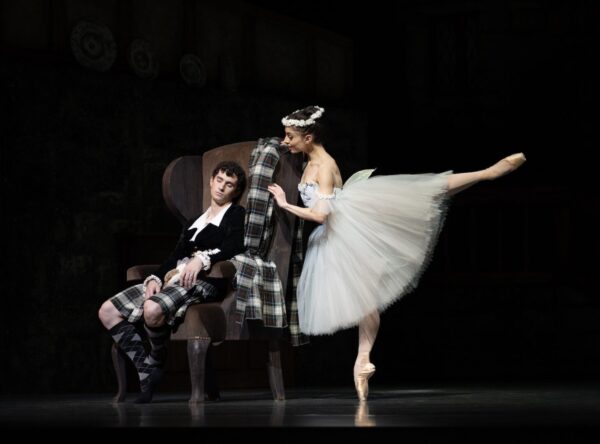
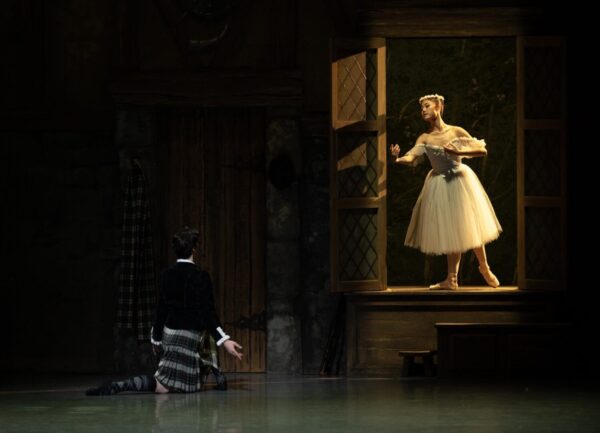
The ballet centers on James, an affluent Scottish landowner, seemingly with everything–property, friends, a perfect fiancé- but who longs for something indefinable. At his wedding, he is entranced by a forest fairy, the Sylphide, who adores him and lures him to follow her to the forest where he is with her, but cannot touch her. Before going into the forest, James ejected an old woman who entered the house, and as happens, she is a witch. Now seeking vengeance, she makes a poisonous offer to help James fulfill his desire to touch and possess the Sylphide.
Taking time from final rehearsals, Birkkjaer spoke to dance writer Ann Haskins about how the enduring story of a first ballet in pointe shoes resonates today, bringing American dancers into the distinctive Bournonville style of the ballet, and his shift from dancing the male lead to staging the whole ballet. The interview has been edited for length and clarity.
Haskins: What does a ballet stager do?
Birkkjaer: It’s a good question, because in ballet, staging is slightly different than other art forms. If you are an opera singer or musician, you’re expected to show up to the first rehearsal knowing your music, knowing the words, knowing the whole work. As a ballet dancer, when you show up to the first rehearsal, a stager is in front of the room. The stager’s responsibility is to teach the company the whole ballet, every single step, musicality, intention, the whole thing. Putting it on stage is way later. Coaching is also later. The first step is physically teaching the steps. That takes probably two weeks for a full length ballet, just to get all the steps out there for a two hour ballet. The second step is the dancers start taking over the material and you start coaching them, giving feedback. All that is still in the studio. Then, very close to performance is when you move on stage, and the staging part comes on. You have to space it again on the bigger stage. You deal with props and all of the exits and entrances. All of those things. So ballet staging is a process that has multiple steps. You’re responsible for the end product, but also to guide the dancers to have a good experience as they get to know the material, to develop their own presence in the work, and then to make the ballet look like it should. Also with La Sylphide, the ballet is Bournonville, a style that they’re not used to, and teaching that is another challenge.
Haskins: How do you translate a Bournonville ballet onto dancers not trained in Bournonville style?
Birkkjaer: A major part of the job is to have the dancers understand how the Bournonville style is different. It is difficult because you’re dealing with very professional people who have spent 20 years learning something, and then you are telling them, let’s do it in a completely different way now. That’s quite a challenge for a dancer to to change in a short amount of time.
Haskins: Are there entry points?
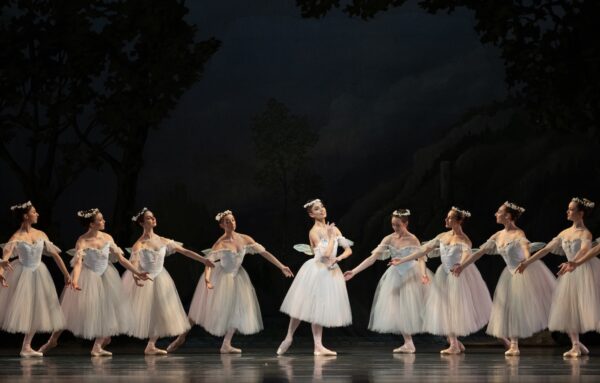
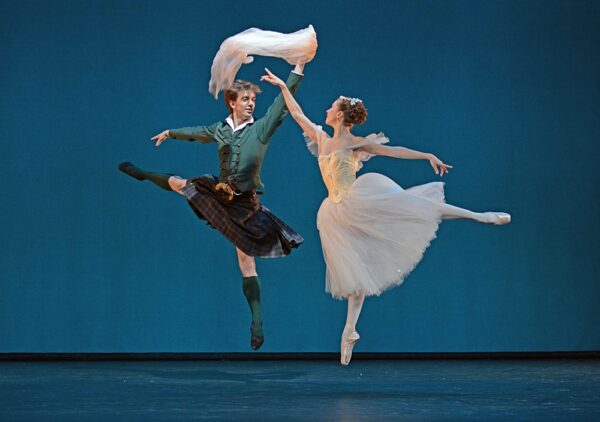
Birkkjaer: A big one is in the port de bras, how you use your arms. A lot of classical ballet comes from the Russian tradition. In Russia, Petipa created different port de bras for Swan Lake, Sleeping Beauty, and Don Quixote. If I did a Swan Lake port de bras or Don Quixote port de bras or Sleeping Beauty port de bras, you could read it very fast, know the ballet, know the character. In Russian ballet, there were a lot of princesses, princes, aristocrats. It made sense to elongate the arms, to make their line bigger than an ordinary human being. Bournonville was of the opposite school. Bournonville is not a Danish name. His father was French, he trained a lot in Paris, and had a lot of French influence. Also, in France at the time, things were more rounded. If you look at Giselle, in the first act, you’ll actually see a lot of rounded arms, and then when we get to the second act, we see allongé in the arms, because she’s no longer human and the port de bras helps create this idea of a ghost. The elongated arms are basic ballet now. Balanchine took Russian ballet and made it more about women being the divine. So instead of it being a princess, it became this female in an elongated, divine fashion. So again, this idea of elongated port de bras has become standard ballet. Bournonville ballets move arms without constantly using hands to make a line out of the body, but using the elbows instead to create the idea of flight. La Sylphide was one of the first ballets created on pointe. I keep reminding the dancers that a lot of these steps were created for the illusion of flight. In the ballet, only the Sylphides are on pointe. They have wings. They are creatures of the air. They can fly. So when the Sylphides are on pointe, these steps have to look like they are flying, and then the arms want to be wings as well, and more elbows lifted than being a princess with elongated arms. So that’s a key difference, especially for the women.
Haskins: Are there things specific to the men?
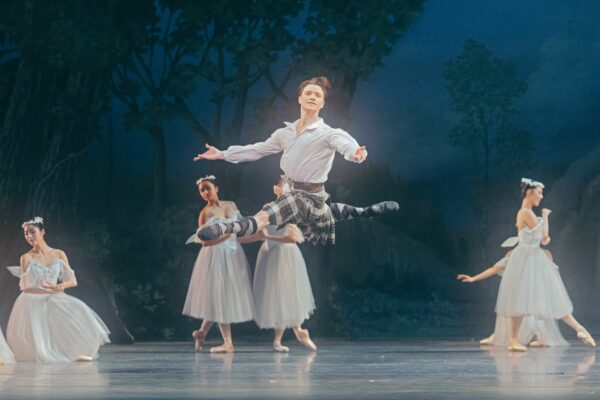
Birkkjaer: For the men, in Bournonville there’s jumping in a way where the landing of a jump often is already the preparation of the next jump. That’s quite difficult and potentially painful, so you have to get it into your body. Also, there are small jumps, and I tell them to think basketball, like you are dribbling the ball and dealing with your path among your opponents, and then you have to get higher and score. The little jumps are preparation steps for the big jumps. If every preparation step or small jump is danced like the main jump, you kill some of the momentum for the main jump. Bournonville is foreign for most of them. They want to land each jump and then do something else before they take off and land the next one, when it needs to be a land and a land and a land and a big land. It’s not normal in ballet to have a step that requires technique and shape that is still a preparation. You can’t treat the jump as a finish. It has to have a momentum so you can use the power of the small jump to jump even higher in the bigger jump. It’s why Bournonville looks so light when it is being danced. It takes a long time to get that into the body. The muscle memory of it is quite advanced, and that’s why it just takes practice. I’m working with some of the best dancers in the world, but we’re schooling a little bit, trying to get it into our bodies.
Haskins: It sounds like someone who speaks French but then learning to speak Italian. Both languages come from Latin, but there are differences to speak each correctly.
Birkkjaer: Absolutely, Bournonville is a completely different language. Qualities you were taught you now have to understand a different set of qualities in order for the work to speak the most.
Haskins: Where does the mime fit into Bournonville style, particularly in La Sylphide?
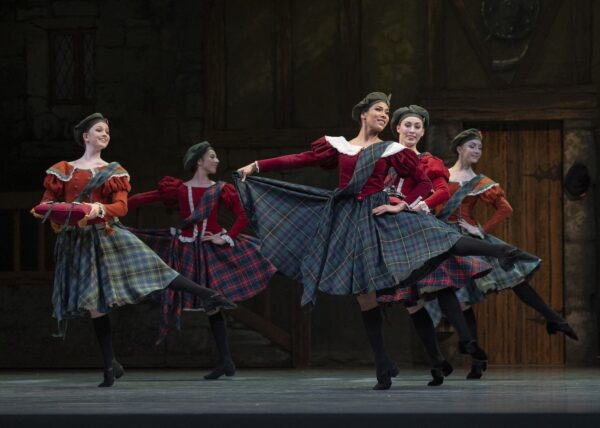
Birkkjaer: We’ve talked a lot about the dancing aspect, but the mime aspect is also a huge part. Often I’ve done classical ballets where the mises en scène, as they call it, the parts in the ballet that don’t have dance, are treated as something insignificant until we get to the next dancing bit. In Bournonville ballets, the mises en scène are very essential. Bournonville had this idea that dance was an expression of joy. So dancing only really happens as joyful. There’s never a sad dance. The whole storyline takes place with mime, with physical gestures, which means they have to read very well.
I think dancers can learn so much from doing mime, and can use it in all kinds of ballets, not only ballets that require mime, because it is an awareness of being on stage that will inform every performance going forward. Choreographer Kathy Marston for one, would say, “Okay, tell her you love her with your foot.” She would try to make mime or storytelling physical, even though you were not dancing. You learn a lot about telling stories physically that helps develop the acting skills. In a lot of ballets, you can go on stage as a body and perform a choreography and then kind of leave the stage. But La Sylphide is a story inside a world. I tell the dancers that as soon as you step on stage, your job is to pretend, and to transform this music, these sets, the costumes, all these things that add up to us pretending something. And then the audience wants to sit down and pretend with you. Sometimes, as artists, we kind of forget the game of that, and we don’t take full responsibility for the whole stage. That’s another skill set that will inform the rest of their careers and give them so much joy, because it is such an artistic, fun place to work in.

Haskins: You danced James throughout your career. I love the ballet, but find it hard to root for him since he starts out being mean to the old woman who is really a witch and ignores his fiance to run off after the Sylphide.
Birkkjaer: I don’t think you necessarily have to root for him. Bournonville was alive in what we call the golden era of Danish art history. His peers were the fairytale author Hans Christian Andersen, composer Carl Nielsen, and the philosopher Søren Kierkegaard. It was the height of dance, authorship and all of these things. What they all had in common was that their storylines had a moral, an educational point, Hans Christian Andersen especially.
As to James and the witch, being back here in San Francisco, I keep thinking of the witch as a homeless person. The initial reaction from most people when they meet a homeless person is ‘Don’t touch me. I don’t feel safe”. It’s only negative. I think James’s relationship to the witch, initially is just, why is there a homeless person in my house on my wedding day? And that is behind how he treats her.
My initial reading of James was a lot about dreaming of a better life, the “what ifs.” What if I just moved to Paris? What if I just moved to Hawaii.” More and more, I find there is a carnal thing, a sexual thing as well for a man who also always wants more, then he wakes up one day to find this amazing creature in front of him who is in love with him, a beautiful, beautiful woman who happens to have wings and can fly, and that’s kind of weird, but she’s kind of offering him everything. Very few humans would resist that, and our human psyche then starts to make excuses that lead to adultery, right? That’s kind of the first act for James. He gets so extremely tempted by this extreme beauty, and then she’s telling him that it hurts that he’s getting married to someone else. He’s wanting something and has to justify it for himself. So the first meeting of the witch is not so consequential for James at all. I think he’s just having a stressful day and thinking about the temptation of the Sylphide, so he sees throwing the witch out as a homeless person who has to leave. Later, his relationship with the witch is only a means to get what he wants. The witch is offering how he can be able to caress this woman, to have his cake and eat it too. So now this homeless person can help him and he takes the scarf.
I don’t necessarily think of James or any of the characters in this ballet, as the hero we have to root for. It is almost the opposite. It is looking into the human spirit, and what can we learn about how we should live a better life. How can we be better humans. But the choices and what happens is exactly why this ballet is still being regularly performed, because it’s about the human spirit.
Haskins: How did you become a stager?
Birkkjaer: In my last year as a dancer with San Francisco Ballet, the former artistic director Helgi Tómasson asked me to help out with staging La Sylphide, and I was basically teaching the whole ballet. I also developed a special relationship with Kathy Marston when she created Snowblind for San Francisco Ballet. After I retired from dancing, I staged some of her ballets in Nashville, Atlanta, and Taiwan, including staging Snowblind in Ballet Zürich, where she’s the boss now. The current artistic director Tamara Rojo asked me to return and stage La Sylphide for this season.
Haskins: Now that you’re staging and coaching, do you view dancers differently now than you did when you were a dancer?
Birkkjaer: Yes, it’s crazy. Retiring from actively being a dancer, I realized it’s a crazy job. Literally, to be physical from 10 am to 6 pm or 11 pm every day for six days of the week, all year for 20 years, is insane. You never really recover your body, and it’s a level of physicality, almost abuse, but it’s a level of using your physicality that no one really does other than ballet dancers. I’m kind of shocked now realizing how extreme the work actually is. I don’t think people outside ballet really realize it.
Also people outside don’t realize that a ballet company has eight or ten productions a year. You only have maybe a month to put on a ballet and premiere it, which is very, very fast. It has to be a finished product, a finished piece of art. I don’t think we appreciate enough the high quality that dance companies achieve in a very short amount of time. It is very, very impressive. Retiring as a dancer, getting distance to it, I’m even more impressed with the art form and how we deliver.
For more on San Francisco Ballet https://www.sfballet.org/.