


As Summer begins, there’s never been a better time to check out Poetry in Los Angeles. You can attend events every night of the week if you are tapped into the community. What’s more is that three new Poet Laureates have been appointed in the last two months. Brian Sonia-Wallace is the new Los Angeles Poet Laureate, Jay Baldwin is the new Santa Monica Poet Laureate and Long Beach has a new Youth Poet Laureate, Ajala Sen.
Poet Laureates work to make poetry more visible in our communities. Both Sonia-Wallace and Baldwin do spontaneous typewriter poetry in public in addition to civic events and site-specific readings and workshops.
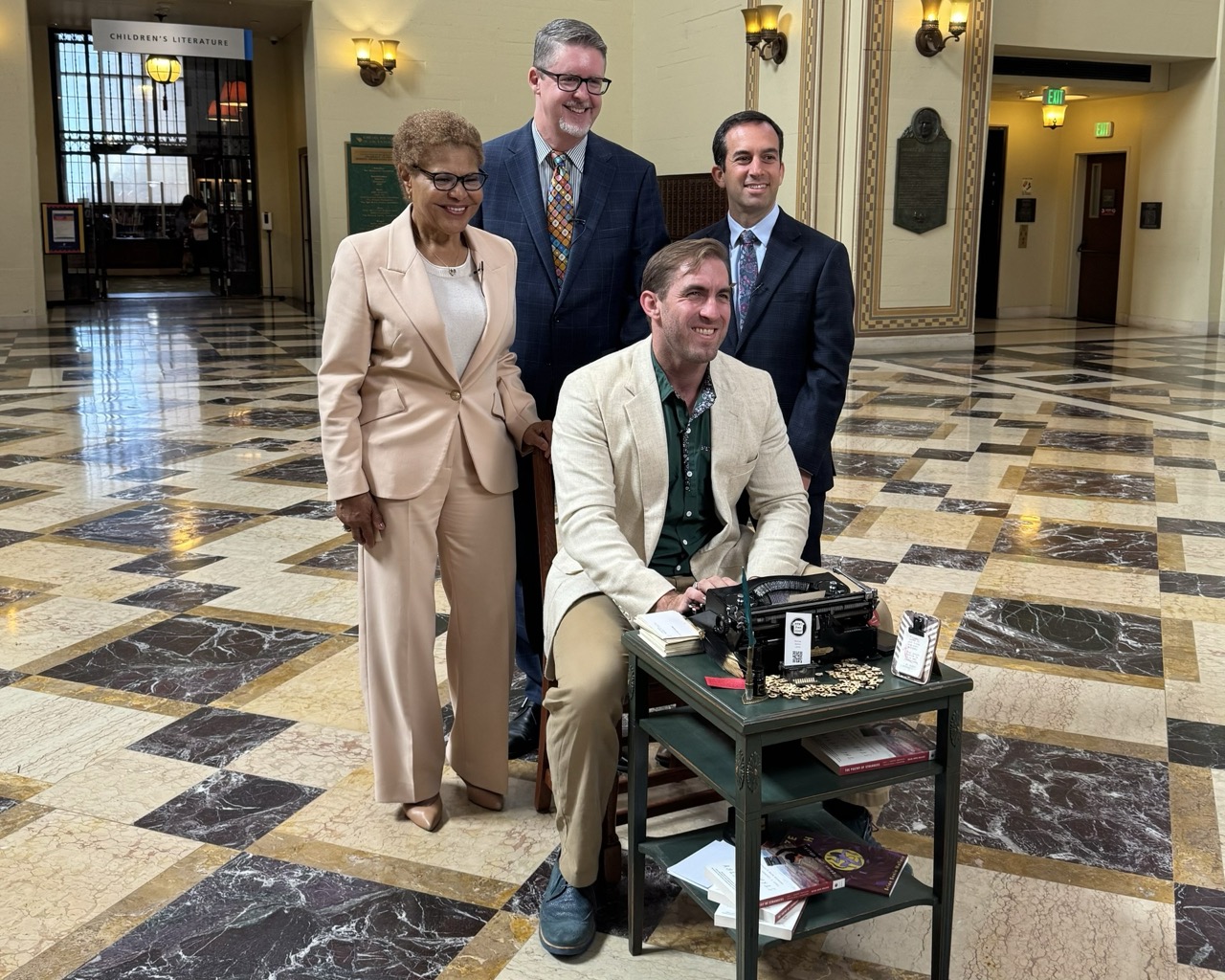
From mid May until June 15th, Sonia-Wallace curated a public art event at the Music Center in Downtown Los Angeles where both he and Baldwin read with several other poets. The exhibit, “If These Stalls Could Talk,” installed a poem on the inside door of six restroom stalls next to the Music Center along Hope Street.
The doors covering each stall include poetry written by trans and queer writers engraved in metal that cover the doors. The exhibit’s six poets are prominent figures in the literary world including the recently deceased Andrea Gibson along with Stephanie Burt, Cameron Awkward Rich, féi iká shumari, Jennifer Espinoza, and of course, Brian. The genesis of the idea started for Brian several years ago with work he was doing for Pride Month and in West Hollywood.
Brian Sonia-Wallace knows the restrooms are contested spaces and that queer and trans poets have been discriminated against. He sees these poems as a way of honoring their dignity. As he writes, “These poems invite pause not as hesitation, but as comfort. They honor the ordinary passage through a public space, the small acts of survival, and the human capacity to witness and hold one another in safety.”
Sonia-Wallace was formerly the West Hollywood Poet Laureate and he has been doing ground breaking work for not only Pride Poets but with senior citizens and other marginalized communities. Brian also published a chapbook that included both the six poets on the stalls and several other local poets like Nancy Lynee Woo, Nate Lovell and Phillip T. Nails.
I originally started this essay in early May right after the conclusion of April and National Poetry Month. 2026 is the 30th anniversary of National Poetry Month and the art form seems to become more and more popular every year. For someone like me, who grew up in the Los Angeles poetry community, every month is about Poetry. Still, this annual 30-day dedication to the craft remains special. While Los Angeles is world-famous for its food, film, and music, it also boasts a vibrant poetry scene, with readings happening nightly across the city.
Having been part of these occasions in nearly every corner of Los Angeles since the late ‘90s, I have witnessed firsthand how they testify to the growth of local independent publishers. I would like to highlight five recent poetry books as well as share several key venues for those ready to experience the joys of hearing live poetry. (Even the Pulitzer Prize nominated Gustavo Arellano, who is also a close friend to LA Taco got into LA Poetry recently. See his newsletter here.)
The links in this essay lead to featured venues and verse collections—let’s dive in!
*
One of the epicenters of Los Angeles poetry, especially in the San Fernando Valley, is Tia Chucha’s Centro Cultural in Sylmar. Founded by bestselling author and former Los Angeles Poet Laureate Luis Rodriguez and his wife, Trini, the space is a bookstore hosting open mic events and art shows. They are also the homebase of a publishing house, Tia Chucha Press, that was established over three decades ago. Their latest book is Alan Chazaro’s These Space Ships Weren’t Built For Us. Meditating on American politics, boom-bap hip hop, basketball, DACA dreamers, and growing up in the Bay Area, Chazaro first garnered critical attention for his 2019 collection, This is Not a Frank Ocean Cover Album.
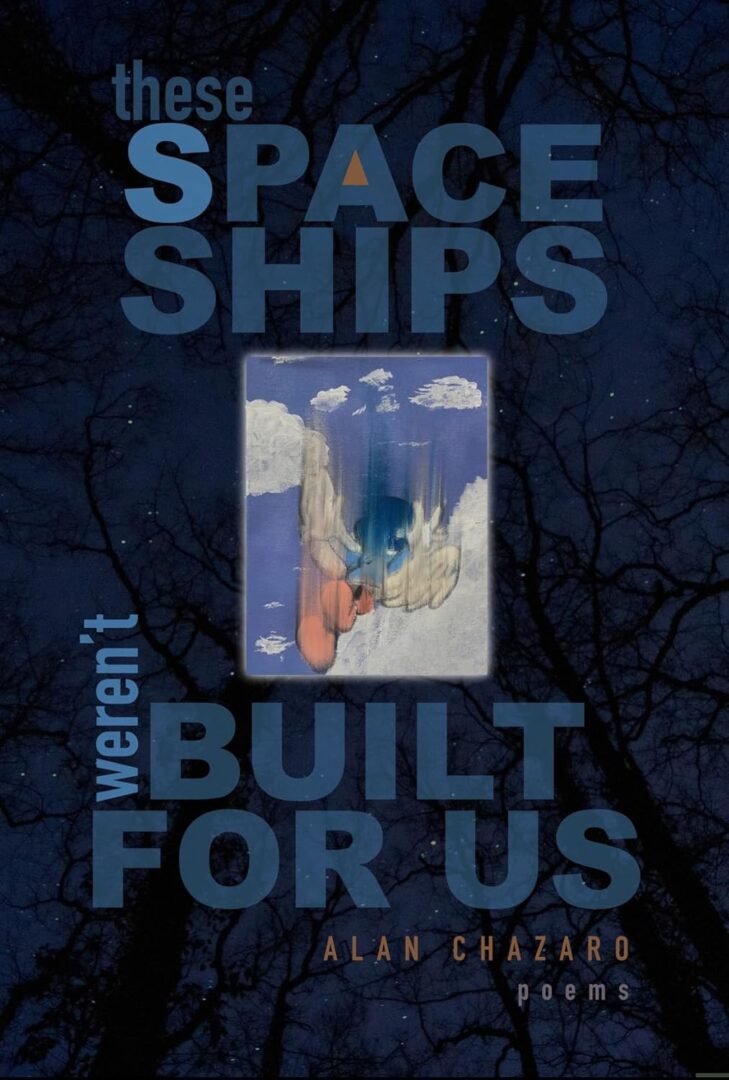
The new poems mix registers through a litany of surreal images. Think of postcards sent from another dimension: “Wake me up / when it’s over,” he writes, “when these ruins and moon / patterns have been mapped. Until then, / I’ll tongue coconut water and move / to Bad Bunny with El Spiritu Santo. I’ll leave / dirt in my pockets, a labyrinth / I cannot untangle in my throat.” These introspective poems codeswitch, asserting a savvy 2026 sensibility that honors matters of the heart. One of the best illustrations of his intergalactic groundedness is his poem “My Mexican Abuela Taught Me How to Land on the Moon.” Chazaro’s poems are simultaneously lyrical, irreverent, and tender.
One of my only regrets about my UCLA undergraduate years is that I never had the chance to enroll in Harryette Mullen’s poetry workshop. I tried to take her class my senior year, but the seminar was full up. Mullen has been, quietly, one of LA’s most important poets since the ‘80s. She’s the author of two of my favorite poetry books: Sleeping With the Dictionary and Urban Tumbleweed: Notes From a Tanka Diary. Mullen’s latest volume, Regaining Unconsciousness, is chock-full of what poet and professor Evie Shockley calls “sonic surprises and wicked wordplay.” I am especially drawn to Mullen’s prose poems, such as “Pineapple Express,” “Laser Focus,” and “How Can I Prove I’m Not a Robot.”
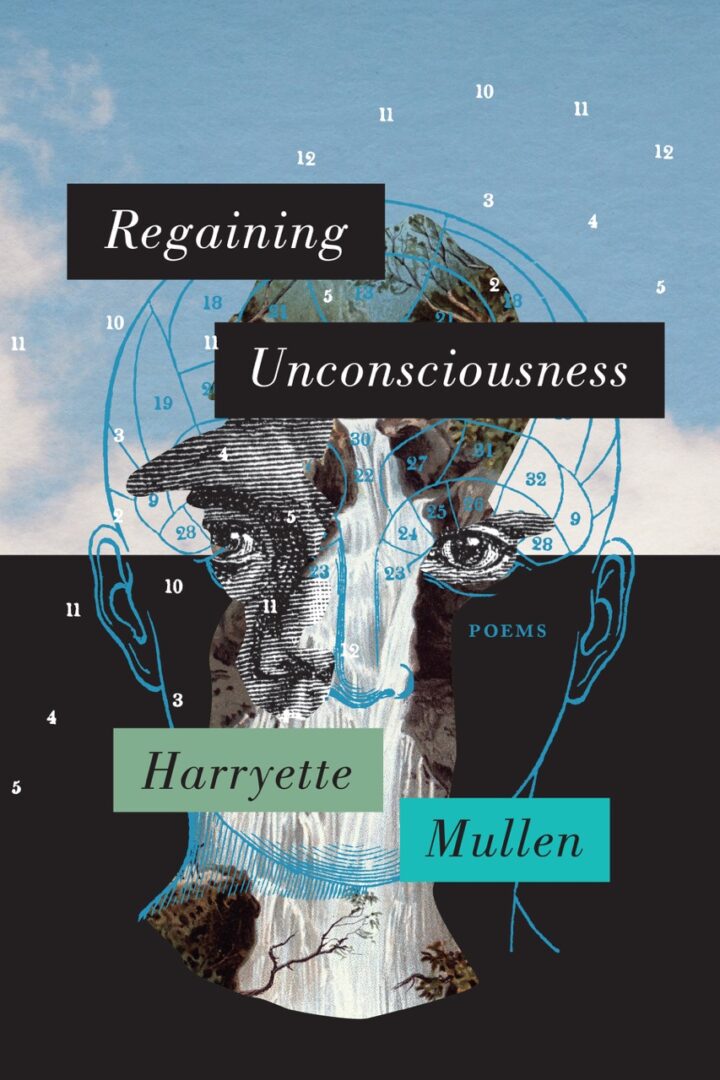
Mullen constructs lines that elude conventional form and standard interpretation. Just when you think she’s writing about nature or the landscape, she flips the script to create fresh perspectives: “Doubtful clouds seek carefree rainbows. Expert handlers / adjust our autonomy and send us back into the fray.” Mullen plays with language better than just about any poet writing today. Poet Monica Youn calls these poems “marvels of aerodynamics” because of how they reconcile tension and structure. There’s an agile velocity to these pieces—they operate at several different speeds. The biggest clue to the book’s spirit may be in its title: Mullen’s poems carry us to a place beyond rationality, toward a state of transcendence.
Teresa Mei Chuc is a former Altadena Poet Laureate and an award-winning high school English teacher. The author of three volumes of poetry, she recently co-edited the anthology Convergence: Poetry on Environmental Impacts of War. Mei Chuc and her co-editors, Anne Coray and J.C. Todd, “have chosen poems that bear witness to the environmental ravages of war in hopes of rousing our sensibilities about what we have done to our planet.” Over 60 poets in the book lament the powers-that-be’s disregard for animals, plants, and humans.
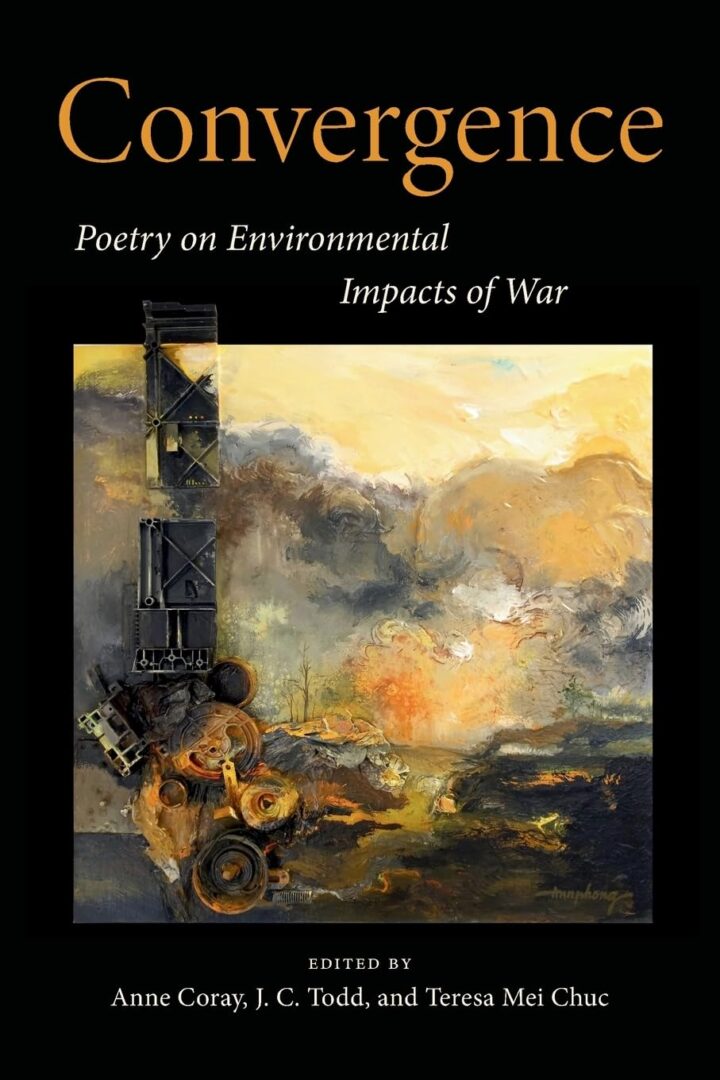
The poems range across time and conflicts, from ancient Rome, the two World Wars, the legacy of colonization, the Vietnam War, the Iraq and Gulf Wars, and war crimes in Gaza. It also pays attention to the predicament of nature, from pockmarked earth and dying poppies to rising water levels. The mix of geographic and historic elements covered not only makes this a powerful collection of verse, but a valuable historical document. An added bonus: the book’s appendix, which includes ten pages of discussion questions and writing prompts. Convergence offers a long list of difficult questions—with scant answers—but the book’s significance lies in how it helps us “reclaim our ecological humanity.”
The legendary Los Angeles pianist Horace Tapscott, who founded the Pan Afrikan Peoples Arkestra, never liked the term “jazz.” He preferred the term African American Classical Music. The musician has been gone since 1999, but he looms larger than ever as a patriarch in our city’s flourishing spiritual jazz scene. The poet, professor, musician, and composer Camae Ayewa, also known as Moor Mother, is carrying on Tapscott’s vision. The evidence is in her stellar collection of poems American Equations in Black Classical Music: Counting the Beat Blues Time & Temporal Alchemy. Published by Hat & Beard Press, the text interweaves musical history, liner notes, cartography, and social commentary. This is avant-garde Afrofuturism conveyed through a melodic lyricism.
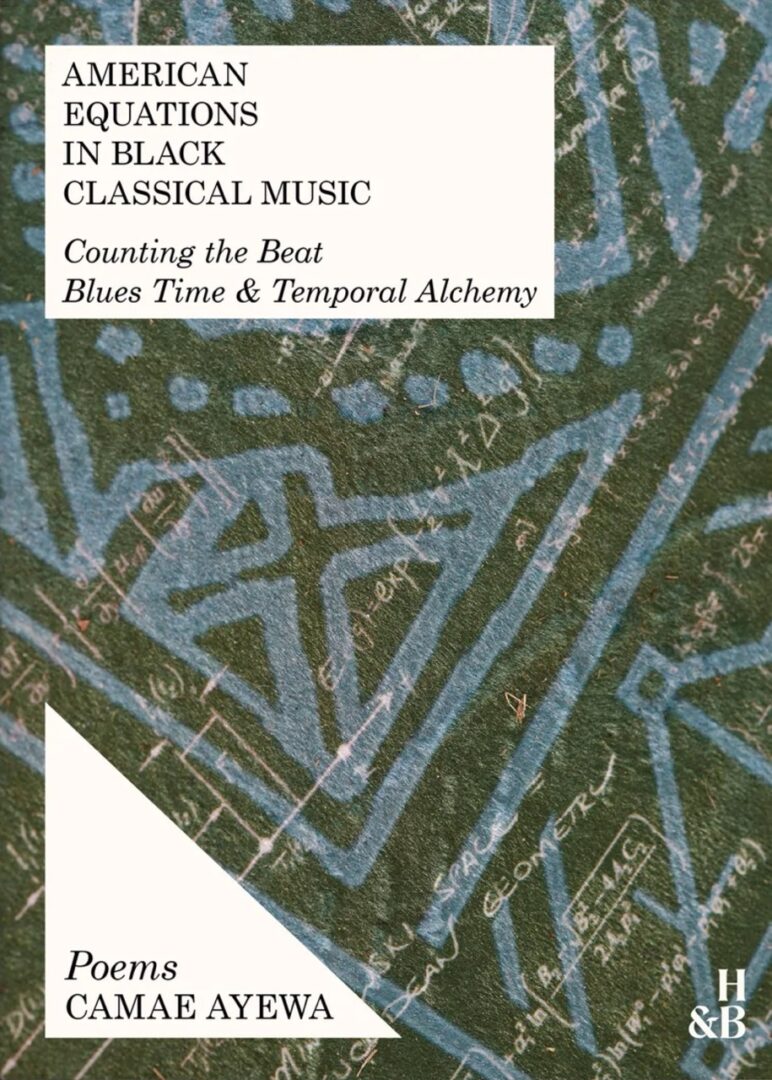
There’s a nod to the ‘60s Black Arts Movement, including references to its political radicalism. But the book is also future-forward, sitting somewhere between Octavia Butler and Kamasi Washington. The poems read like magic spells or incantations: “Searching for a New Landscape / Genius + Soul = A Jazz Memory / See We Got All the Magic / African American Classical Music / A Jewel in the Lotus / Alchemy all up in the music.” Ayewa is a co-founder of the Black Quantum Futurism theory and practice and a professor at the USC Thornton School of Music. The compelling poems in American Equations add up to much more than the sum of their parts.
One of the longest-running poetry venues in Los Angeles is Little Tokyo’s Tuesday Night Project aka Tuesday Night Cafe. Now in its 28th year, the site was started by the poet, playwright, community organizer, and cultural producer traci kato-kiriyama during a time when there were not many spaces that served Asian American writers. Over 27 years later, the venue is going as strong as ever. A documentary film about the cafe, This is Not a Showcase, will debut at the Japanese American National Museum in May. The title comes from one of the event’s co-hosts, Sean Miura, who often says in the show’s intro, “You will not be discovered here, but you might discover yourself.”
There’s a down-to-earth spirit in the space. This is not about performances dedicated to ego or Hollywood. It is about people connecting with each other while listening to thoughtful poetry. I’ve always loved how these events usually feature three generations of poets reading their work. I read there on April 21st with several poets ranging from 17 to 74 years old. The youngest poet on the bill, Aisha Weththasingha, is a high school senior who co-founded her own independent publishing house with nine of her friends, called Last Generation Press.
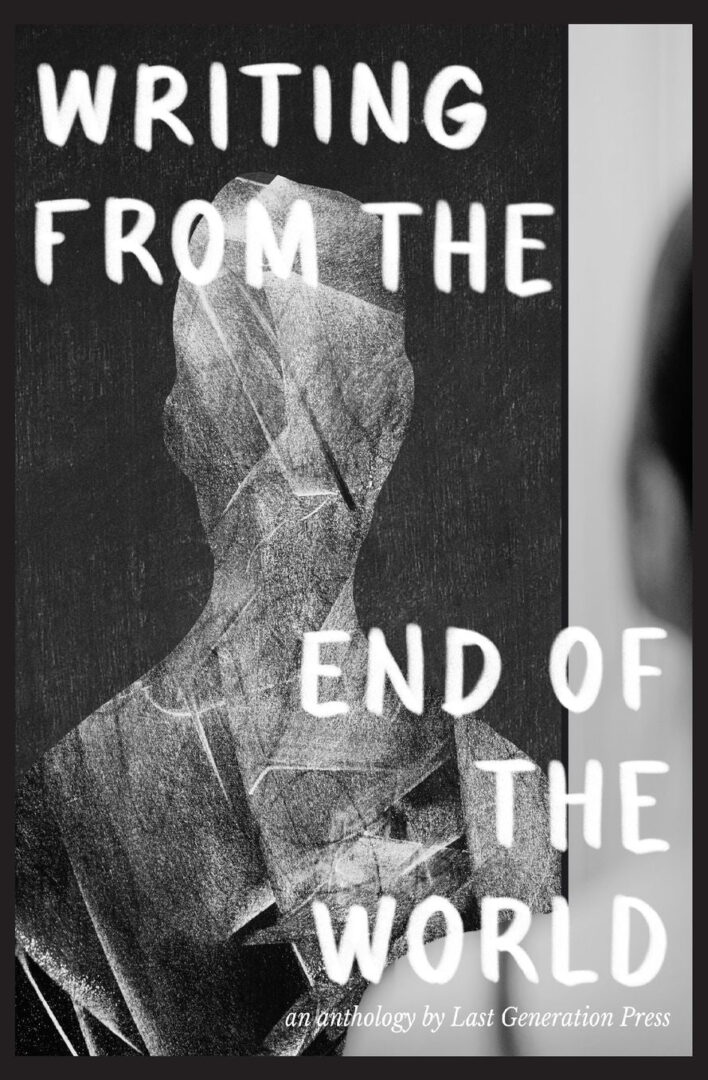
That press’s latest book, its first volume, in fact is Writing From the End of the World. Ten high school authors are included in 167 pages of verse. The poems capture the 2026 zeitgeist—our beleaguered cultural moment—with a youthful exuberance that is conveyed through a surprising level of technical skill. You can feel the camaraderie of the writers in the text. Their teacher and mentor in charge, the poet and publisher Chiwan Choi from Writ Large Projects, has this to say about the book: “The thing about this group of teen writers, the Last Generation Press, is that not only are they incredible writers, but their spirit of collaboration and their sense of goodness and rightness is so clear and strong.”
As someone who has mentored young poets for over 20 years now, I love hearing tomorrow’s voices today. The poems from these teens grapple with the anxiety and pressure of our contemporary era, which is why they named the press and the book the way they did. Just when you think the poems are stuck in a morbid state, there are injections of humor and beauty. “This collection is a true reflection of their worlds,” Choi explains, “their lives, their fears and anxieties, their vulnerability, their love, and their joy. Working with them as their mentor has been an incredible journey for me.” I found myself struck by how accurately the teens understand reality—using laughter as an ironic weapon. For example, take this line by Shinbi Lee: “Maybe in another life, you can be that Disney princess you always wanted to be.”
As the books above attest to, Poetry gives its practitioners a place to dream and to start envisioning the life they want to live. The countless venues and open mics around the city provide space for anyone that shows up eager to participate. This is why the poet Austin Alexander runs his event, Poetik LA in Silverlake and a special event he runs in SoCal recovery centers, Hope & Mic.
Hope & Mic is a performance based expressive and exposure therapy-informed platform supporting wellness, rehabilitation, and self-discovery. Alexander was just awarded a contract by the California Arts Council to run the program Chino and Valley State prison. He sees Hope & Mic as the container for a broader narrative and existential-informed curriculum he developed called the anti-Heroes Journey. To find out more about his poetry programs, see his Instagram @iamaustinalexander.
To wrap up, there are poetry venues in just about every SoCal neighborhood. One of the districts with the most locales is Long Beach. There are too many around to provide a complete list, but here are a few standouts. There’s a collective of Long Beach scribes called the “Never Speak Long Beach Poets.” Their crew consists of Tommy Domino, Shy But Fly, Ravina, Philosophy, and Dr. V. Poets, like DJs and graffiti writers, often take monikers and noms de plume that shout-out their superhero identity.
The Never Speak crew runs Long Beach Poetry, and I love attending these events. The crew host several poetry nights a month and they are all over the LBC, in neighborhoods like 4th Street Retro Row, Bixby Knolls, and the Wrigley District. Some of these nights include the Muse on Fire Open Mic, Shades of Afrika, and even in nearby Bellflower at the popular breakfast spot, The Nest.
Four other neighborhoods with active poetry spaces are Echo Park with Stories Books, Historic Filipinotown with Sunday Jump, Leimert Park with the World Stage, Da Poetry Lounge, and the Sims Library of Poetry, and Venice with Beyond Baroque. I could share dozens more. Any of the poetry reading venues I have mentioned would be a great place to begin. Tap in, because poetry is alive in Los Angeles!