

Before visiting Cambodia, the country where my parents are from, I had only heard short tales of what life there was like. My knowledge was limited to stories of tragedies and difficulties, as my parents had little life experience in Cambodia, having escaped the Khmer Rouge genocide when they were children. When I visited Kratie, Cambodia, in 2025 and attended a medical mission, it was undeniable that the remnants of war were still present 50 years later. Despite this, the Cambodian patients I met remained resilient and positive. I admired the volunteers as well, who came from different walks of life but were all devoted to making a change. Hence, I wrote this article to capture the different voices of patients and volunteers with different backgrounds who share a similar hope.
*
In the colorless and clinical room, Reth Mon’s warm and genuine smile lights up the room. She sits upright and shares her story of struggle and strength.
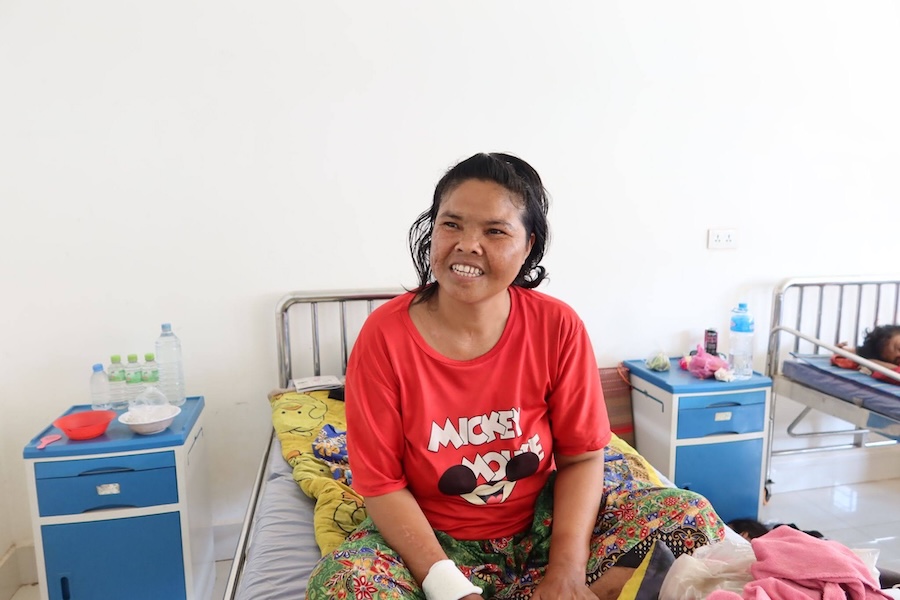
Reth Mon is a 40-year-old mother from Kratie province in northeast Cambodia. Like many others in rural Cambodia, she faces difficulty accessing adequate healthcare.
After surviving a car-motorcycle accident, Mon broke both her legs. Rolling her pants up to reveal her scars and extending her hands out, she explains, “I have a child, but he couldn’t go to school after the accident. I was too embarrassed to see anyone, even my friends and family. . . I wasn’t able to do anything.”
Mon adds that she began losing her purpose to live. But after receiving care from Cambodian Health Professionals of America (CHPAA), Mon found herself in a healthy and happy place, saying, “I wanted to live. . . The doctors took good care of me. They were conscientious, they gave me food, and it makes me feel good to see other Cambodians coming to help like this.”
CHPAA is a humanitarian non-profit organization based in Long Beach, California, that organizes annual medical missions to Cambodia. Each mission serves underprivileged Cambodians by providing healthcare through service and education.
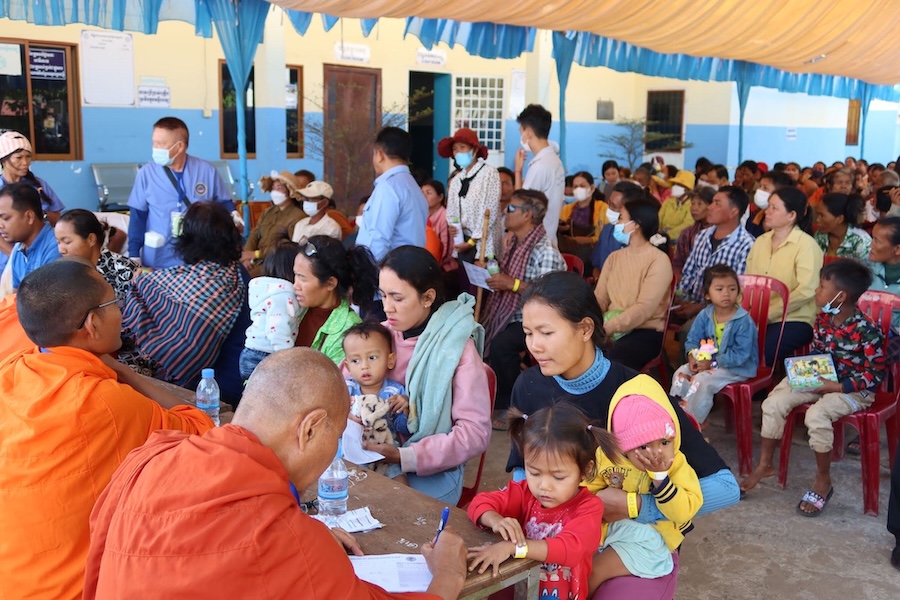
The 2025 medical mission to Kratie, Cambodia, from February 5 to February 15 saw remarkable results. CHPAA’s 13th mission exceeded expectations and numbers, with over 200 devoted volunteers tirelessly working to serve approximately 850 patients a day. Each team, made up of logistics, primary care, surgery, dental, ophthalmology, pharmacy, Helping Babies Breathe, and eyeglasses, played a critical role in ensuring every patient received the care they needed and left with a smile. The Helping Babies Breathe program (HBB) educates and trains healthcare professionals in newborn resuscitation, ultimately reducing infant mortality rates.
Despite being geographically dispersed, volunteers from diverse backgrounds came together with a similar goal of making an impact.
Ian Brookes, from Sydney, Australia, is a dedicated volunteer for CHPAA, with this being his fourth mission as part of the logistics team. With 33 years of experience working with the United Nations and its International Children’s Emergency Fund, Brookes shares, “Much of what I see is not new, but it is still touching to the heartstrings how long-suffering the general population of Cambodia is.”
Many of the challenges in Cambodia derive from the history of the Khmer Rouge regime that lasted until the late 1970s. The genocide’s effects remain present, especially among Cambodia’s elderly population.
Tien Yin is a survivor of the Khmer Rouge who still stands strong. “I’ve worked hard to take care of my children and grandchildren since the war, and then I started not being able to see. I didn’t know why,” she said.
Yin expressed how the cataract surgery would drastically improve her vision, as well as her life. She put her palms together to form a blessing, wishing everyone the best in their journeys ahead.
At the corner of the ophthalmology team where Tien Yin rests, patients without shoes lie on dental beds. While the scorching sun made working outside a challenge, Dr. Carl Werts from Pasadena, California, led his team of students and dentists flawlessly. Dr. Werts emphasized the importance of a team approach, saying, “We can’t do much by ourselves, but as a group and unified team, we can do some very amazing things.”
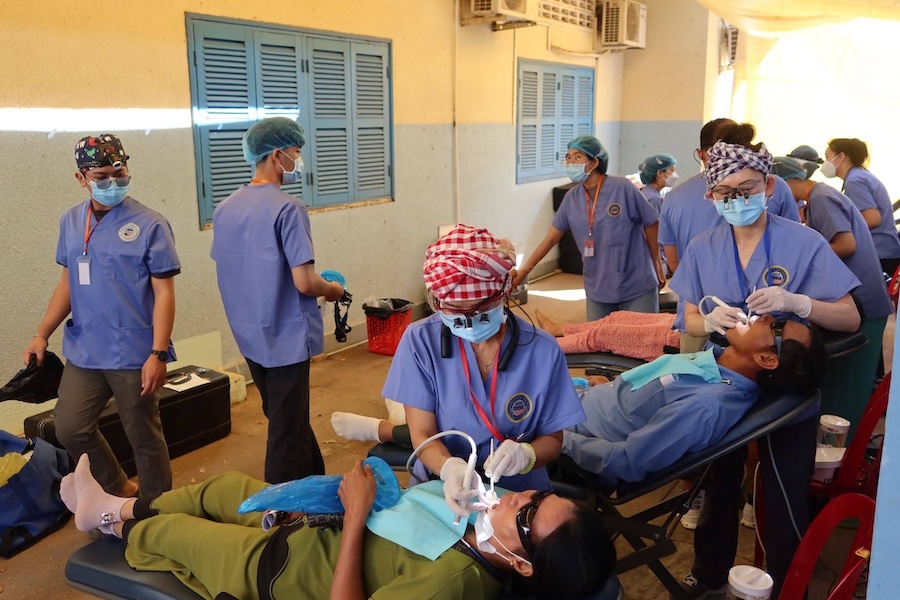
Approaching the end of his fourth mission, Dr. Werts reflected on how the team spirit changed his perspective on what is possible, noting, “This is one of the best teams I’ve had on any mission I’ve worked with.”
Alongside returning volunteers, many new faces joined the team. Dr. Krishna Srinidhi, from Sacramento, California, had an eye-opening experience during his first mission with CHPAA. Searching for a new perspective in a different part of the world, he found himself in Cambodia, working in primary care and spreading infectious joy with each patient he met.
Besides the main clinic, CHPAA also provides services at mobile clinics. This year, both mobile clinics in Sambo and Chlong were situated in the most remote areas of Kratie province.
Dr. Srinidhi remarked on the mobile clinics’ impacts, saying, “The ability of us to provide medical care, especially in the mobile clinics where there are zero resources. . . Being able to pick up potentially life-threatening things that people would otherwise not have access to care. . . Makes it extremely rewarding.”
On the first floor, below primary care, Zenita Leang works hard, running between triage and primary care. On the pre-med route, Leang’s first medical mission with CHPAA’s logistics team not only consisted of giving back to the Cambodian community she is from, but also led her to gain new inspirations.
Leang shared, “Seeing the patients, seeing how far they’ve come, how long they wait just to be seen, knowing they don’t have access to these resources. . . I think in America, we ask for every single little thing and try to treat it, but here, pain is so normal to them. Seeing them deal with so many different things makes me want to be a stronger person too.”
Another young volunteer from Phnom Penh, Cambodia, Phoungrattanak Kang, spent her weeks working in the pharmacy department. Throughout her time in Kratie, Kang empathetically consulted patients and distributed medication, while also discovering a newfound courage. “Getting out of my comfort zone and talking to a lot of people here, the patients, all the doctors from another country. . . I thought I would come here and have no friends, but now I have friends here. I feel brave and confident to talk to somebody,” she said.
As the mission came to a close, volunteers celebrated their hard work, embracing one another as high fives flew across the room. With the room full of bittersweet farewells, Kim Ear sits down for a well-earned break. She remarked, “I find that even in the small things, we can make a difference.”