


When I visited the Autry Museum of the American West to explore the new exhibition, Life, Liberty, and Los Angeles (read my article here), I also looked through the other exhibits.
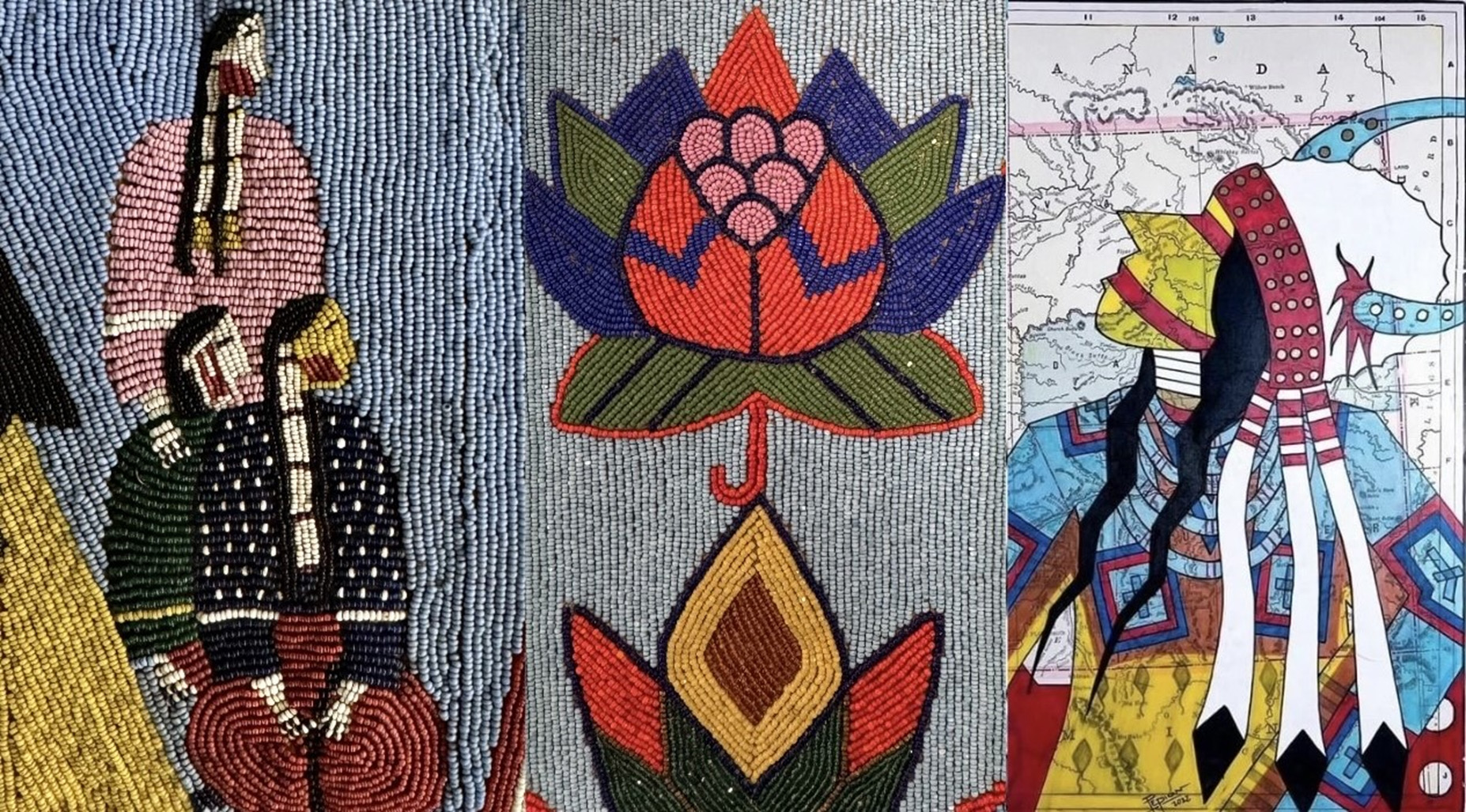
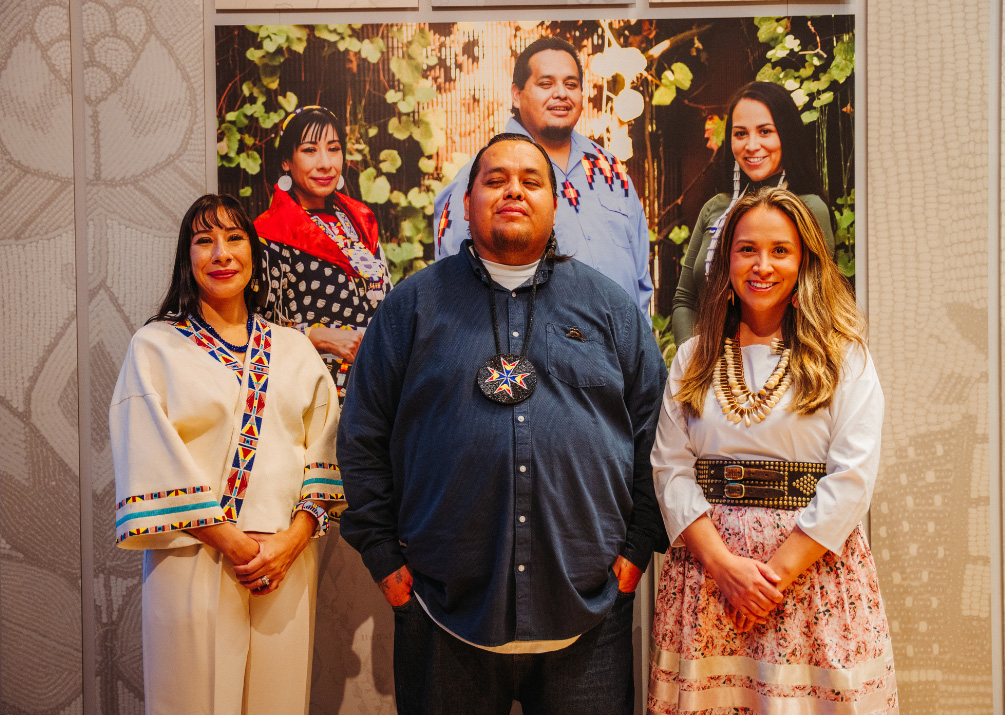
For Creative Continuities: Family, Pride, and Community in Native Art (November 15, 2025 – June 27, 2027), three contemporary Plains Indian artists -John Pepion (Blackfeet), Brocade Stops Black Eagle (Crow), Jessa Rae Growing Thunder (Sioux)- selected works by their ancestors and created their own to educate visitors about the diversity of Native American culture, history, and tradition.
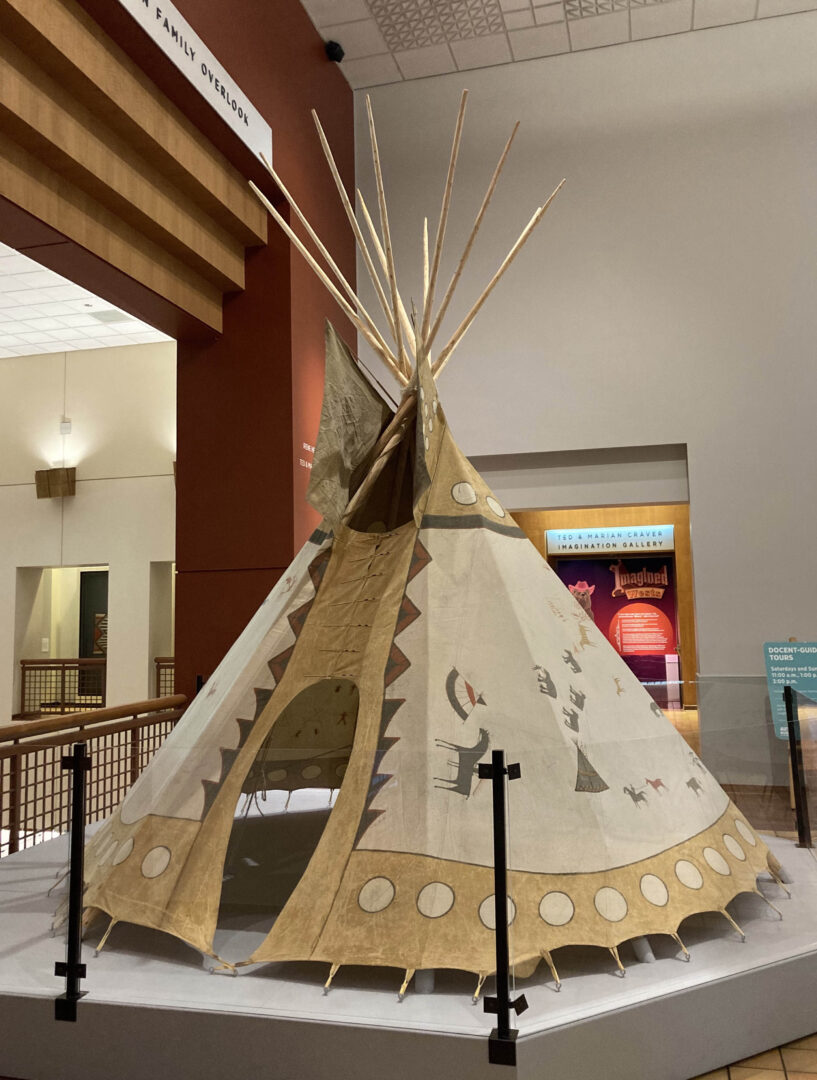
Right behind the ticket counter, we are greeted by a full size teepee from the Blackfoot tradition.
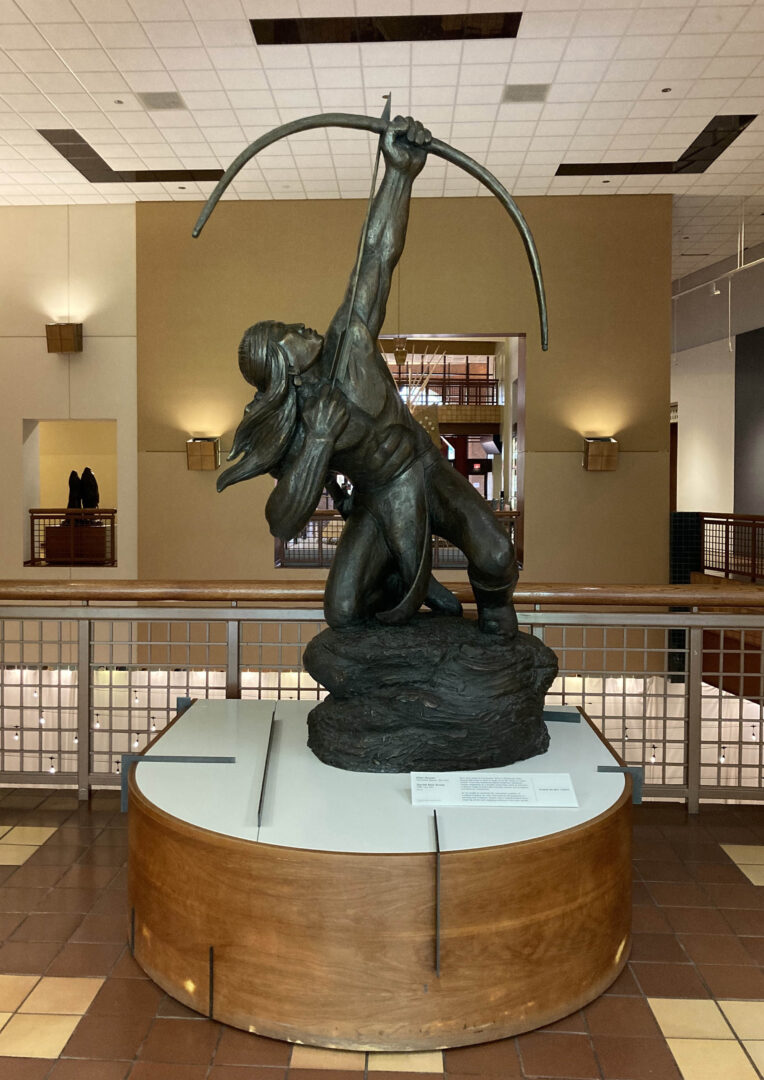
In the hallway stands the famous sculpture by Allan Houser, Sacred Rain Arrow, 1991, that, I was told “The museum does not have permission to share or reproduce any images of.” But I photographed it myself, so hopefully that was permitted.
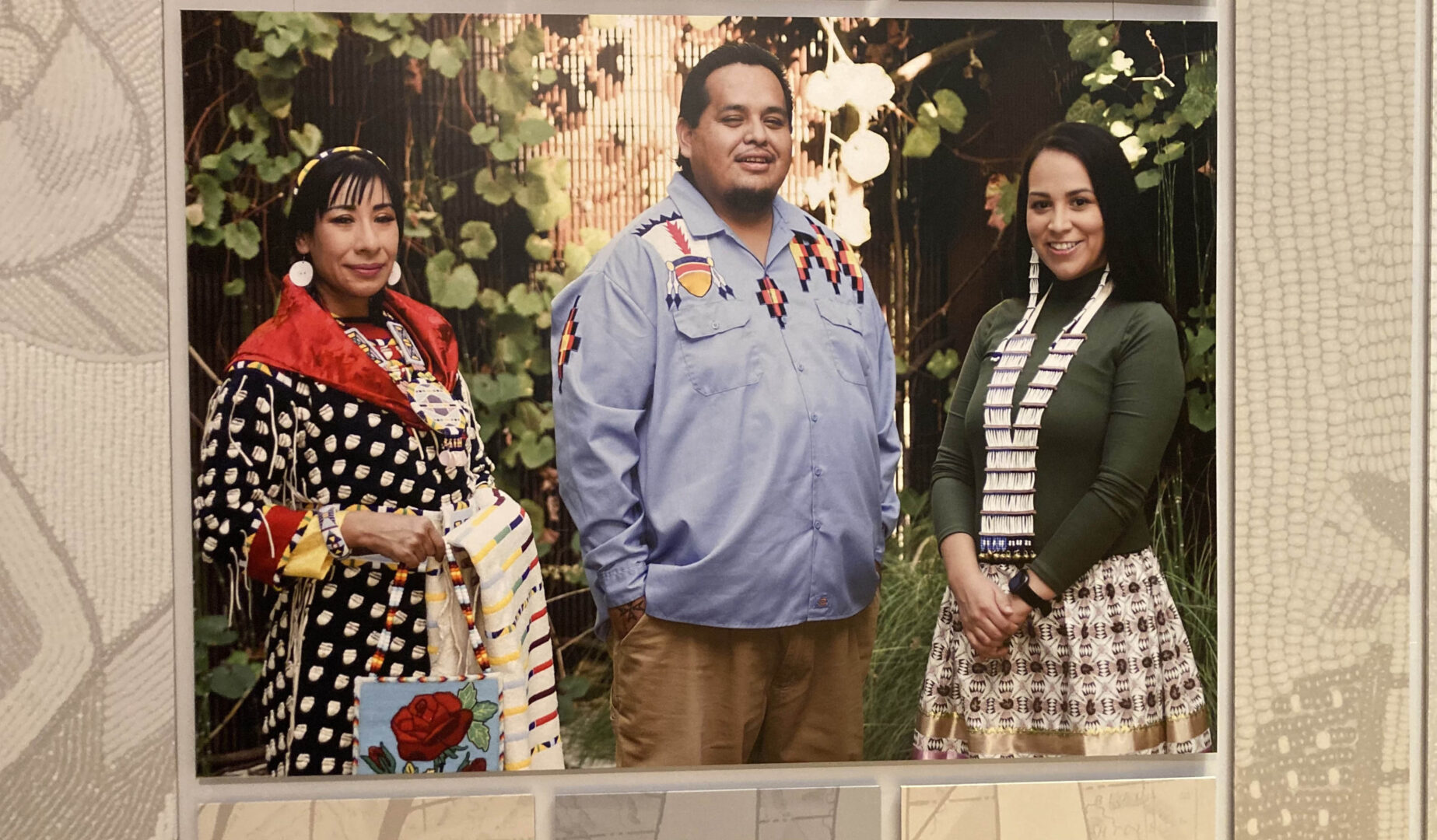
Here’s a photograph of the three artists that I recorded with my iPhone, and a photo of them in person in front of that print.
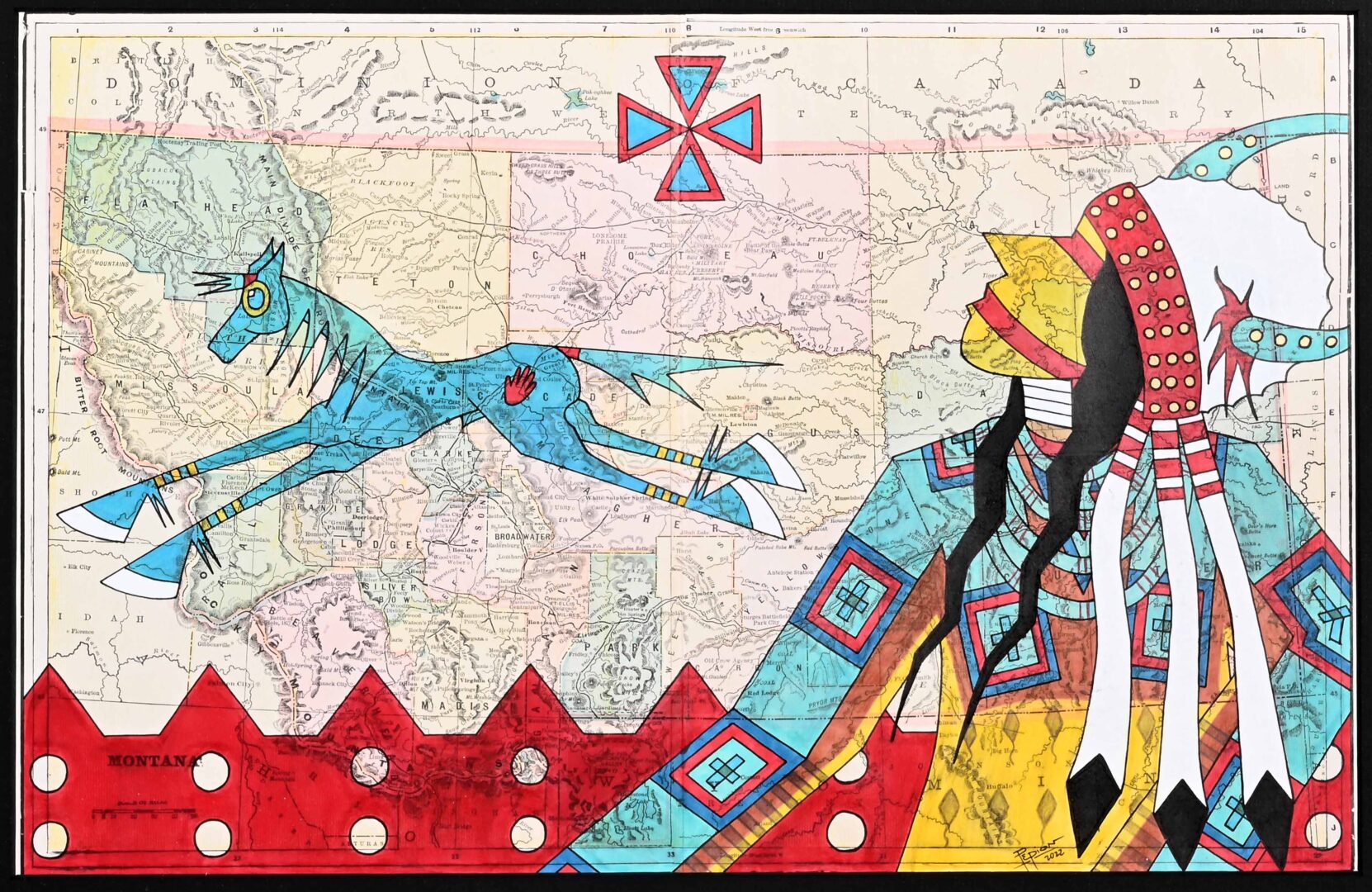
John Pepion drew on an antique map of Montana, titled Our Land, 2022, a warrior from his Blackfoot tribe wearing a horn headdress.
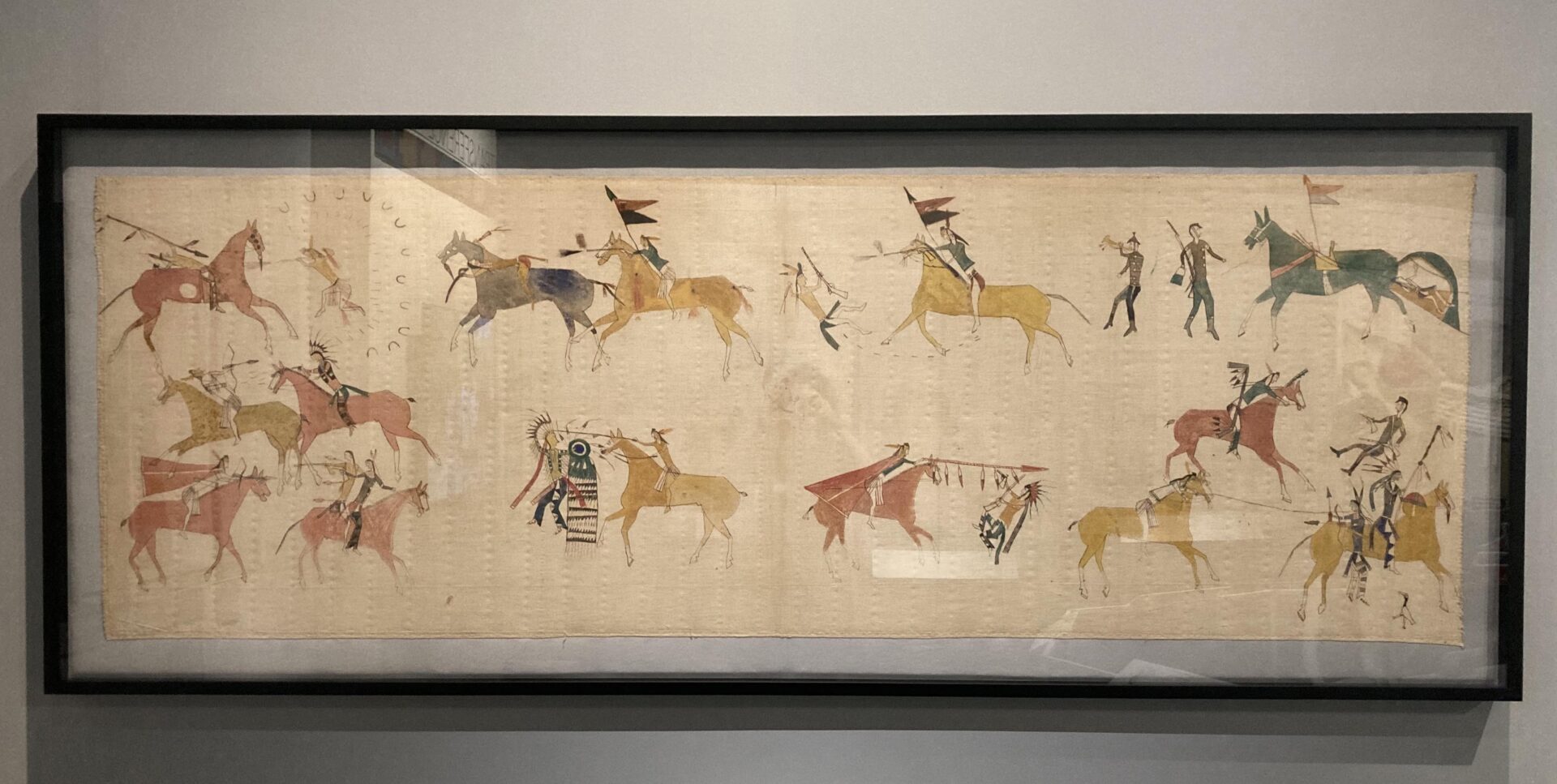
This drawing of the 1876 Battle of Little Big Horn, by White Swan, a Crow scout for the U.S, military, depicts the artist as the hero.
During my 1985 trip across the United States to document the condition of several Native Tribes, I visited the Little Bighorn Battlefield, National Monument in Montana. Read here my article about that experience: “Indigenous People in the U.S.”
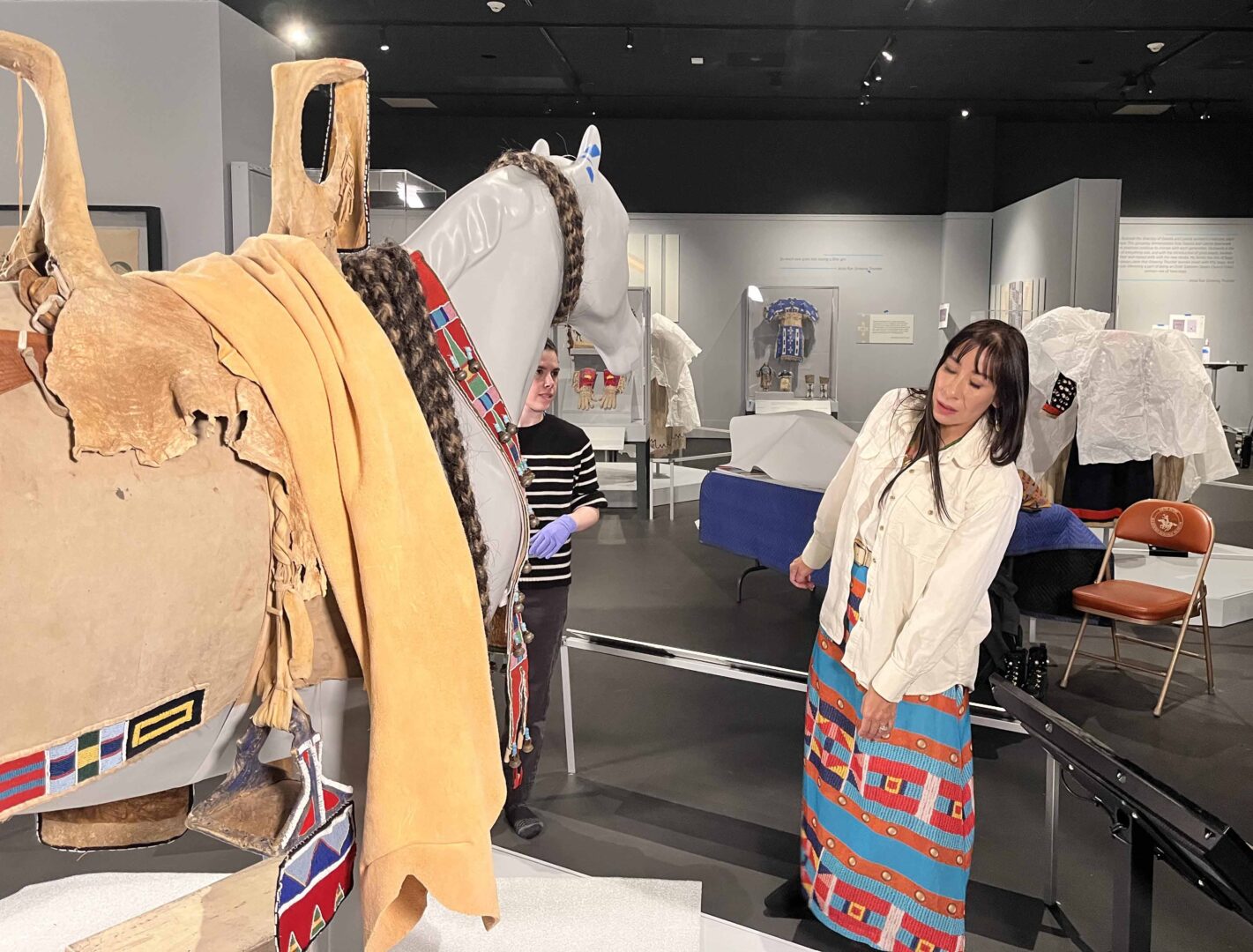
Brocade Stops Black Eagle conceived of an installation where several beaded artifacts from her Crow tribe are displayed on a horse mannequin.
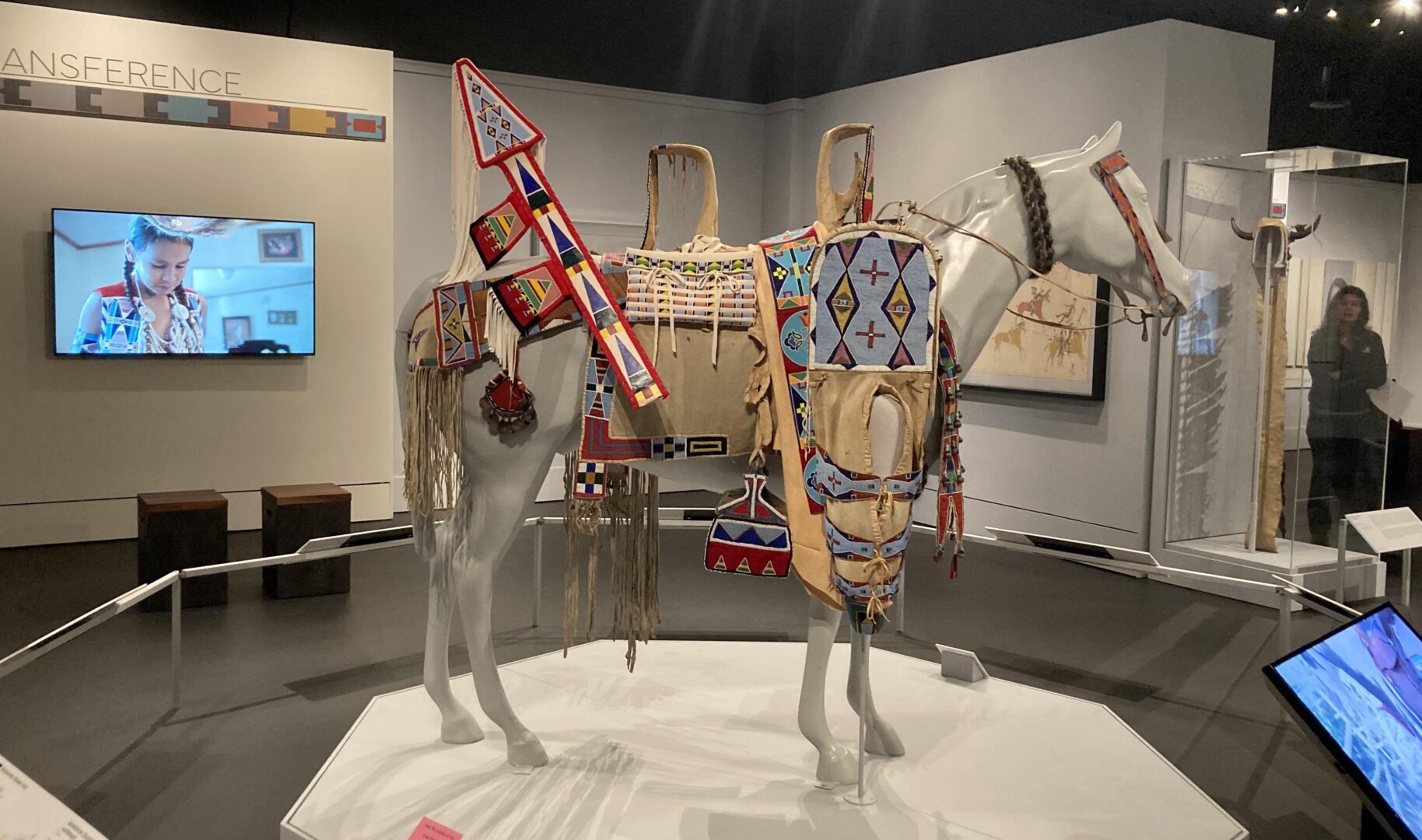
She likes knowing that the beadwork that she makes for her three boys of different ages to wear will be passed down from the oldest to the youngest, then to her grandchildren, “because when we dress children in our regalia, they also learn about our culture, about our ways and why they are important to us.”
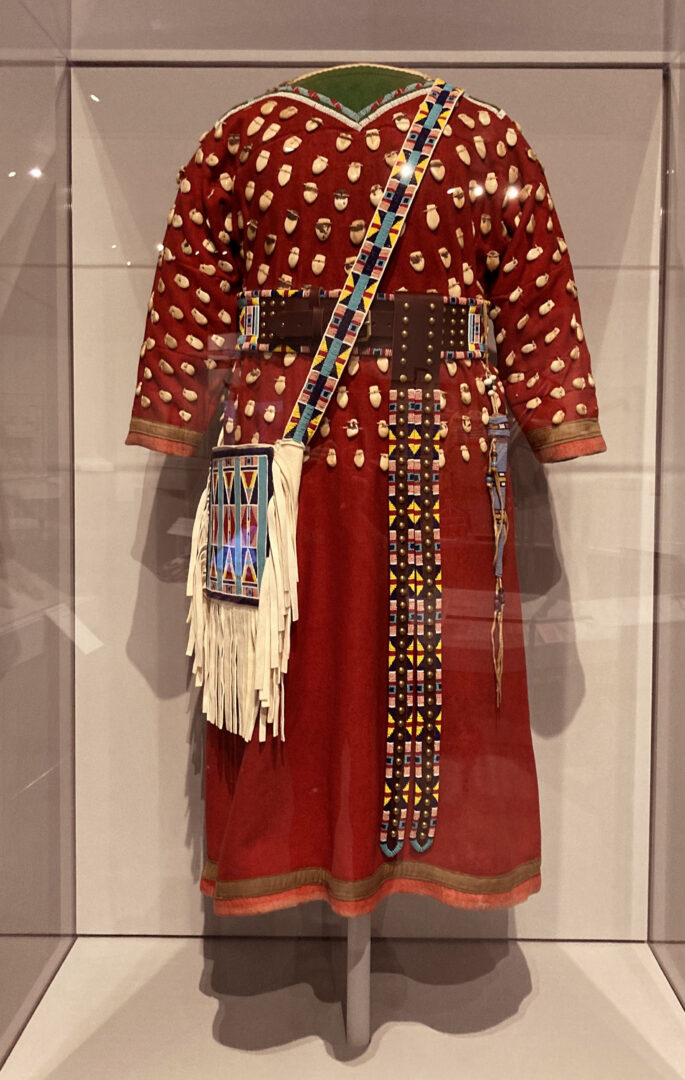
She loves this Elk tooth dress from the 1880s, because it looks like one that her mother made for her.
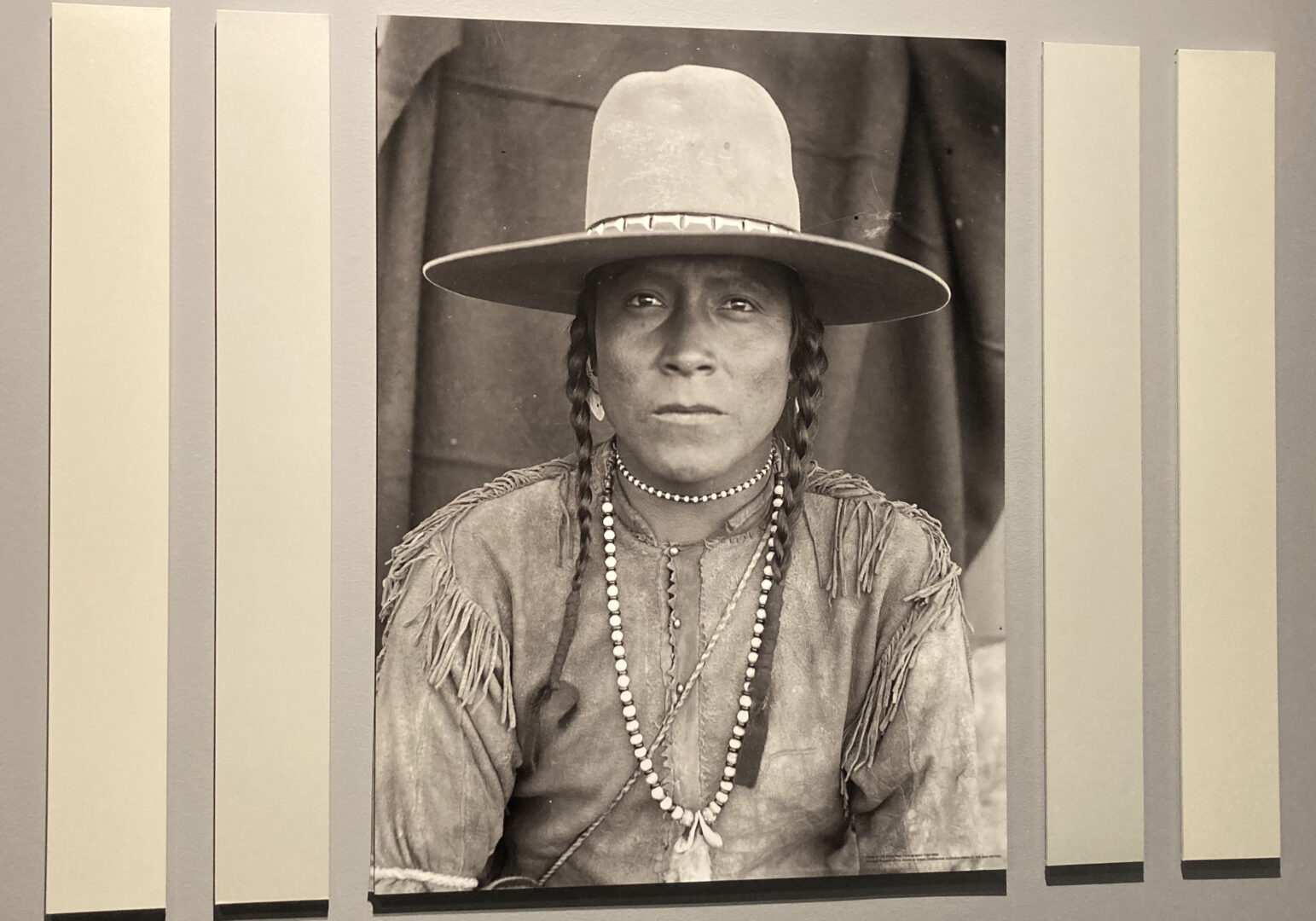
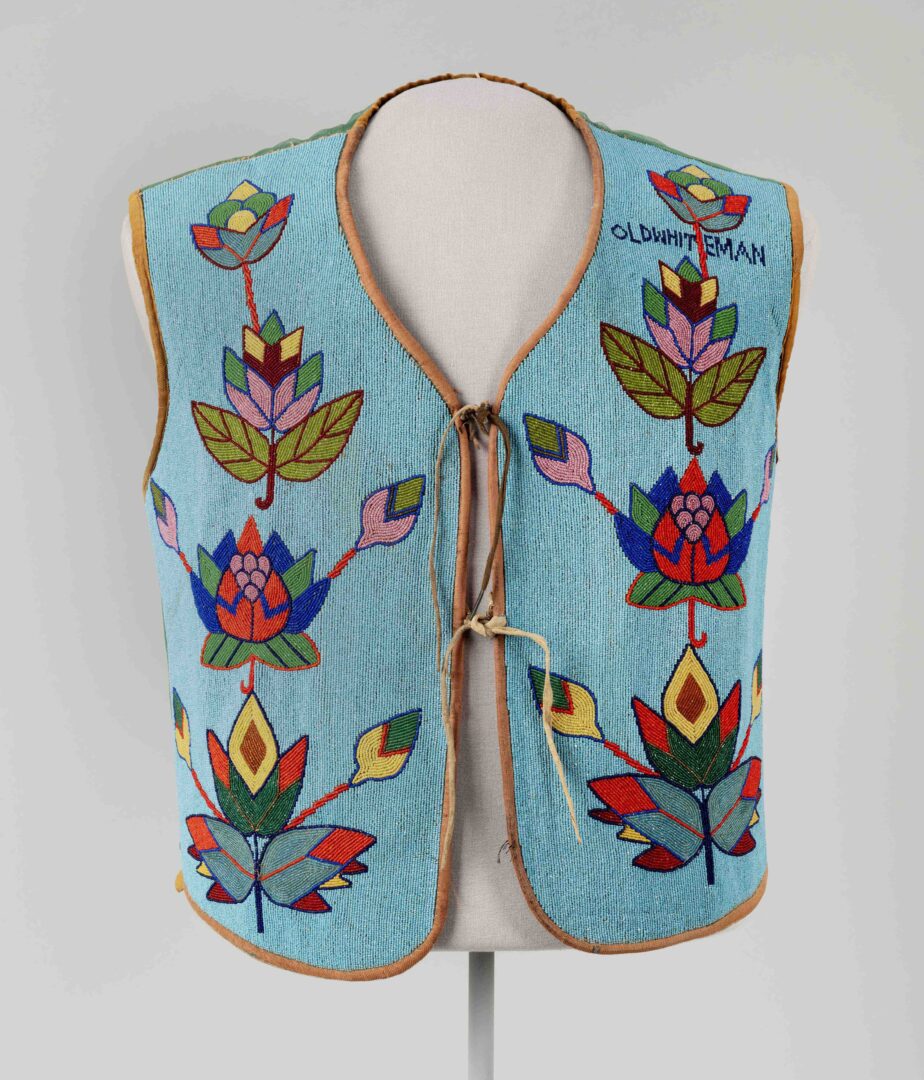
Has Things, the Crow wife of “Old Whiteman,” one of the most decorated Native American soldiers during World War II, was a skilled beadworker and made this vest for her husband.
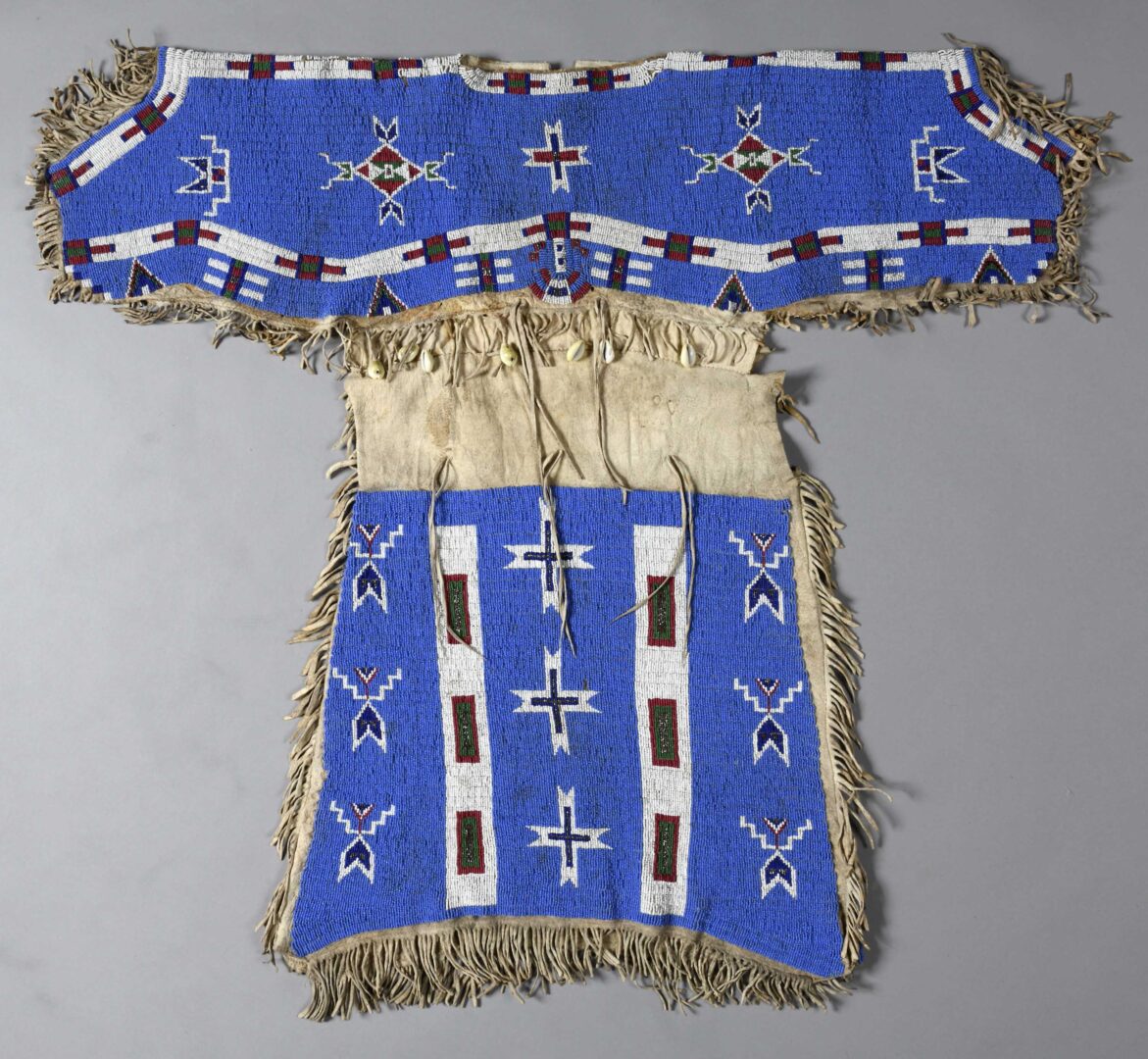
Jessa Rae Growing Thunder says that the dress below made in the 1880s by a Lakota (Sioux) artist could fit her three-year-old daughter perfectly. “It was probably made for one child, then passed down through the family. In a way each dress carries knowledge that is then transferred from one generation to the next.”
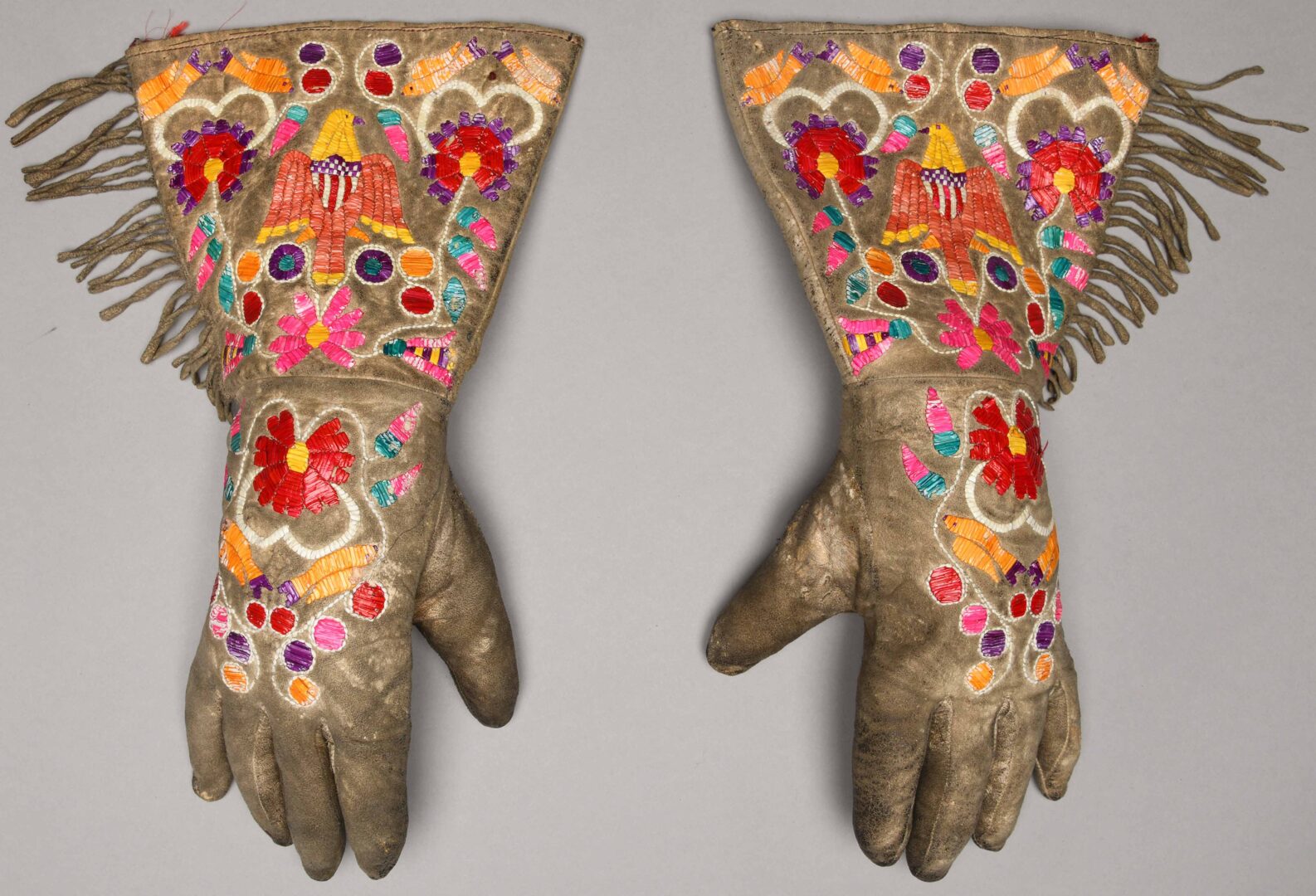
She admires the dyed quill work of these gauntlets by a Dakota (Sioux) artist in the 1880s, and points out the Eagle representing the United States.
I timed my visit to the Autry for June 20, because that was the last day of another exhibit: Future Imaginaries: Indigenous Art, Fashion, Technology.
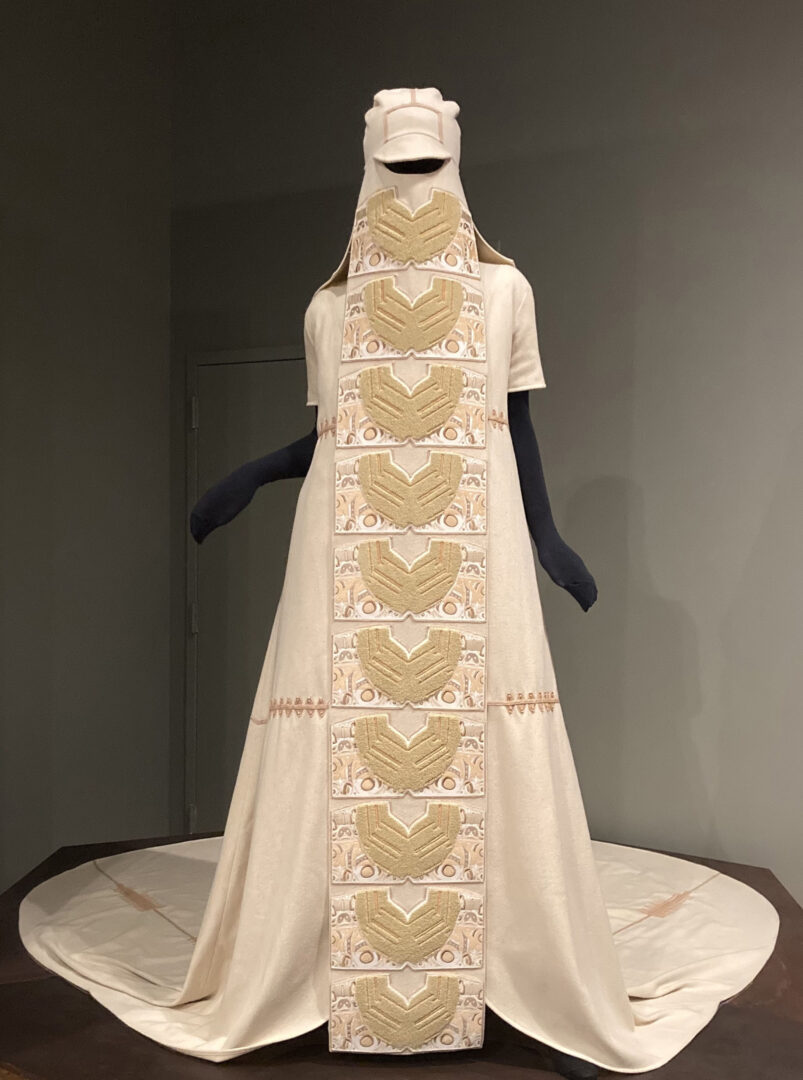
I was fascinated by this costume for the 2016 TV series, No Pigs in Paradise. It’s titled SHE in Light Form, by Nep Sidhu, a Punjabi Sikh.
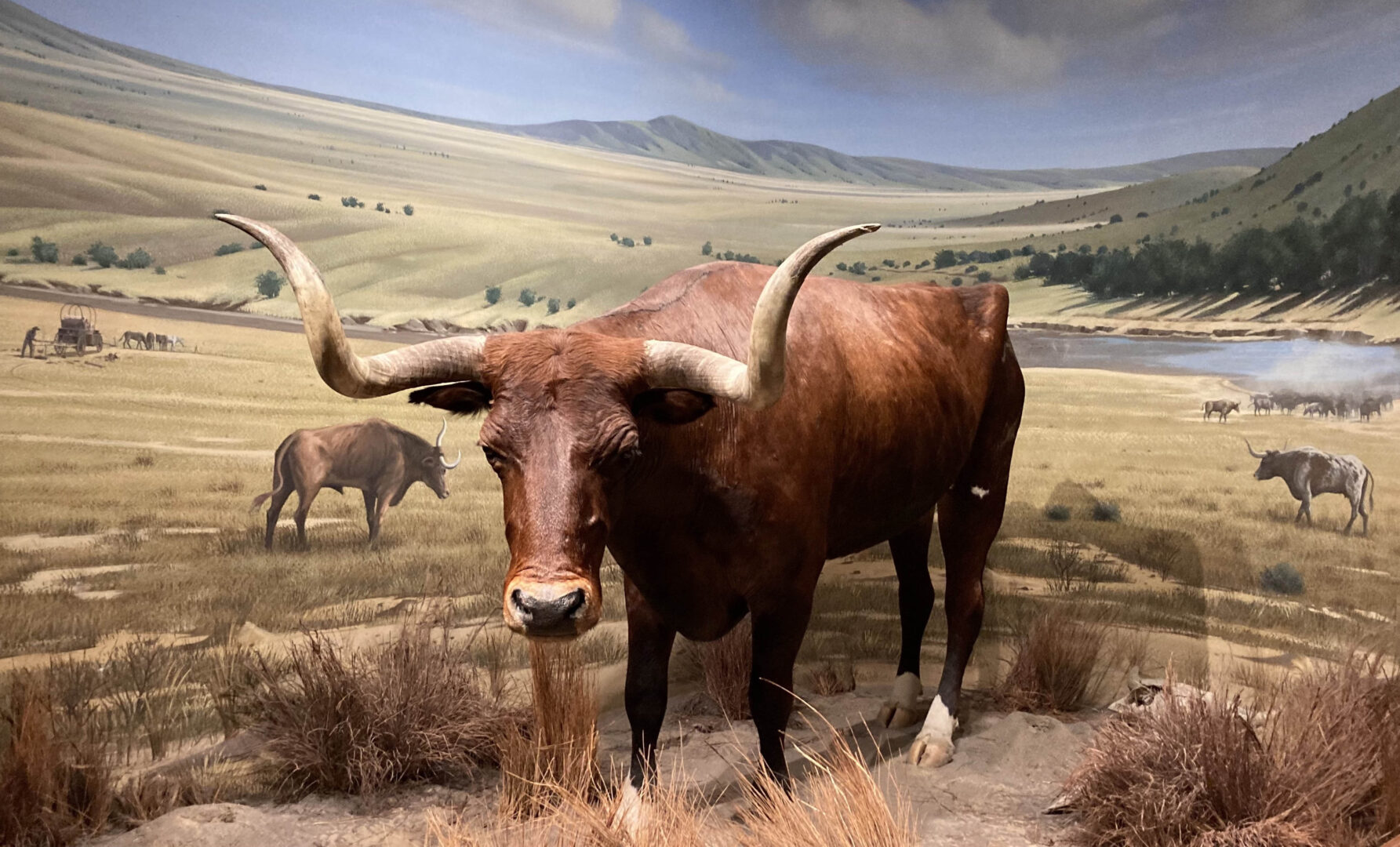
I walked quickly through the many rooms of the permanent exhibits and was impressed by this Texas Longhorn.
The Autry also offers activities for children and screenings of Western films. It’s across from the Zoo on the East edge of Griffith Park, and definitely worth a visit.