


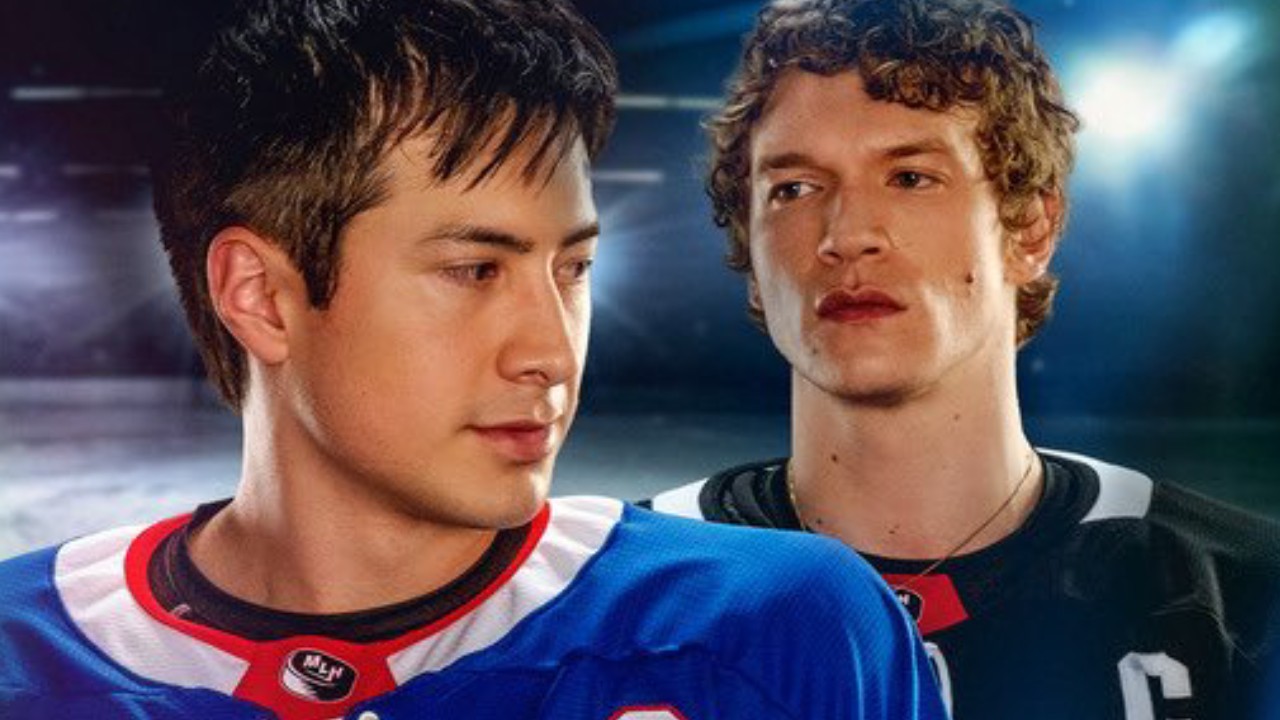
Heated Rivalry took the hockey world by storm, but the NHL might not have been ready to reckon with its new overnight fanbase.
Since it debuted in November, the TV show from Crave and HBO Max has created what many online have deemed a “mass psychosis.” It has put fictional LGBTQ+ hockey players at the center of the conversation. In December, one of the characters’ names was searched more than any NHL player besides Pittsburgh Penguins star Sidney Crosby, according to a Google Trends analysis by LGBTQ+ sports news website OutSports.
Fans who have fallen in love with fictional professional hockey stars Shane Hollander and Ilya Rozanov are flocking to NHL games. Stubhub reported that interest in hockey games increased 40% during the show’s run from Nov. 28 through Dec. 26. As a result, the NHL has had to wrestle with what it means to accept a new, more diverse audience, and LGBTQ+ fans are considering how the show could increase the inclusivity of the sport.
“It’s this cultural moment that has kind of been rare for hockey over the years,” said Dan LaTorraca, who was the vice president for marketing and brand strategy for the Carolina Hurricanes from 2018 to 2024. He now serves as the director of marketing at Zoomph, a company that supports sports teams in measuring marketing analytics. “I think it exposes the game to a much broader and more diverse audience, which is just good for the sport.”
Besides energizing a new fanbase for the sport, viewers have praised the show for confronting difficult themes surrounding sexuality and masculinity in professional sports. To Jim Buzinski, the co-founder of OutSports, the show is “exciting and wonderful.”
“It has been a hit in the gay community. No doubt about it,” Buzinski said. “It’s been written about everywhere and sort of everyone feels they have to have watched it.”
But while fans of Heated Rivalry are turning to the NHL, the show’s story about two male players falling in love and defying the norms of professional hockey has put the league in a precarious position.
“It’s tough because of the nature of the content of the show and the topic of it, unfortunately, is a divisive topic now,” LaTorraca said.
LaTorraca noted that although some NHL teams have engaged with the show, including the Boston Bruins and the Colorado Avalanche, others have laid low, despite seeing new fans.
“When [an internet trend] does intersect with very hot-topic cultural and social issues, and, of course, things that do deal with different communities, that’s where oftentimes [social media and marketing teams] kind of go to different departments or ownership or senior leadership and discuss their comfort level with it,” LaTorraca said.
LaTorraca added that the decision on whether to support more Pride and inclusion efforts can be a “damned if you do, damned if you don’t” situation for the NHL. Conservative fan bases and ownership might be holding teams back from addressing the show if there is concern that there will be backlash.
“It’s up to the league and clubs to determine and balance, like, ‘will this be worthwhile for us? Will this do more harm than good?’” he added.
According to The Athletic, three of the league’s 32 teams have stopped hosting a Pride Night this season, an annual Pride-themed game where players are encouraged to wear multi-colored “Pride tape” and teams donate to LGBTQ+ charities. There are no publicly out NHL players and specialty jerseys are no longer allowed during theme nights, including Pride Night.
“[The NHL] seems on the face that they want to expand the sport, but also seems at the same time they don’t,” said Evan F. Moore, the co-author of the 2021 book, “Game Misconduct: Hockey’s Toxic Culture and How to Fix It.”
For teams who are engaging with the show, results can vary. Many have faced pressure to donate proceeds to LGBTQ+ charities if they are using the hit show to promote the league. In one case, the Ottawa Senators organization announced that it would donate the proceeds from its custom Heated Rivalry jerseys to Ottawa Pride Hockey— before telling the organization itself. It led Ottawa Pride Hockey to release a statement on Instagram that thanked the NHL team but called on it to increase inclusivity. The lack of communication from the team had left the local Pride organization conflicted.
“We remain guarded towards the NHL’s commitment to inclusivity,” the Jan. 19 statement from Ottawa Pride Hockey reads. “The initial assumptions that these jerseys were not real say a great deal about the level of trust the queer community has for the NHL as a whole.”
LaTorraca hopes teams who do use and reference the show will follow up with real action. “If [an NHL team is] doing something with it, I hope they’re also doing things that engage that community and celebrate that community. Otherwise, it’s just kind of like cashing in,” he said.
The NHL’s struggle with inclusivity measures echoes a larger hockey culture that might take more than a popular show to change.
“Folks who are either white, male, from the country, from the farms or suburban feel like somehow the sport belongs to them and them only,” Moore said.
A lot of fans, he said, “do feel like hockey culture as a whole excludes them.”
For those who are LGBTQ+ or a part of an otherwise marginalized group, the isolated team environment common in youth and junior hockey clubs paired with a “macho tough” environment can lead to players self-selecting, Buzinski said.
“What you can never prove is, are there athletes who maybe would have been good pro athletes, but they stopped playing that sport because they didn’t want to be closeted or feel the need to be closeted?” Buzinski said.
He doubts that the show will lead to more professional players coming out.
“Coming out is such a personal decision for people that I find it hard to believe that someone’s going to come out because of a TV show,” Buzinski said. “They’ll come out for their own reasons when they’re comfortable enough.”
For Queer Hockey Nova Scotia, being a part of the LGBTQ+ community is a requirement to join. Located in Halifax, Nova Scotia, the local hockey league is meant to be a safe place for those who might feel otherwise left out of hockey culture.
Web traffic, social media followers and donations for the league have all increased since Heated Rivalry debuted, the president of the league, Nora Renick Rinehart, said. Halifax is also the home of Rachel Reid, the author of the Heated Rivalry novel, which has further increased attention. The league received proceeds from a jersey that Reid partnered with a local clothing company to create.

“I think we’re really in the hotspot of the Heated Rivalry sort of moment,” Renick Rinehart said. People come to the league because, they said, “our culture is just radically different from other hockey spaces.”
She hopes that new hockey fans from Heated Rivalry will seek out hockey organizations outside of the NHL that they think better reflect the spirit of the show.
“Look for your women’s leagues, look for your local queer leagues,” she said. “Like, if you want to put your support into the universe that you’re seeing in Heated Rivalry because that’s what you’re so excited about, those are the organizations that are doing that work.”
For the NHL, fans might not see a significant change in inclusion policies anytime soon.
“[Heated Rivalry] may lead to some change, but we’ll see. I mean, I’m not saying it’s going to make any change overnight,” Moore said.
“I think statements help. I think more robust Pride Nights,” Buzinski said on what NHL teams could be doing better. “Let teams play their Pride Night games in a Pride jersey or have a patch or something. They could be doing more.”