


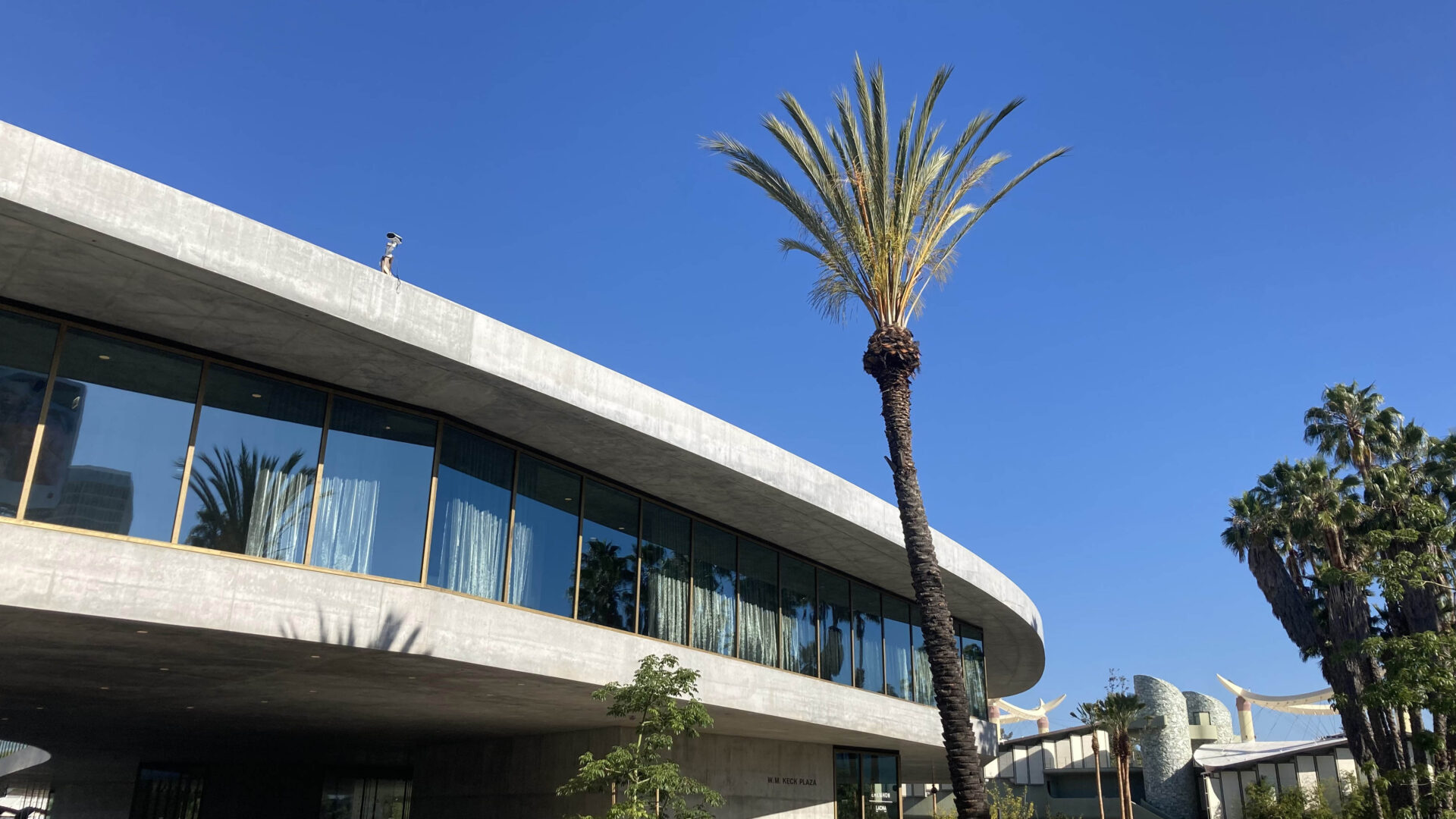
Finally, the much anticipated new LACMA building was unveiled to press on April 15. After member previews, it will open to the public on May 4. It is named David Geffen Galleries because the media mogul contributed 150 million of the total cost of 720 million.
The architect chosen for this project in 2009 is Peter Zumthor, born in Basel, Switzerland. He said to press that he learnt to love Los Angeles while teaching here in the 80s and exploring our city on a bicycle. “L.A. has changed me. There’s a certain freshness in America, it’s not overly refined.” Read here Zumthor interview in the Los Angeles Times.
The curvilinear 900-foot-long building, that crosses over the road to the South side of Wilshire Blvd, has floor to ceiling windows, covered by transparent curtains to protect the artwork from light. The more sensitive pieces are displayed in darkened inner rooms.
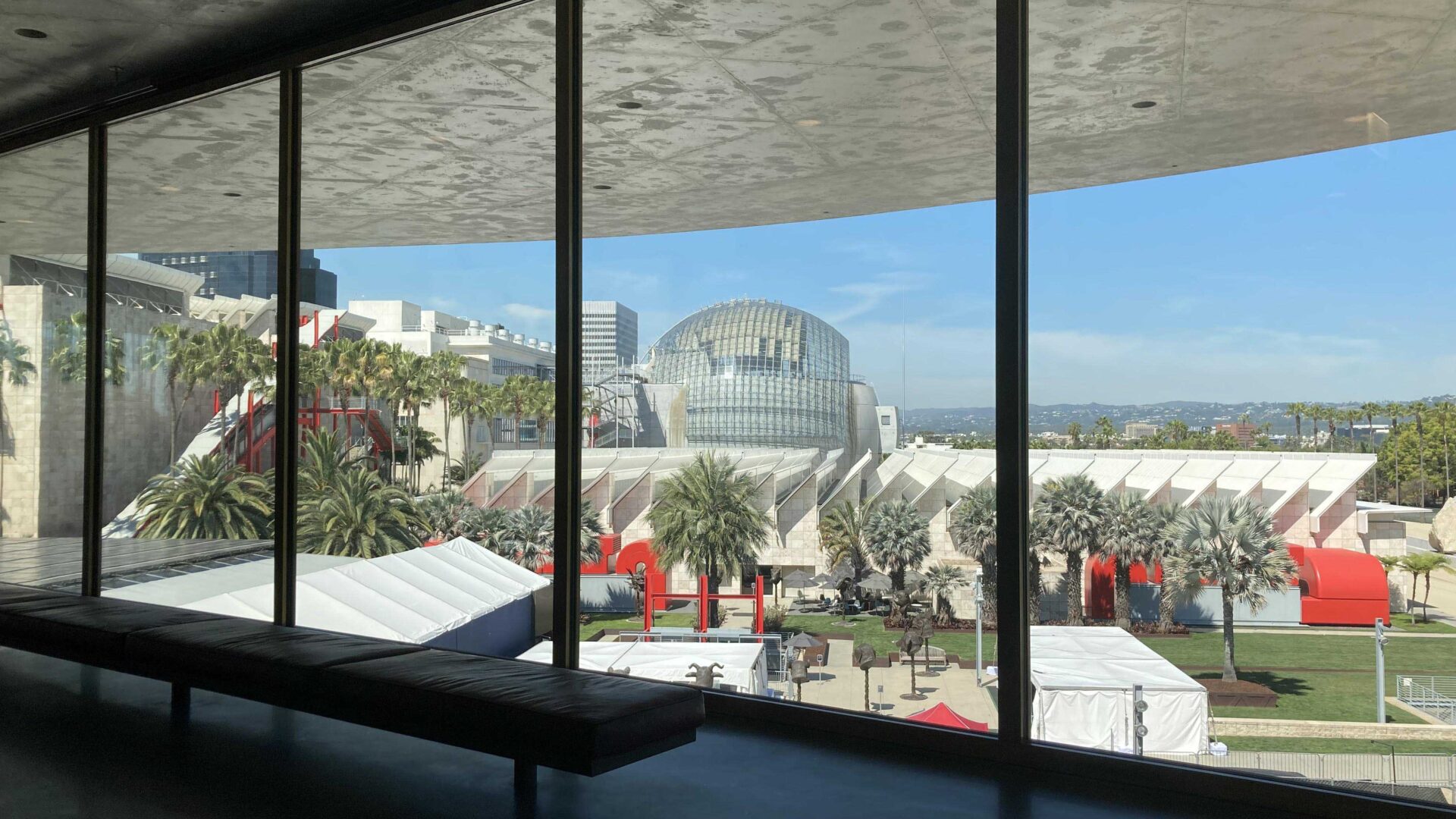
This feature offers views of the city to the West and to the East. The architect explained: “The museum had to be open to its surroundings. So contemporary L.A. should be present at all times, come in, whenever you can look out.”
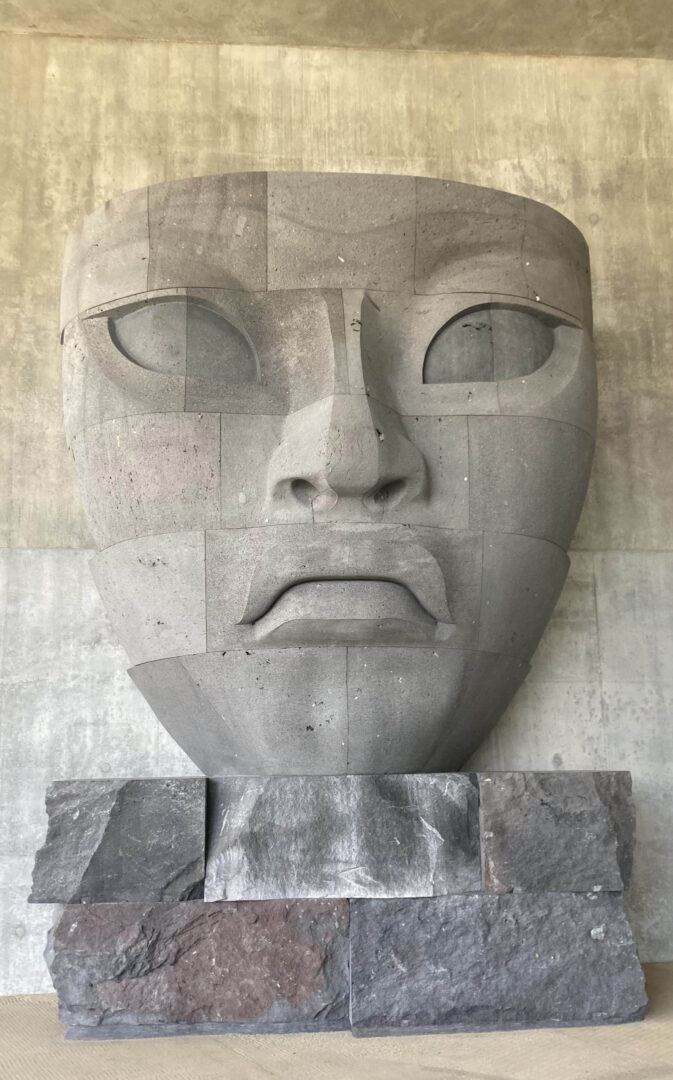
On the wall near the elevators and the staircase that lead to the elevated building is a large stone mask titled Tlali, 2025 by Pedro Reyes, inspired by the Olmec heads found in Veracruz, New Mexico.
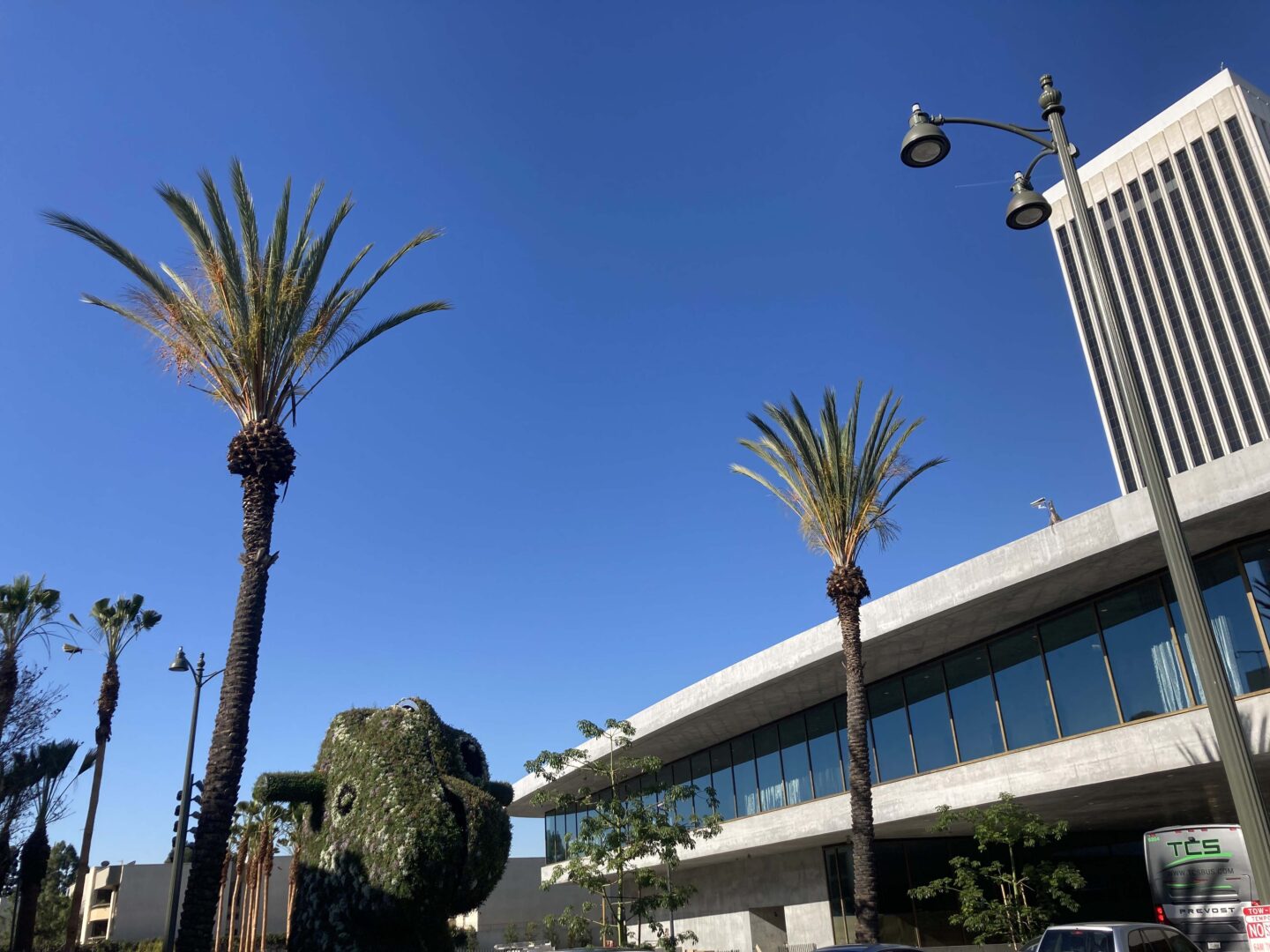
On the opposite side stands Split-Rocker by Jeff Koons, a 37-foot-tall, stylized rocking horse and dinosaur head covered with thousands of plants that in our warm climate flower year-round.
The inaugural installation is divided into four sections: the Pacific, Indian, and Atlantic Oceans, plus the Mediterranean Sea of ancient Rome, Greece and Egypt.
CEO Michael Govan said that this thematic arrangement of some of the 155,000 pieces from LACMA’s permanent collection is a reflection of the diversity of cultures in Los Angeles, where we’re all interconnected through migration.
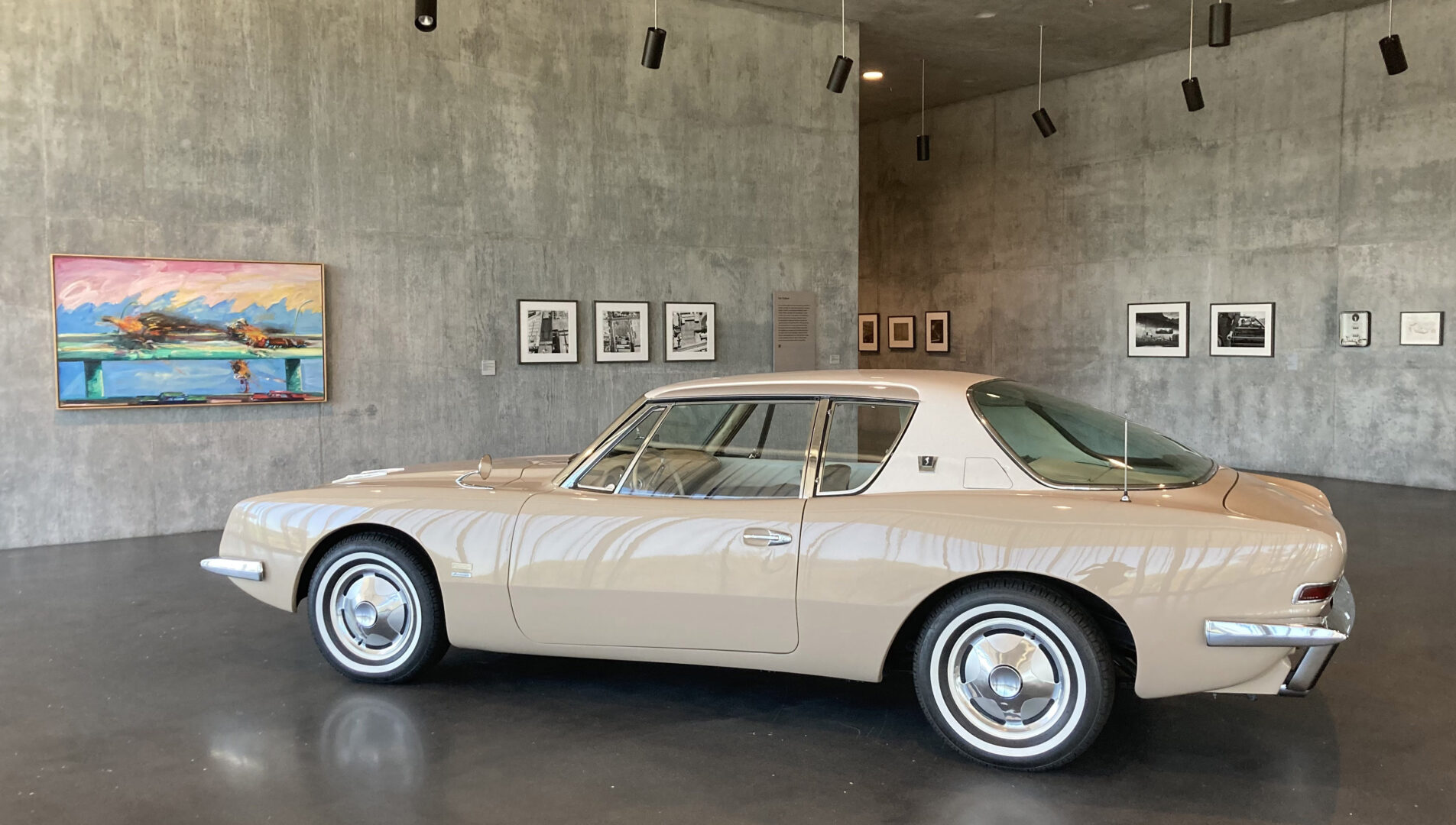
The first piece that attracted my attention was an Avanti, designed by Raymond Lowey for Studebaker in 1961. The vintage car on display is one that the designer customized for himself.
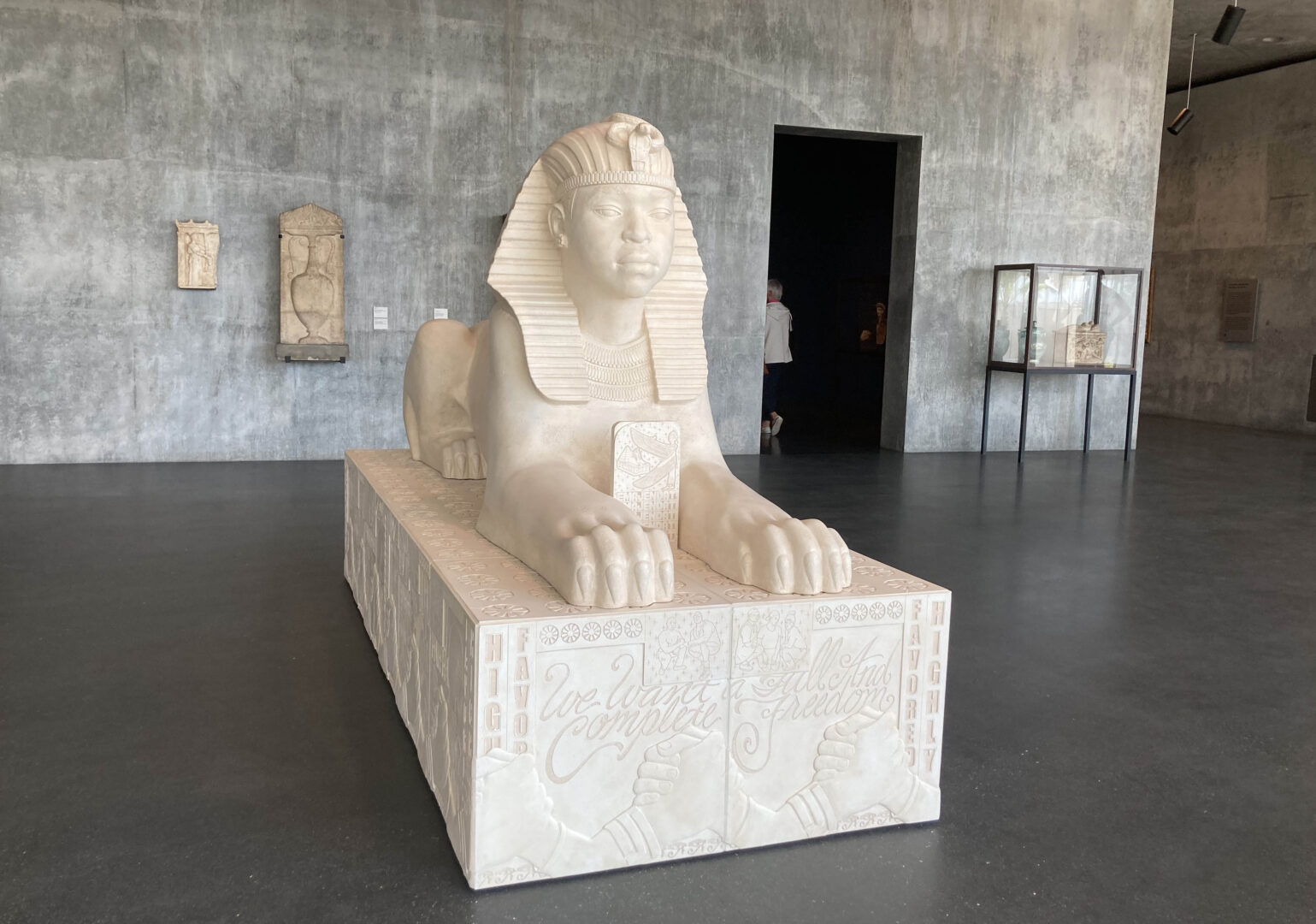
Walking around the outside perimeter, I noticed a white marble Sphinx, commissioned from Lauren Halsey, dominating the room. The inscription says: “We want a full and complete freedom.” Read here an interview with the artist.
This work reminded of when I saw the massive Great Sphinx of Giza during my trip to Egypt in 2002.
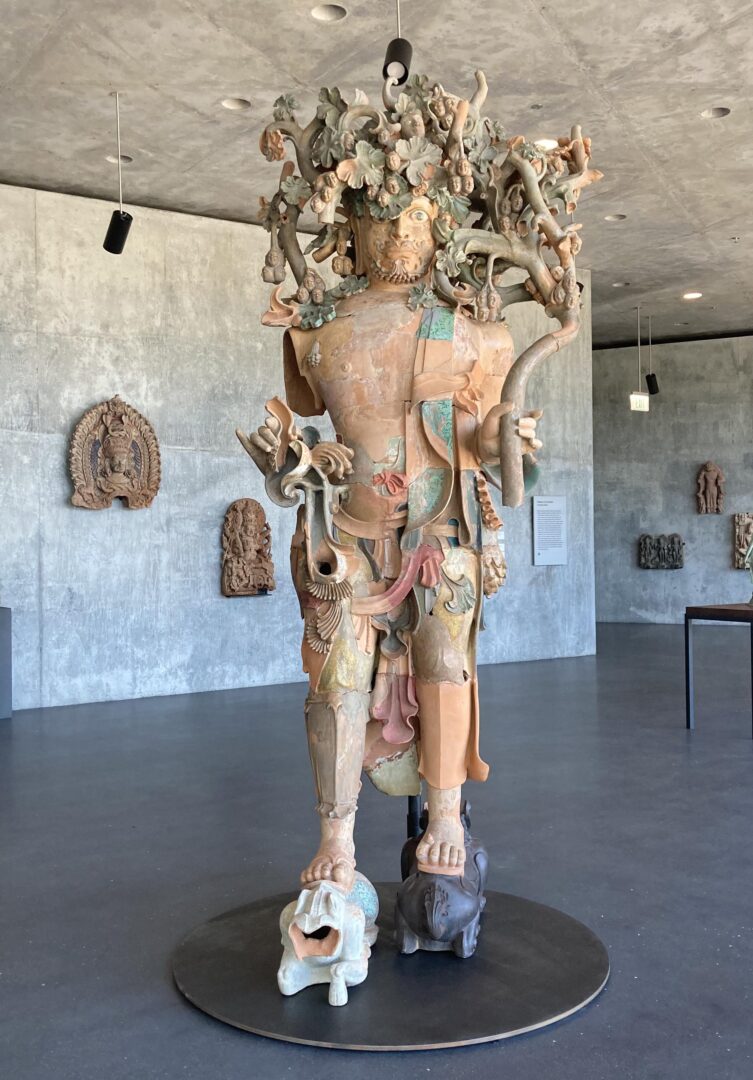
A 12-foot-tall terracotta sculpture is titled Vikatonarva, a name that the Indian artist Manjunath Kamath said he made up.
I have been interested in the statuary of India ever since I traveled to that country in 1984 and photographed the temples of Kajuraho. Read here about that fabulous trip.
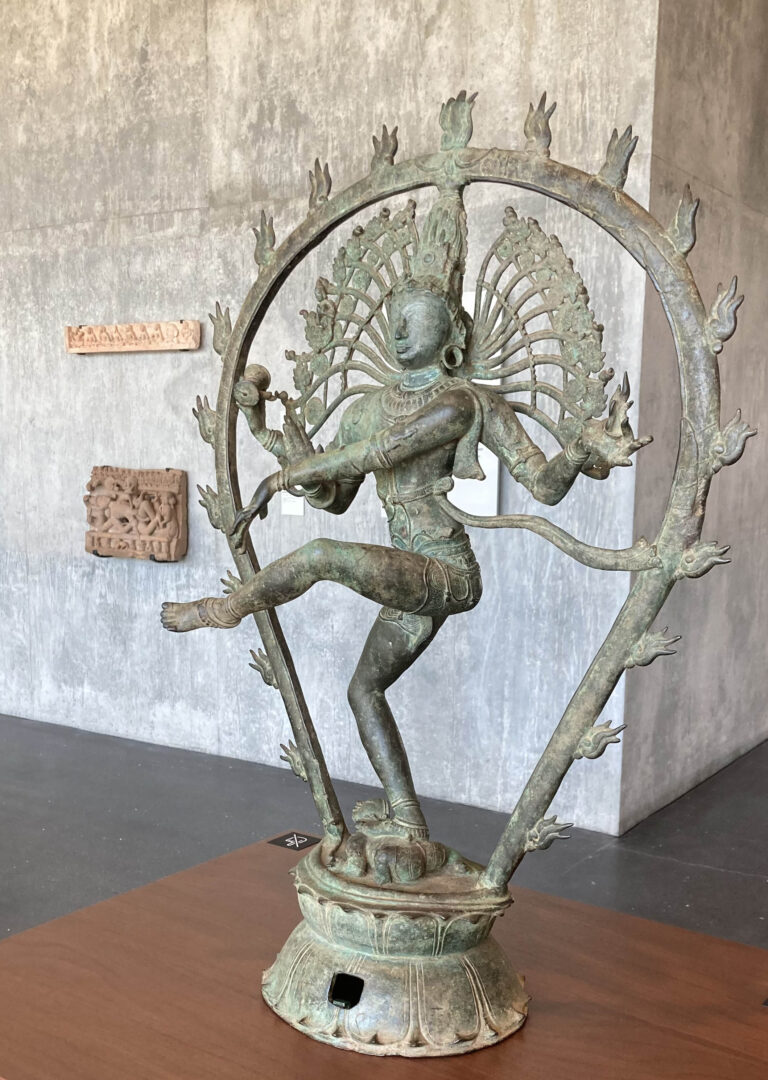
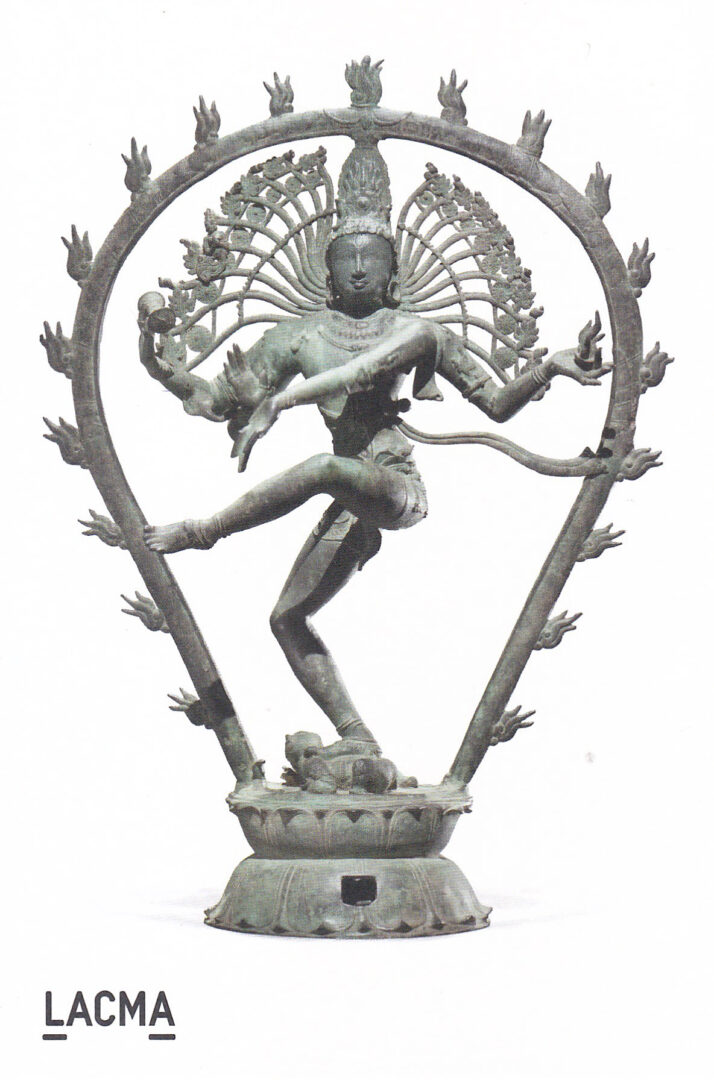
In that same area of “Images of the Divine in South Asia” I saw a small copper sculpture, Shiva as the Lord of Dance, from Tamil Nadu. The Hinduist deity is ringed by flames representing the destruction of the universe by fire.
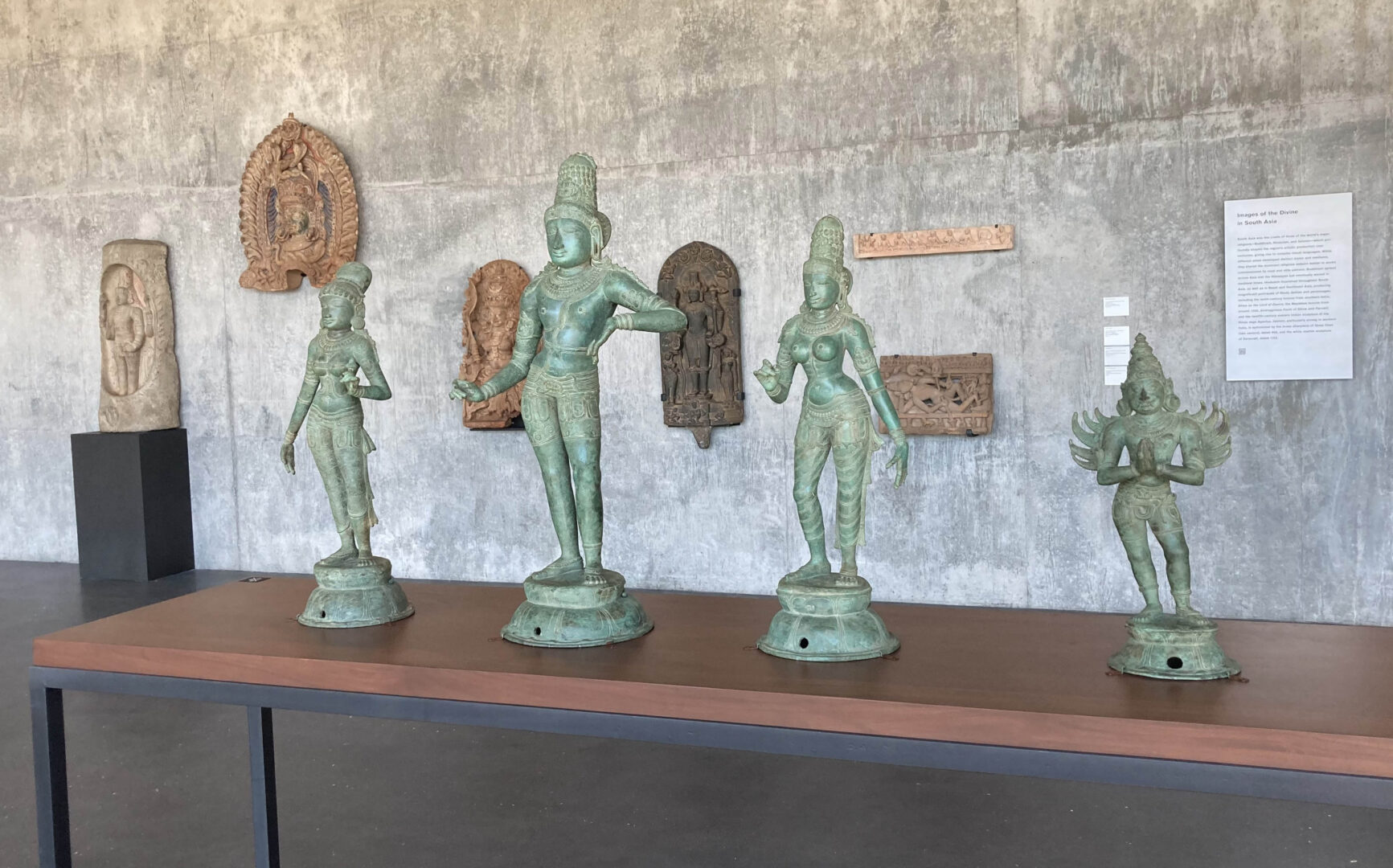
Four copper sculptures lined up on a table of Krishna with Wives and Garuda are also from Tamil Nadu, India.
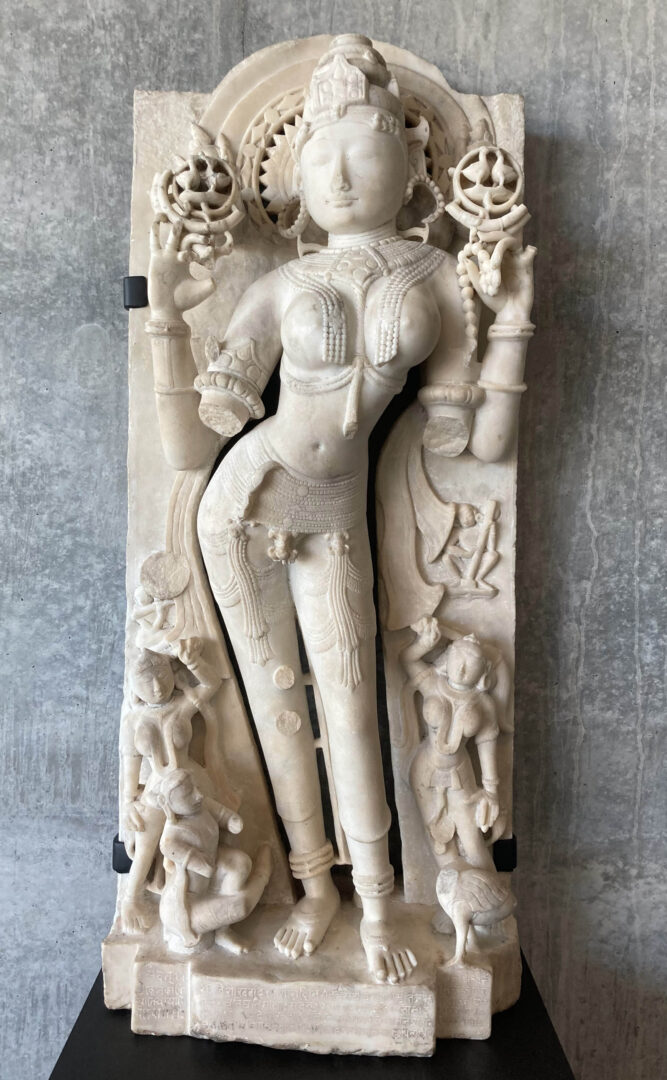
The marble sculpture of Sarasvati, the Jain Goddess of music and learning, was carved in 1153 by Jagadeva.
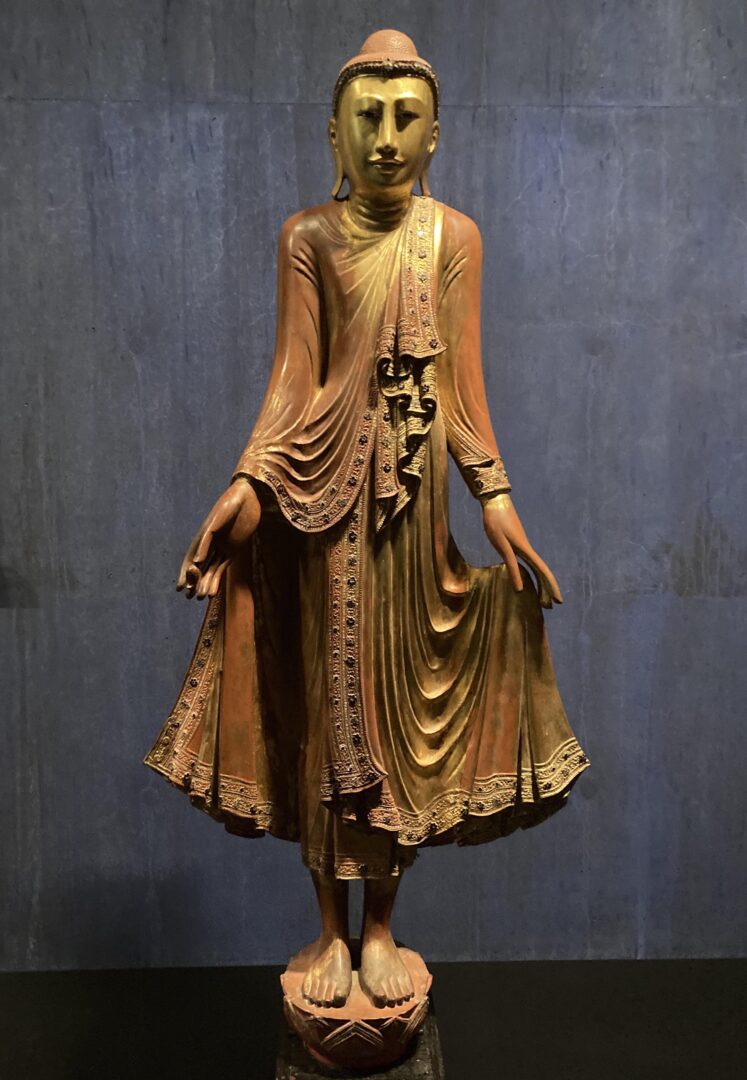
In one darkened room was a 19th century standing Buddha Shakyamuni from Mandalay, Myanmar (Burma).
I visited Burma and Laos in 2005.
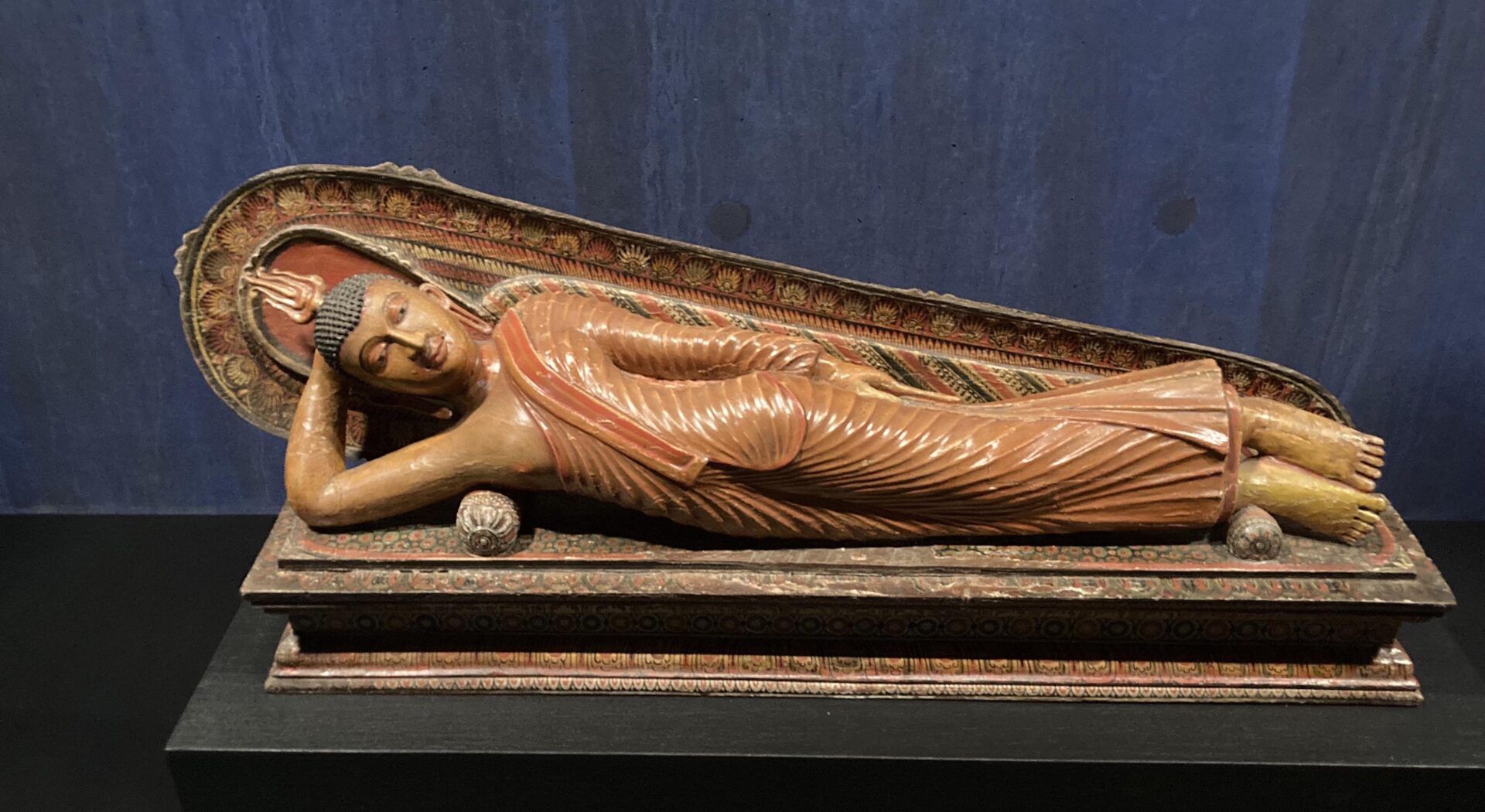
An 18th century reclining Buddha from Sri Lanka is depicted on his death bed still alive with his eyes open talking to his disciples.
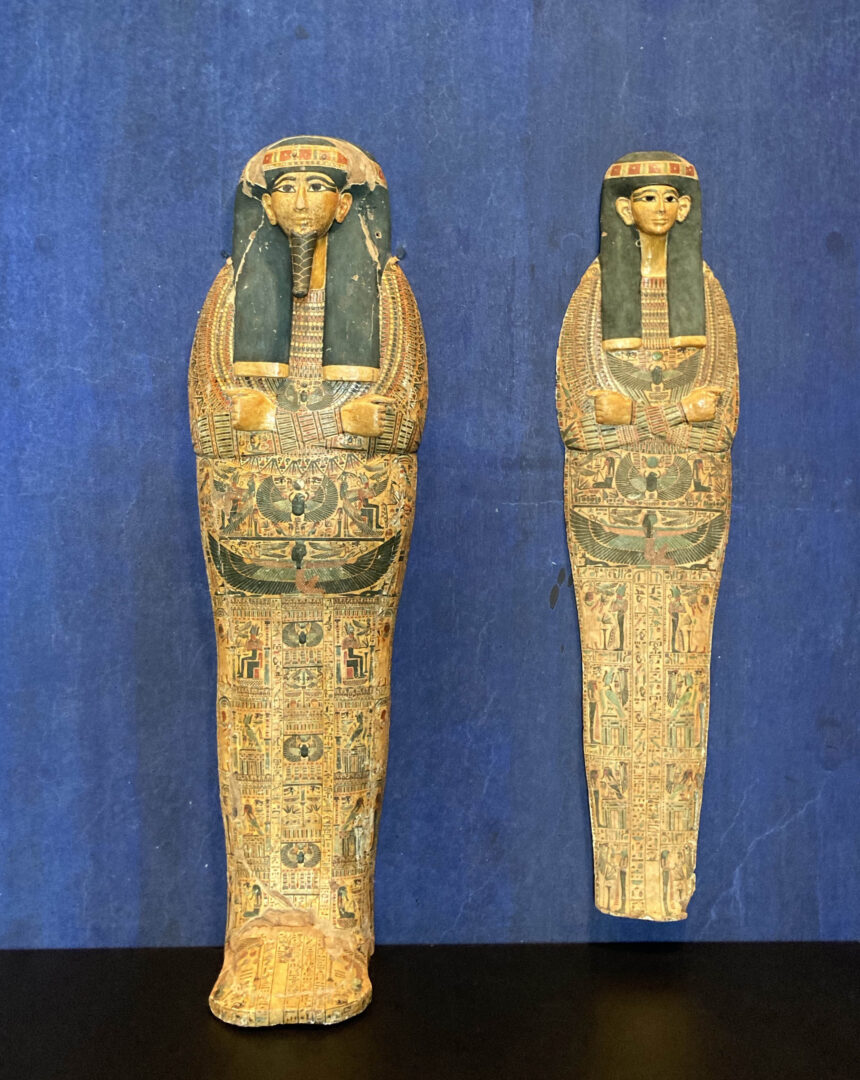
In another inner room devoted to Egypt I admired two colorful sarcophagi, probably of a Pharaoh and his wife.
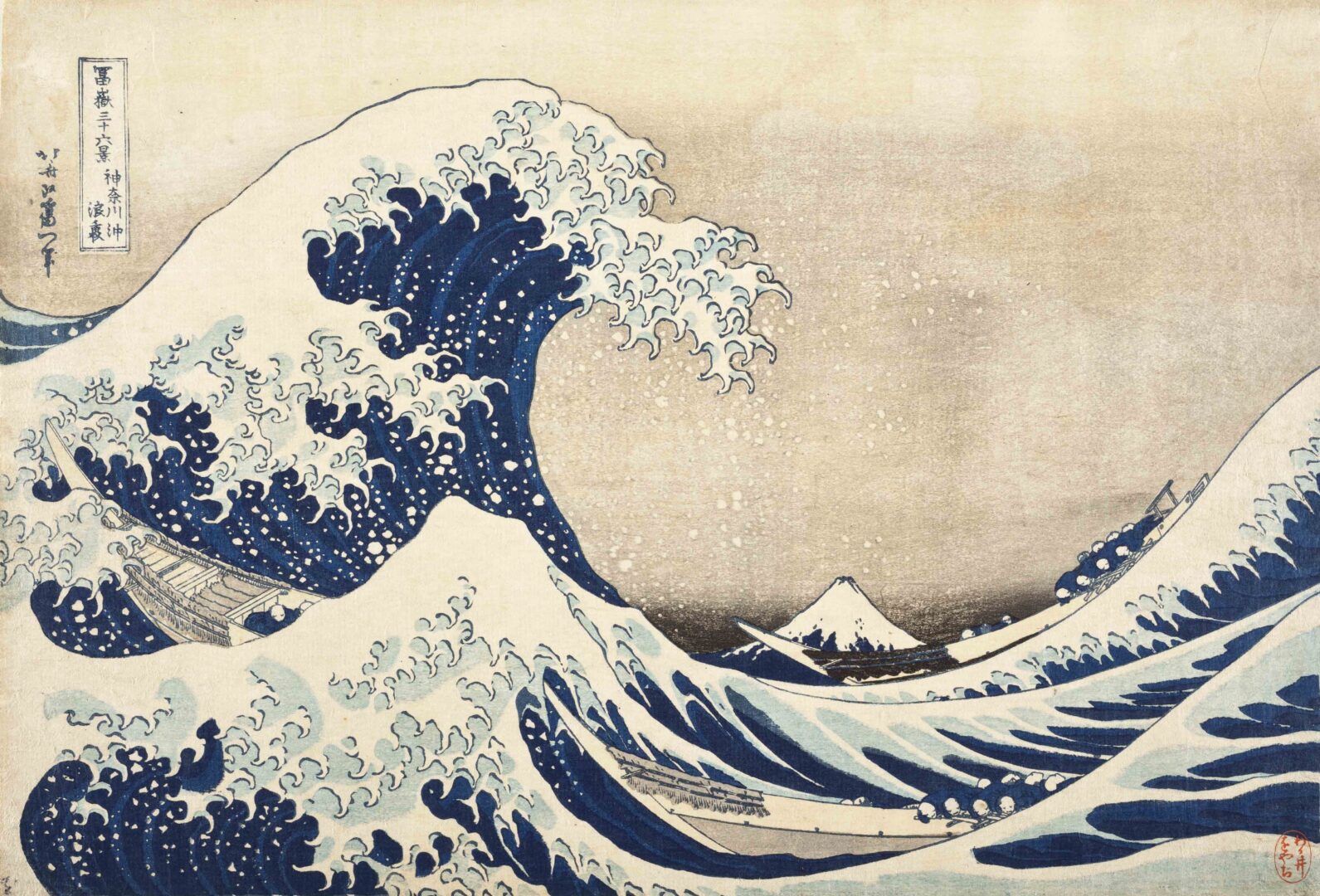
The iconic Great Wave off Kanawaga by Katsushika Hokusa, a woodblock print from 1831, was also a postcard.
I realized this wave served as inspiration for art works by my friend Jon Van Hamersveld. Read here about his exhibit “Making Waves.”
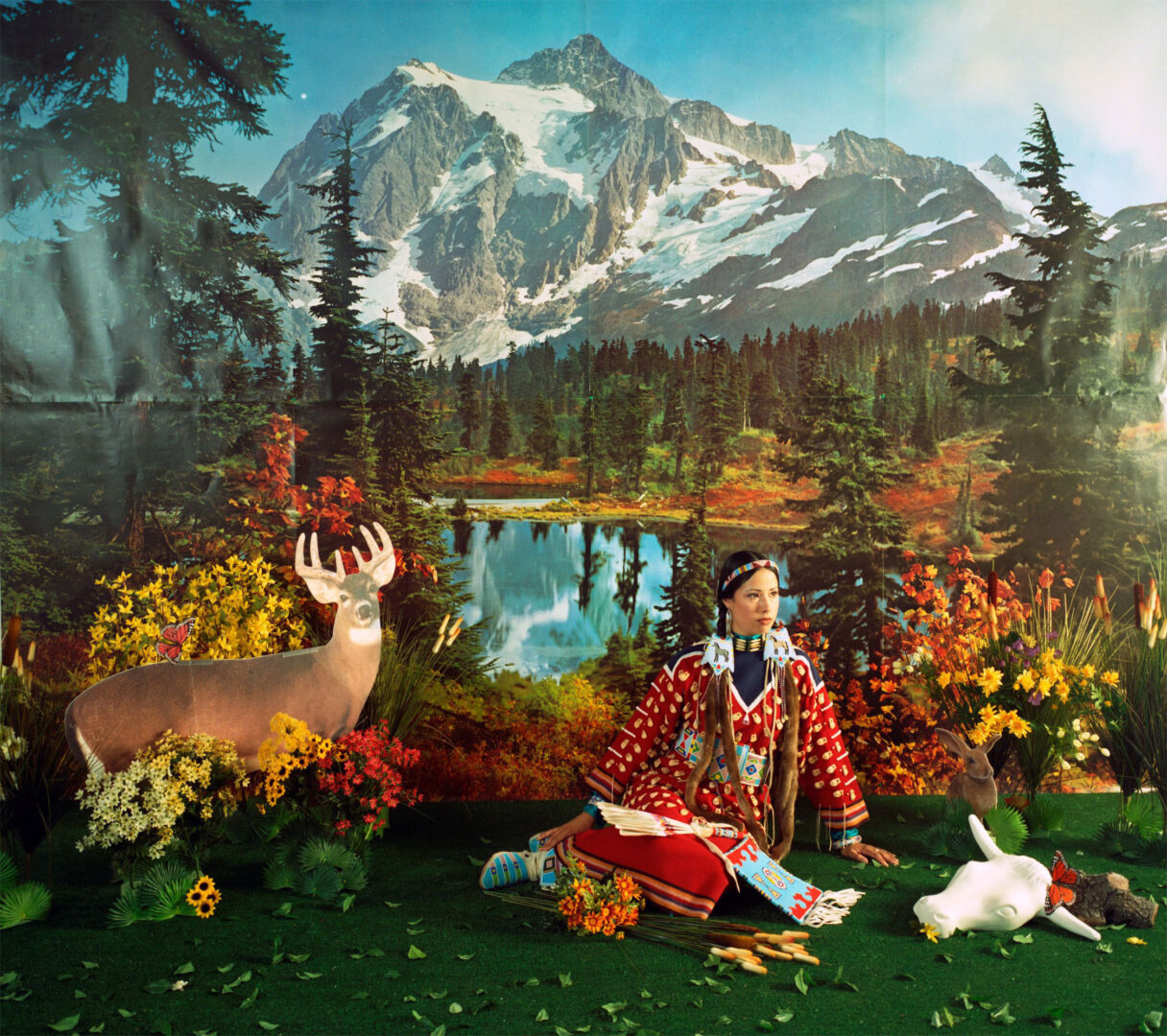
In the booklet Wander handed to us by the thoughtful LACMA press office, and available for sale in the gift shop, I had noticed a photograph by Wendy Red Star titled Fall, 2006 from her Four Seasons series. But it was actually Summer.
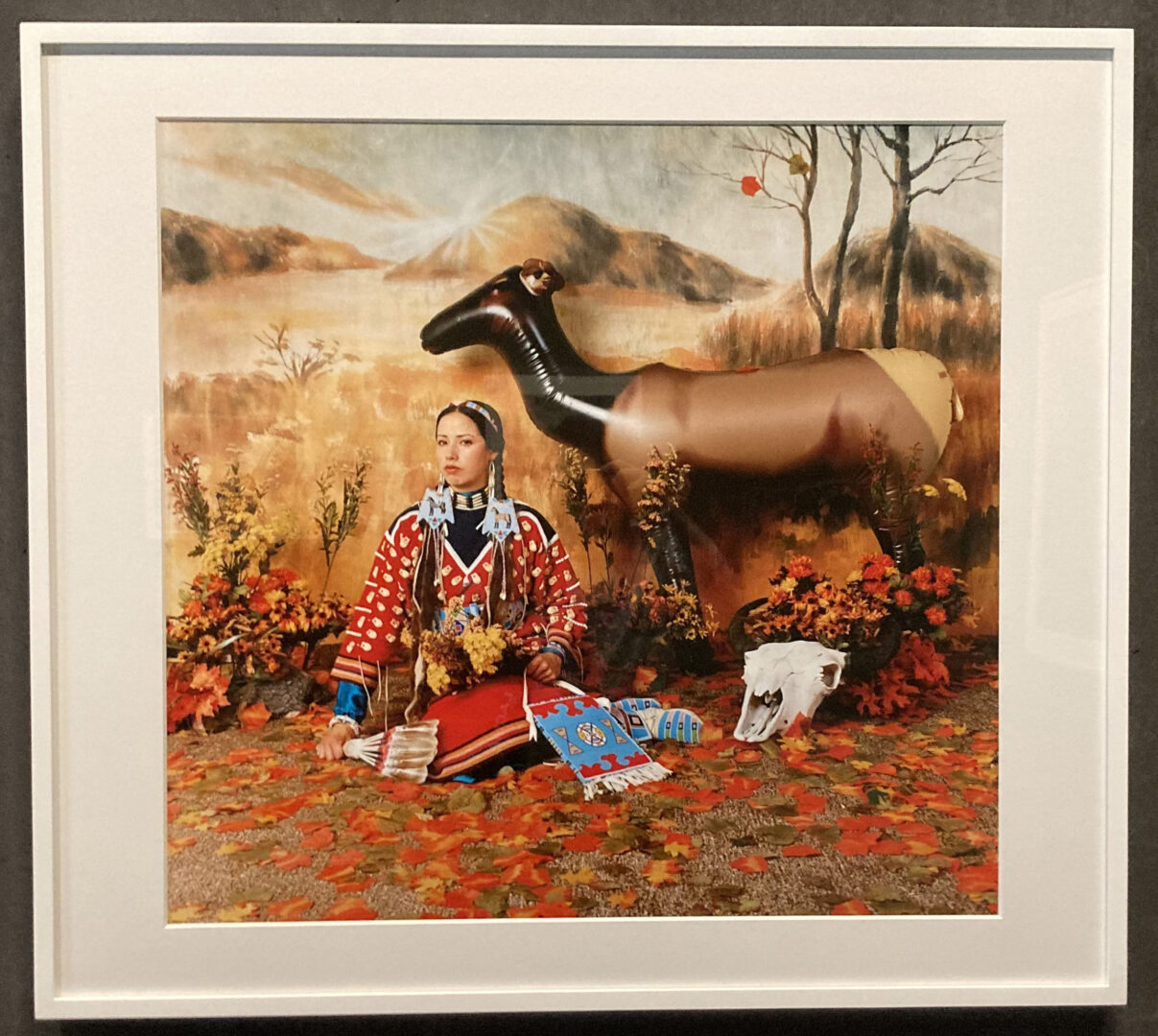
Inside the galleries was the real Fall.
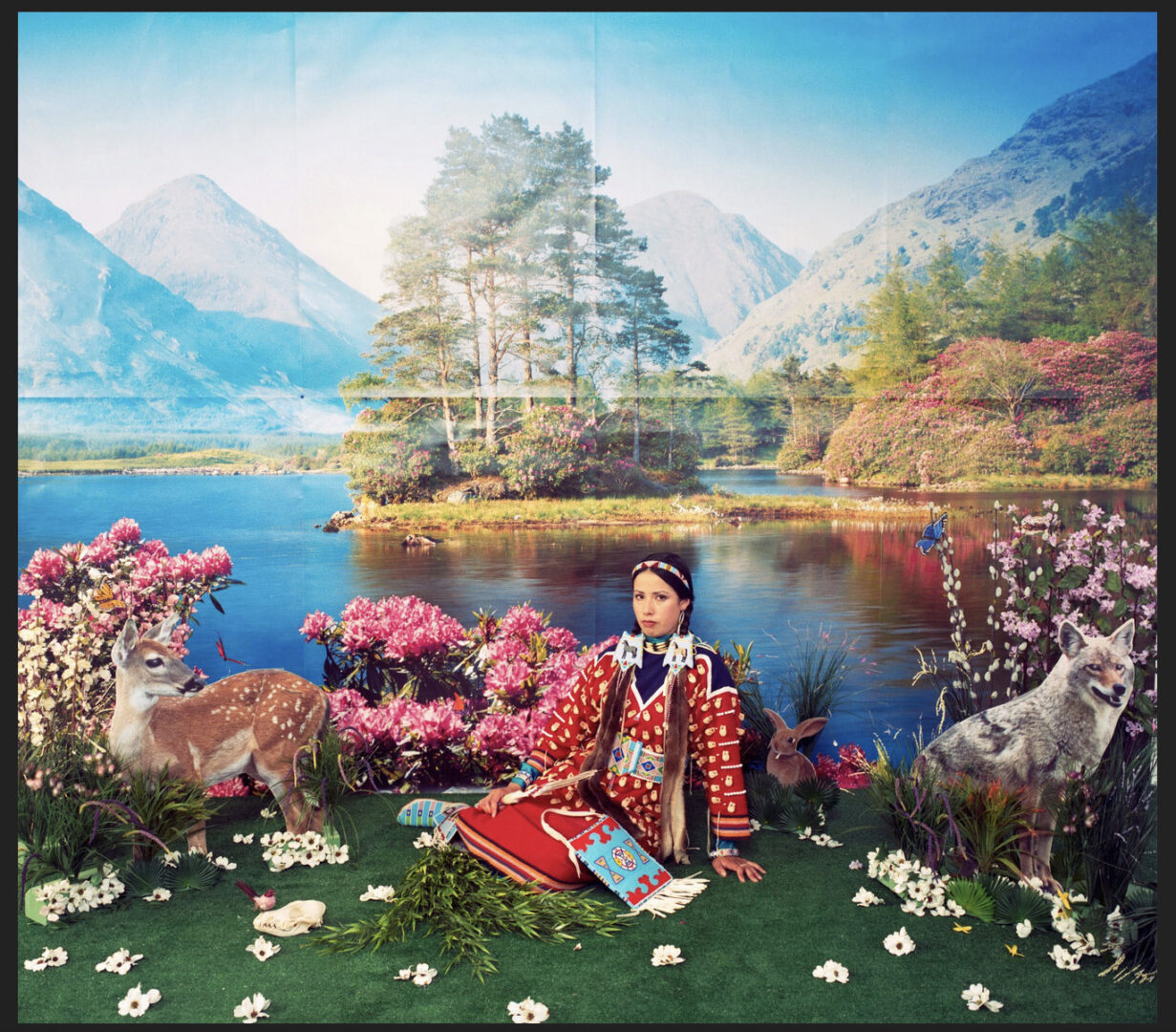
See also Spring and Winter.
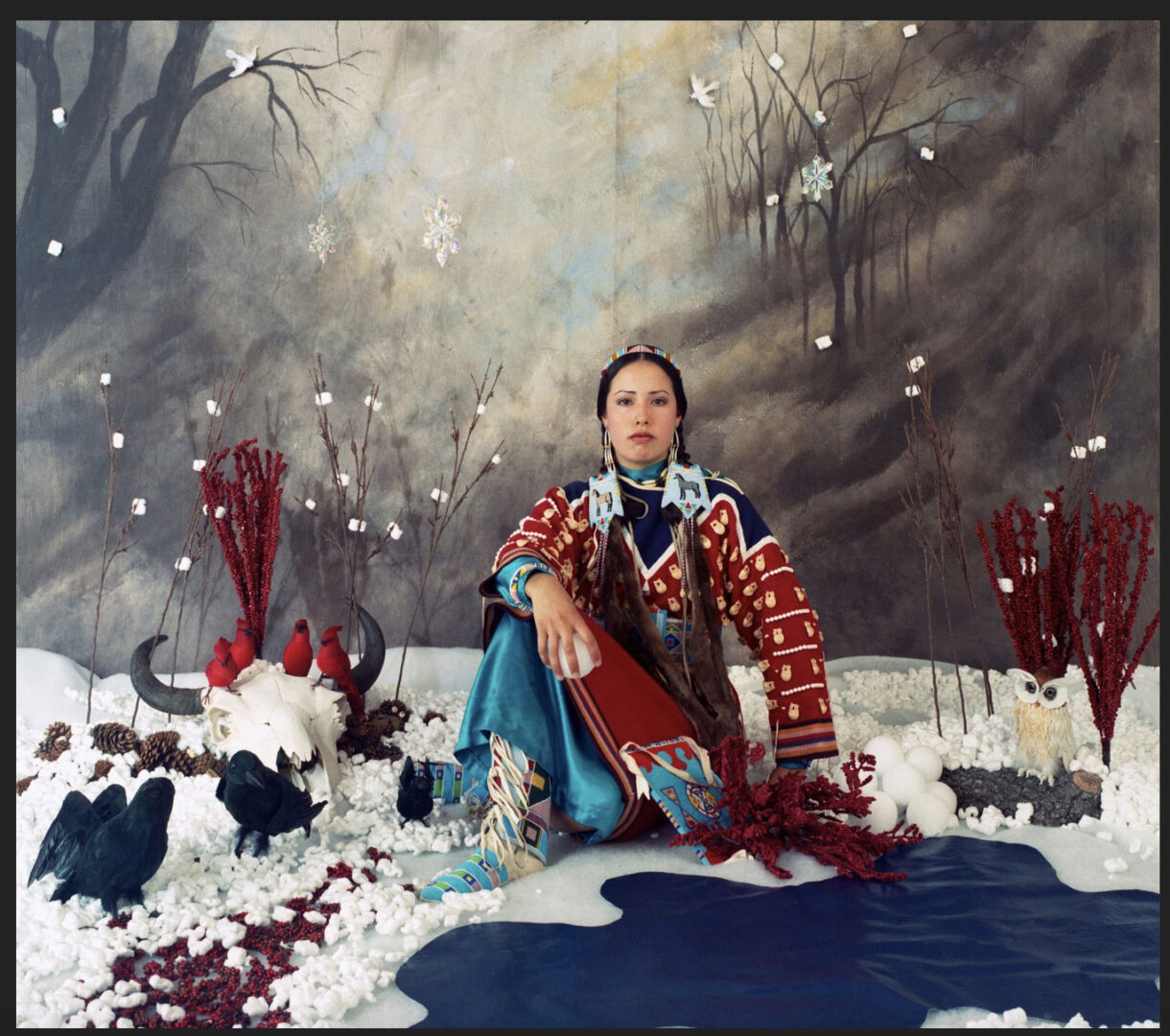
The Crow artist created these self-portraits as humorous send ups of Native American stereotypes as people close to animals and nature. On this subject, please read here my article “Thoreau and Nature.”
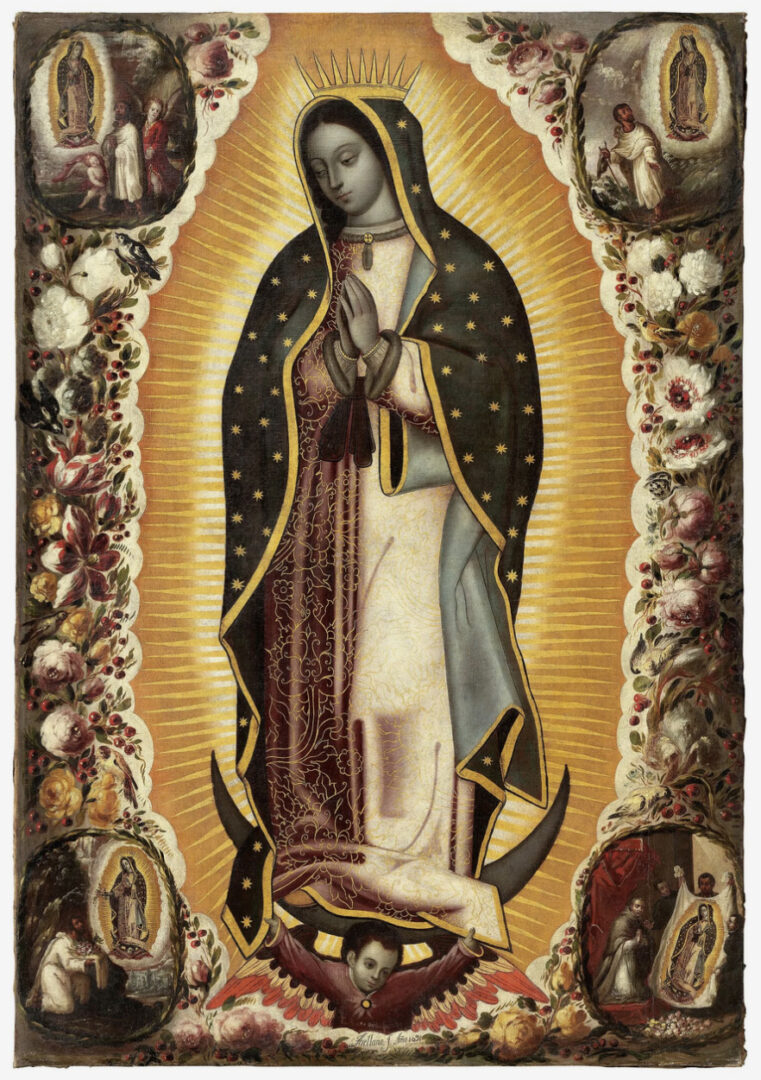
As a final blessing from a former Catholic, who likes Pope Leo speaking out against war, see another postcard: Virgin of Guadalupe, 1691 by Antonio and Miguel Arellano.
Please click on underlined words for additional info.
Photos by Elisa Leonelli